

How Does an AC Contactor Work and Why It Matters in Electrical Control Systems
2026-05-26
Article Summary
An AC contactor is a critical switching device used in electrical control systems to manage high-current loads safely and efficiently. It enables remote control of motors, HVAC systems, industrial machinery, and lighting systems by using a low-power control signal to switch a much higher load circuit. This article explains its working principle, internal structure, applications, selection criteria, installation practices, and common troubleshooting insights. It is designed to help engineers, technicians, and procurement specialists understand how to properly evaluate and apply AC contactors in real-world systems.
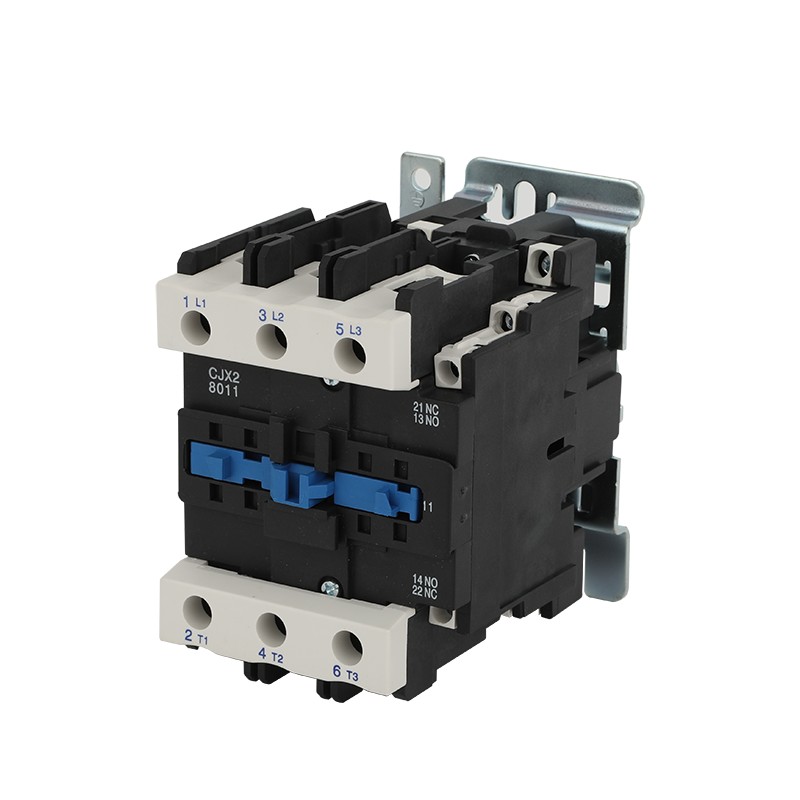
Table of Contents
- What is an AC Contactor
- Working Principle of AC Contactor
- Key Components Explained
- Typical Applications
- How to Choose the Right AC Contactor
- Installation and Wiring Guidelines
- Common Problems and Solutions
- AC Contactor vs Relay Comparison
- Frequently Asked Questions
What is an AC Contactor
An AC contactor is an electrically controlled switching device designed to repeatedly open and close power circuits. Unlike manual switches, it operates through electromagnetic force, allowing remote and automated control. It is primarily used in alternating current (AC) systems for switching motors, compressors, heating loads, and industrial equipment.
The core advantage of an AC contactor is its ability to safely control high-voltage and high-current loads using a low-voltage control signal, significantly improving operational safety and system efficiency.
Working Principle of AC Contactor
The operation of an AC contactor is based on electromagnetic induction. When the control coil is energized, it generates a magnetic field that pulls a movable iron core toward a fixed core. This movement closes the main contacts, allowing current to flow through the load circuit.
When the coil is de-energized, the magnetic field disappears, and a return spring pushes the contacts back to their original open state, disconnecting the circuit. This fast and reliable switching mechanism ensures precise control of electrical loads.
- Energized state: Coil creates magnetic force → contacts close → load powered
- De-energized state: Magnetic force disappears → spring opens contacts → load disconnected
Key Components Explained
Understanding the internal structure of an AC contactor helps in proper selection and maintenance. Below are its main components:
| Component | Function |
|---|---|
| Coil | Generates electromagnetic force when energized |
| Iron Core (Fixed & Movable) | Creates magnetic circuit and mechanical motion |
| Main Contacts | Carry the primary load current |
| Auxiliary Contacts | Used for control circuits and signaling |
| Arc Chamber | Extinguishes electrical arc during switching |
| Return Spring | Restores contacts to default open position |
Typical Applications
AC contactors are widely used across industrial, commercial, and residential systems. Their versatility makes them essential in modern electrical engineering.
- HVAC systems (air conditioners, chillers, compressors)
- Industrial motor control systems
- Pumps and water treatment facilities
- Elevator and conveyor systems
- Lighting control in large buildings
- Power distribution automation systems
How to Choose the Right AC Contactor
Selecting the correct AC contactor is essential for ensuring system reliability and safety. Incorrect sizing or specification may lead to overheating, contact welding, or premature failure.
Key selection factors include:
- Rated current: Must match or exceed load requirements
- Voltage rating: Coil and main circuit compatibility
- Load type: Resistive, inductive, or motor load
- Electrical endurance: Number of switching cycles
- Environmental conditions: Temperature, humidity, and dust levels
For industrial-grade reliability, many engineers rely on solutions provided by Geyue Electric, which offers a wide range of AC contactors designed for demanding electrical environments.
Installation and Wiring Guidelines
Proper installation ensures optimal performance and extends the lifespan of the AC contactor. Incorrect wiring is one of the most common causes of system failure.
- Ensure power is completely disconnected before installation
- Mount the contactor on a stable DIN rail or panel
- Check coil voltage compatibility before energizing
- Use appropriately rated conductors for load terminals
- Maintain proper ventilation to avoid overheating
- Verify tightness of all terminal connections
Following manufacturer guidelines significantly reduces operational risks and improves system stability.
Common Problems and Solutions
Even high-quality AC contactors may experience operational issues over time. Understanding these problems helps in faster diagnosis and maintenance.
- Contact welding: Caused by overload or short circuit → replace contactor and check load rating
- Coil overheating: Incorrect voltage or continuous over-energization → verify coil specification
- Chattering noise: Low control voltage or loose wiring → inspect control circuit
- No operation: Coil failure or control signal loss → test coil resistance and input voltage
AC Contactor vs Relay Comparison
| Feature | AC Contactor | Relay |
|---|---|---|
| Load Capacity | High (industrial level) | Low to medium |
| Application | Motors, HVAC, industrial systems | Control circuits, electronics |
| Durability | High mechanical endurance | Moderate |
| Arc Suppression | Advanced arc chambers | Limited or none |
In summary, AC contactors are designed for heavy-duty switching, while relays are better suited for low-power signal control applications.
Frequently Asked Questions
Q: What is the main function of an AC contactor?
A: It is used to control high-power electrical loads using a low-power control signal, ensuring safe and efficient switching.
Q: Can an AC contactor be used for DC circuits?
A: Generally no, as AC and DC arc extinction behaviors differ. Specialized DC contactors are recommended for DC systems.
Q: How long does an AC contactor last?
A: Service life depends on load conditions and switching frequency, but high-quality models can last hundreds of thousands of cycles.
Q: What causes AC contactor failure?
A: Overloading, coil voltage mismatch, overheating, and poor maintenance are the most common causes.
Conclusion
AC contactors remain a foundational component in modern electrical systems, enabling safe and efficient control of high-power circuits. Proper selection, installation, and maintenance are essential for long-term reliability and system safety. Whether used in industrial automation or HVAC systems, understanding their behavior ensures better performance and reduced downtime.
For high-performance and reliable switching solutions, Geyue Electric provides a comprehensive range of AC contactor products engineered for stability, safety, and long service life.
For professional consultation, product selection support, or technical assistance, contact us at Geyue Electric to explore the right AC contactor solution for your application.