

How Does an Integrated DC Servo Motor Improve Motion Control Performance?
2026-08-05
Article Summary
An Integrated DC Servo Motor is an advanced motion control solution that combines a DC servo motor, driver, encoder, and control electronics into one compact unit. This integrated design helps manufacturers reduce system complexity, improve positioning accuracy, and achieve more reliable automation performance. As industries continue to demand faster response, higher precision, and easier installation, integrated servo technology has become an important choice for modern motion applications.
This article explains how an Integrated DC Servo Motor works, why it solves common automation challenges, what advantages it provides compared with traditional motor systems, and how businesses can select the right solution for their applications. With professional motion control experience, SEA MOTION provides integrated servo motor solutions designed to meet the needs of various industrial automation fields.
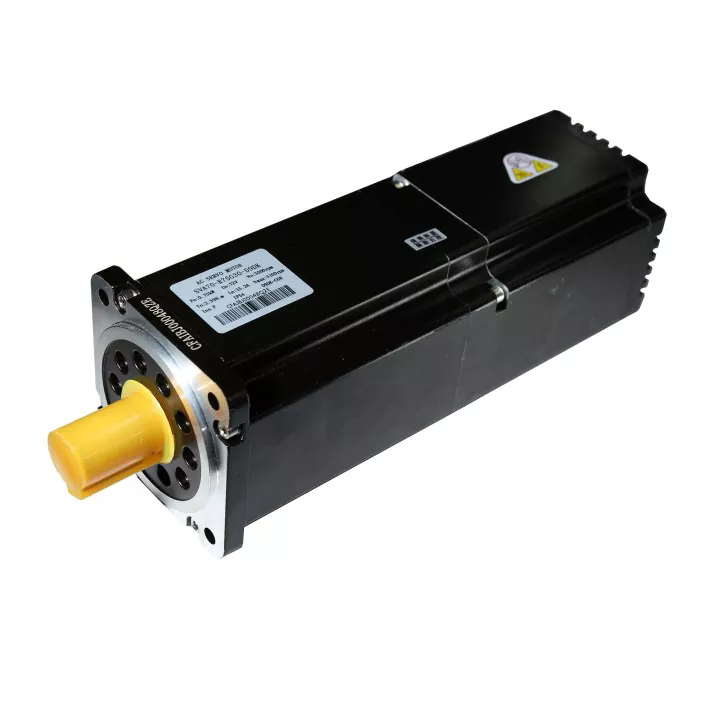
Table of Contents
- 1. Introduction to Integrated DC Servo Motor Technology
- 2. How Does an Integrated DC Servo Motor Work?
- 3. What Problems Can an Integrated DC Servo Motor Solve?
- 4. Key Advantages of Using an Integrated DC Servo Motor
- 5. Common Applications of Integrated DC Servo Motors
- 6. How to Select the Right Integrated DC Servo Motor?
- 7. Why Choose SEA MOTION for Integrated Servo Solutions?
- 8. Frequently Asked Questions
- 9. Conclusion
Article Outline
- Understanding the structure and operating mechanism of integrated servo motors
- Identifying automation problems caused by traditional motor systems
- Exploring the benefits of compact and intelligent motion control
- Learning where integrated DC servo motors are widely used
- Understanding important factors when choosing a suitable servo solution
1. Introduction to Integrated DC Servo Motor Technology
Modern automation systems require motion components that can provide accurate control, fast response, and stable operation. Traditional motor systems usually require separate components, including motors, drivers, controllers, feedback devices, and complex wiring systems. Although these solutions can work effectively, they often increase installation time, maintenance requirements, and overall system complexity.
An Integrated DC Servo Motor changes this traditional approach by combining multiple motion control components into a single compact device. The motor, servo drive, feedback sensor, and control interface work together as one complete system. This design simplifies machine construction while improving communication efficiency between different components.
For equipment manufacturers and automation engineers, choosing the right motor technology is critical. A suitable motion solution can directly influence productivity, accuracy, energy efficiency, and equipment reliability. Integrated DC servo technology provides a practical approach for applications that require precise movement within limited installation space.
2. How Does an Integrated DC Servo Motor Work?
An Integrated DC Servo Motor operates by combining mechanical motion generation with intelligent electronic control. Unlike conventional DC motors that require external control systems, an integrated servo motor contains built-in electronics that regulate speed, torque, and position.
The working process usually includes several important steps:
- Motion command input: The control system sends movement instructions through communication interfaces or control signals.
- Signal processing: The built-in controller analyzes the command and determines the required motor performance.
- Motor operation: The DC motor generates rotational movement according to the calculated speed and torque requirements.
- Feedback adjustment: The encoder continuously monitors the motor position and speed, allowing real-time corrections.
This closed-loop control process allows the motor to maintain high positioning accuracy even under changing loads. If external conditions affect movement, the feedback system automatically adjusts operation to maintain stable performance.
The integration of electronics and mechanical components makes the system more responsive compared with separated motor and controller configurations. This is especially valuable for machines requiring frequent start-stop cycles, precise positioning, and dynamic movement control.
3. What Problems Can an Integrated DC Servo Motor Solve?
Many automation manufacturers face challenges when developing compact and efficient equipment. Traditional motor systems may create several difficulties that affect production efficiency and maintenance costs.
- Complex installation: Multiple external components require additional wiring, mounting space, and configuration procedures.
- Limited machine space: Compact equipment designs often cannot accommodate large control cabinets and multiple devices.
- Higher maintenance requirements: More individual components create more potential failure points.
- Difficult system integration: Communication between separate devices may require additional engineering work.
- Reduced response speed: Long signal transmission paths may influence motion performance.
An Integrated DC Servo Motor addresses these challenges by providing a more compact and intelligent architecture. By reducing the number of external components, manufacturers can create cleaner machine designs while improving operational stability.
4. Key Advantages of Using an Integrated DC Servo Motor
The popularity of Integrated DC Servo Motors comes from their ability to provide practical benefits for different automation environments. Their integrated structure offers advantages that traditional motor solutions may not easily achieve.
Compact Design and Space Efficiency
One of the biggest advantages is the reduced installation footprint. Since the motor and driver are combined into one unit, engineers can save valuable machine space. This makes integrated servo motors suitable for compact automation equipment, robotics, and precision instruments.
Simplified Installation Process
A traditional servo system may require complicated wiring between motors, drives, and feedback devices. Integrated solutions reduce connection requirements and make installation easier. This helps manufacturers shorten assembly time and reduce potential wiring errors.
Improved Motion Accuracy
With built-in feedback control, Integrated DC Servo Motors can achieve precise positioning and stable speed regulation. The continuous feedback process allows the system to automatically compensate for operational changes.
Better System Reliability
Fewer external components mean fewer connection points that may experience problems. The integrated structure improves system consistency and helps maintain reliable long-term operation.
Flexible Communication Options
Modern integrated servo motors often support different communication methods, allowing easier connection with industrial control systems. This flexibility helps equipment manufacturers develop smarter automation solutions.
5. Common Applications of Integrated DC Servo Motors
Integrated DC Servo Motors are widely used in industries where accurate and reliable motion control is required. Their compact structure and intelligent control capability make them suitable for many applications.
- Robotics Equipment: Used for robotic joints, automated movement systems, and precision positioning mechanisms.
- Medical Equipment: Applied in devices requiring accurate and quiet operation.
- Packaging Machinery: Helps control feeding, positioning, and high-speed movement processes.
- Laboratory Automation: Provides precise movement control for testing and research equipment.
- Industrial Automation Systems: Supports production lines requiring reliable motion performance.
- Small CNC Equipment: Provides accurate axis movement control in compact machining systems.
As automation technology continues developing, integrated servo solutions are becoming increasingly important for equipment requiring higher intelligence and efficiency.
6. How to Select the Right Integrated DC Servo Motor?
Choosing the correct Integrated DC Servo Motor requires careful consideration of application requirements. Different machines have different load conditions, speed requirements, and control expectations.
- Determine required torque: Select a motor that can provide sufficient force for the application load.
- Consider operating speed: Ensure the motor can achieve the required movement speed without affecting stability.
- Evaluate accuracy requirements: Applications requiring precise positioning need suitable feedback and control performance.
- Check communication compatibility: Make sure the motor can easily connect with existing control systems.
- Consider environmental conditions: Temperature, dust, vibration, and operating conditions should be evaluated before selection.
Working with an experienced supplier can help businesses avoid incorrect selections and improve the overall performance of their equipment.
7. Why Choose SEA MOTION for Integrated Servo Solutions?
SEA MOTION focuses on providing reliable motion control products and solutions for modern automation applications. The company understands that different industries require different levels of precision, efficiency, and customization.
By combining motor technology with intelligent control design, SEA MOTION develops Integrated DC Servo Motor solutions that help customers simplify system structures and improve machine performance.
The company emphasizes product reliability, engineering support, and application-focused solutions. Whether customers need compact motion components for automation equipment or customized control solutions for specific applications, SEA MOTION works to provide suitable products based on practical requirements.
Through continuous improvement and technical innovation, SEA MOTION supports manufacturers seeking more efficient, stable, and intelligent automation systems.
8. Frequently Asked Questions
Q1: What is an Integrated DC Servo Motor?
An Integrated DC Servo Motor is a motor system that combines a DC servo motor, driver electronics, feedback sensor, and control functions into one compact device. It provides precise motion control with simplified installation.
Q2: What is the difference between an integrated servo motor and a traditional servo system?
A traditional servo system usually requires separate motors, drives, and feedback devices. An integrated servo motor combines these components into one unit, reducing wiring complexity and saving installation space.
Q3: Can Integrated DC Servo Motors be used for industrial automation?
Yes. They are widely used in robotics, packaging equipment, medical devices, laboratory automation, and various industrial machines requiring accurate motion control.
Q4: Why is feedback important in servo motor systems?
Feedback allows the motor system to monitor actual movement and make automatic corrections. This improves positioning accuracy, speed control, and operational stability.
Q5: How can customers choose a suitable Integrated DC Servo Motor?
Customers should consider torque, speed, accuracy, communication requirements, environmental conditions, and application needs. Professional technical support can help select the most suitable solution.
9. Conclusion
An Integrated DC Servo Motor provides an effective solution for modern automation challenges by combining compact design, intelligent control, and precise motion performance. Its ability to reduce system complexity while improving reliability makes it an ideal choice for many industries.
As manufacturers continue searching for smarter and more efficient automation technologies, integrated servo solutions will play an increasingly important role. With professional experience and customer-focused engineering capabilities, SEA MOTION delivers motion control solutions designed to support advanced industrial applications.
If you are looking for a reliable Integrated DC Servo Motor solution that improves equipment performance and simplifies system design, please contact us today. SEA MOTION is ready to provide professional support and customized motion control solutions for your application needs.