

How Does an Integrated PSA Nitrogen Generator Improve On-Site Gas Supply?
2026-08-24
Article Summary: An Integrated PSA Nitrogen Generator provides a practical way for industrial facilities to produce nitrogen directly where it is needed. By combining pressure swing adsorption technology with an integrated system design, the equipment can reduce dependence on nitrogen cylinders or bulk liquid nitrogen, simplify installation, improve supply continuity, and help control long-term gas costs. This article explains how an Integrated PSA Nitrogen Generator works, what factors determine performance, how to select the right configuration, and how proper operation can support reliable nitrogen production.
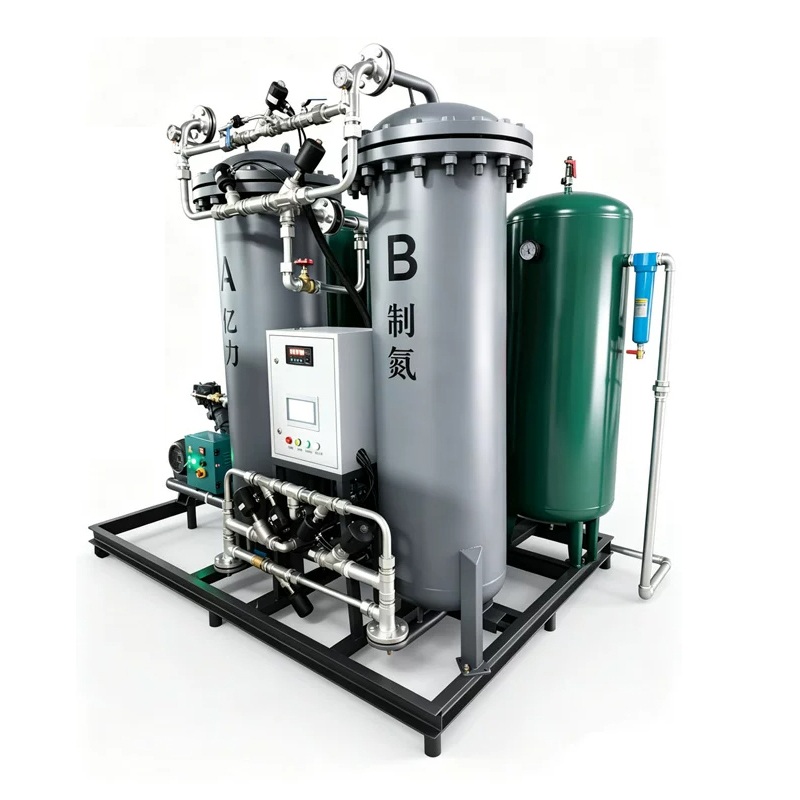
Table of Contents
- Article Outline
- What Is an Integrated PSA Nitrogen Generator?
- How Does an Integrated PSA Nitrogen Generator Work?
- What Makes an Integrated Design Different?
- What Are the Main Advantages?
- How Should You Select the Right Nitrogen Generator?
- Where Can an Integrated PSA Nitrogen Generator Be Used?
- How Can Installation and Operation Be Improved?
- What Maintenance Does the System Need?
- Integrated PSA Nitrogen Generator vs. Traditional Nitrogen Supply
- Frequently Asked Questions
- Conclusion
Article Outline
- Understanding the basic structure and purpose of an Integrated PSA Nitrogen Generator
- Explaining the nitrogen separation process and adsorption cycle
- Examining the advantages of an integrated skid-mounted configuration
- Identifying important technical parameters before purchasing
- Matching nitrogen production with different industrial applications
- Reducing operating problems through correct installation and maintenance
- Comparing on-site PSA generation with conventional nitrogen supply methods
- Answering common questions from industrial buyers and operators
What Is an Integrated PSA Nitrogen Generator?
An Integrated PSA Nitrogen Generator is an on-site gas generation system designed to separate nitrogen from compressed atmospheric air. PSA stands for Pressure Swing Adsorption, a technology that uses adsorbent materials to preferentially remove oxygen and other unwanted components from compressed air while allowing nitrogen to pass through as the product gas.
Unlike a conventional nitrogen supply arrangement that may depend on cylinders, tube trailers, or liquid nitrogen storage tanks, an on-site generator produces nitrogen according to the actual demand of the facility. This can be especially useful for factories that require a stable nitrogen supply for long operating hours or continuous production.
The integrated configuration places key components into a coordinated package rather than requiring the customer to construct a complicated gas-generation system from separate equipment. A properly designed system can combine nitrogen separation, filtration, monitoring, control, and supporting components into a compact footprint.
For industrial users, the objective is not simply to generate nitrogen. The real goal is to obtain the required purity, flow, pressure, stability, and availability without creating unnecessary complexity in the production environment.
How Does an Integrated PSA Nitrogen Generator Work?
The operating principle is based on the different adsorption characteristics of gases. Compressed air contains primarily nitrogen and oxygen, along with smaller quantities of argon, carbon dioxide, water vapor, and other components. During PSA operation, carbon molecular sieve material preferentially adsorbs oxygen and allows nitrogen-rich gas to pass through.
A typical cycle can be understood through the following stages:
- Compressed air preparation: Atmospheric air is compressed before entering the nitrogen generation system. Filtration and moisture removal help protect downstream components.
- Air distribution: Prepared compressed air enters the adsorption vessels through a controlled flow path.
- Adsorption: Carbon molecular sieve selectively adsorbs oxygen and other unwanted components under pressure.
- Nitrogen production: Nitrogen-rich gas exits the adsorption vessel and is directed toward the product-gas outlet.
- Pressure reduction: The saturated adsorbent is regenerated by reducing pressure, allowing the adsorbed gases to be released.
- Regeneration and switching: Another adsorption vessel takes over nitrogen production while the first vessel regenerates.
- Continuous cycling: The vessels alternate between adsorption and regeneration to maintain a stable nitrogen supply.
This cyclic process is one of the reasons PSA technology is suitable for continuous industrial operation. Instead of consuming stored nitrogen, the facility can generate product gas whenever compressed air and electrical power are available.
The performance of the system depends on several variables, including feed-air quality, pressure, adsorption material, cycle timing, nitrogen demand, required purity, and operating temperature.
What Makes an Integrated Design Different?
One of the most important benefits of an integrated system is that multiple functional elements are coordinated within a compact equipment package. This approach can reduce the engineering burden placed on the end user.
A conventional gas-generation project may require separate equipment selection, piping design, control integration, filtration arrangements, and installation planning. An integrated configuration aims to simplify these tasks by providing a more complete system architecture.
| Design Consideration | Potential Benefit |
|---|---|
| Compact skid-mounted structure | Reduces floor-space requirements and simplifies equipment arrangement |
| Integrated control system | Makes startup, monitoring, and daily operation easier |
| Online nitrogen purity monitoring | Allows operators to observe product-gas quality during operation |
| Air filtration system | Helps remove moisture, oil, and particulate contamination |
| Automated PSA cycling | Supports repeatable adsorption and regeneration processes |
| Compact piping layout | Can reduce installation complexity and unnecessary connections |
For facilities with limited space, the compact structure can be particularly valuable. Instead of allocating a large area to multiple individual pieces of equipment, the generator can be incorporated into an organized production-gas system.
What Are the Main Advantages of an Integrated PSA Nitrogen Generator?
1. On-Site Nitrogen Production
Producing nitrogen at the point of consumption can reduce dependence on external deliveries. This is useful when transportation schedules, cylinder replacement, or liquid nitrogen replenishment creates operational uncertainty.
2. Flexible Nitrogen Purity
Different industrial processes require different nitrogen specifications. Some applications need nitrogen primarily for inerting, while others require a much higher purity level. A properly configured PSA generator can be designed around the required nitrogen purity instead of forcing every application to purchase the same fixed-grade gas.
Integrated PSA systems can be configured across a broad purity range. The appropriate setting should always be selected according to the actual process requirement rather than automatically choosing the highest available purity.
3. Reduced Gas Logistics
When nitrogen is delivered in cylinders or bulk form, users must manage ordering, transportation, storage, handling, and replacement. On-site generation can simplify this supply chain by turning atmospheric air into the feedstock for nitrogen production.
4. Space Efficiency
An integrated skid-mounted configuration can be advantageous where factory floor space is limited. A compact arrangement also makes equipment positioning and connection planning easier.
5. Automated Operation
Modern systems can use PLC-based controls and touchscreen interfaces to display operating information and support automated startup and continuous operation. This reduces the need for operators to manually manage each PSA cycle.
6. Lower Long-Term Operating Burden
The economic advantage of an on-site nitrogen generator depends on operating hours, nitrogen consumption, electricity costs, required purity, and the alternative gas-supply price. However, for facilities with steady nitrogen demand, producing gas on-site can offer an attractive long-term operating model.
How Should You Select the Right Nitrogen Generator?
Buying a nitrogen generator based only on advertised capacity can lead to poor results. The equipment should be selected from the process requirements backward.
Start by defining the following parameters:
- Nitrogen flow rate: Determine the normal and peak consumption in Nm³/h.
- Required purity: Establish whether the process requires 95%, 99%, 99.9%, 99.99%, 99.999%, or another purity level.
- Required pressure: Confirm the minimum and maximum nitrogen pressure required at the point of use.
- Operating schedule: Consider whether the generator will operate intermittently, during one shift, or continuously.
- Feed-air quality: Check compressor performance, oil content, moisture, temperature, and filtration requirements.
- Installation space: Measure the available floor area and consider maintenance access.
- Ambient conditions: Temperature, humidity, altitude, ventilation, and dust levels can influence system performance.
- Future expansion: If production is expected to increase, consider whether additional nitrogen capacity will be required.
| Parameter | Typical Consideration | Why It Matters |
|---|---|---|
| Nitrogen capacity | 1–3000 Nm³/h depending on configuration | Determines whether production demand can be covered |
| Nitrogen purity | Approximately 95%–99.999% | Affects process suitability and energy consumption |
| Product pressure | Approximately 0.1–0.8 MPa depending on design | Must match downstream equipment requirements |
| Dew point | Approximately -40°C to -70°C for suitable configurations | Important for moisture-sensitive applications |
| Control system | PLC and touchscreen monitoring | Supports automated operation and process visibility |
The values above should be treated as equipment-selection references rather than universal operating limits. Final specifications should be confirmed according to the selected model and actual working conditions.
Where Can an Integrated PSA Nitrogen Generator Be Used?
Nitrogen is used in many processes because it is relatively inert and can reduce unwanted contact between oxygen and sensitive materials. The exact purity and pressure requirements vary considerably between industries.
New Energy Manufacturing
Battery and other new-energy manufacturing processes may require controlled atmospheres during specific production or handling stages. Nitrogen can help reduce unwanted oxidation and improve environmental control.
Electronics Processing
Electronics manufacturing often requires controlled gas conditions for processes involving oxidation-sensitive components and materials. Stable nitrogen quality can help maintain process consistency.
Food Packaging
Nitrogen can be used to displace oxygen in selected food-packaging applications. The objective may be to help protect products from oxidation and maintain packaging conditions during storage.
Pharmaceutical Manufacturing
Pharmaceutical processes can require controlled gas environments for manufacturing, storage, blanketing, or other specialized operations. Gas purity requirements should be determined according to the specific process and applicable regulations.
Aerospace and Automotive Production
Nitrogen may be used in heat treatment, inerting, component manufacturing, testing, and other industrial processes where controlled gas conditions are required.
Metal Processing
Some metalworking and thermal-processing operations use nitrogen to reduce oxidation or create a controlled atmosphere around sensitive materials.
How Can Installation and Operation Be Improved?
Even a well-designed nitrogen generator can perform poorly if the supporting air system is incorrectly configured. Installation should therefore be treated as part of the complete gas-generation project.
Check the Air Compressor
The PSA generator depends on an adequate supply of compressed air. The compressor must provide sufficient flow and pressure without excessive fluctuations. Undersizing the compressor can result in insufficient nitrogen capacity or unstable operation.
Protect the Carbon Molecular Sieve
Oil, liquid water, excessive moisture, and particulate contamination can affect adsorption performance and shorten the service life of critical components. Appropriate upstream filtration and air treatment are therefore essential.
Provide Adequate Ventilation
The equipment room should have suitable ventilation and enough clearance around the generator for inspection and maintenance. Operators should also follow the manufacturer's installation requirements for ambient temperature and environmental conditions.
Set the Correct Nitrogen Demand
Operating a generator at an unnecessarily high purity level can increase resource consumption. If the process only needs a moderate purity, there may be little practical benefit in continuously producing ultra-high-purity nitrogen.
Monitor Product Gas Quality
Online nitrogen analysis provides useful information about product quality. A sudden change in purity can indicate problems such as feed-air contamination, adsorption material degradation, abnormal pressure conditions, valve issues, or incorrect operating parameters.
What Maintenance Does the System Need?
Preventive maintenance is essential for maintaining nitrogen purity and production stability. Maintenance intervals should follow the manufacturer's recommendations and actual operating conditions.
- Inspect air filters and replace filter elements when required.
- Check for oil or water contamination in the compressed-air system.
- Inspect valves, fittings, pipelines, and connections for leakage.
- Verify nitrogen analyzer readings regularly.
- Review operating pressure and cycle parameters.
- Keep the equipment room clean and adequately ventilated.
- Inspect electrical connections and control-system components.
- Monitor changes in nitrogen purity and production capacity.
- Maintain records of operating hours, alarms, maintenance, and replacement parts.
A useful maintenance strategy is to monitor trends rather than waiting for complete equipment failure. Gradual increases in compressed-air consumption, declining nitrogen purity, abnormal pressure changes, or increasingly frequent alarms can provide early indications of developing problems.
Integrated PSA Nitrogen Generator vs. Traditional Nitrogen Supply
| Factor | Integrated PSA Nitrogen Generator | Cylinders or Bulk Nitrogen |
|---|---|---|
| Gas source | Generated from atmospheric air | Delivered from external supplier |
| Supply logistics | Reduced dependence on deliveries | Requires regular delivery management |
| On-site production | Yes | No |
| Storage requirements | Generally lower for primary supply | Requires cylinder or bulk storage arrangements |
| Purity flexibility | Can be configured for application requirements | Usually purchased as a defined gas grade |
| Production scalability | Can be designed around current and future demand | Requires adjustment of delivery volume |
| Operational control | Local generation and monitoring | Dependent on external supply availability |
Neither supply method is universally superior. Low-consumption facilities with occasional nitrogen demand may find cylinders practical, while facilities with stable and substantial consumption may benefit more from on-site generation. The correct decision should be based on total consumption, purity, pressure, operating hours, logistics, and lifecycle cost.
Frequently Asked Questions
1. What is the main purpose of an Integrated PSA Nitrogen Generator?
Its primary purpose is to produce nitrogen on-site by separating nitrogen from compressed atmospheric air through pressure swing adsorption. It is designed to provide a controlled nitrogen supply for industrial applications without relying entirely on external gas deliveries.
2. What nitrogen purity can a PSA generator produce?
The achievable purity depends on the equipment design, carbon molecular sieve, operating pressure, cycle parameters, and required production rate. Integrated PSA systems can be configured for a broad purity range, with some models designed to reach up to 99.999% nitrogen purity.
3. Does an Integrated PSA Nitrogen Generator require an air compressor?
Yes. PSA nitrogen generation requires compressed air as the feed gas. The compressor and air-treatment system should be correctly matched to the nitrogen generator's required flow and pressure.
4. How quickly can the system produce nitrogen?
Startup time depends on the system design and operating conditions. A properly configured unit can reach qualified nitrogen production relatively quickly after startup, while actual stabilization time should be confirmed for the selected model and application.
5. Is PSA nitrogen generation suitable for continuous production?
Yes. PSA technology uses alternating adsorption and regeneration cycles, allowing continuous nitrogen production when the system is correctly sized, installed, and maintained.
6. How do I determine the required nitrogen generator capacity?
Calculate the average and peak nitrogen consumption of all connected equipment. Then consider pressure requirements, required purity, operating schedule, future expansion, and appropriate design margin. Avoid selecting capacity based only on the largest single piece of equipment.
7. What industries can use an Integrated PSA Nitrogen Generator?
Applications can include new energy, electronics, pharmaceuticals, food packaging, aerospace, automotive manufacturing, metallurgy, petroleum, chemical processing, and other industries that require controlled nitrogen supply.
8. What happens if the nitrogen purity becomes unstable?
Operators should first check feed-air quality, compressor performance, pressure conditions, filtration, valves, adsorption vessels, analyzer accuracy, and cycle settings. A sudden purity drop should be investigated rather than ignored because it may indicate a developing system problem.
9. Can the nitrogen generator be customized?
Yes. Industrial nitrogen systems can be configured according to required flow, purity, pressure, operating environment, control requirements, and installation conditions. Guangdong Yili Machinery Equipment Co., Ltd. provides customized equipment solutions according to customer requirements.
10. What should I provide when requesting a nitrogen generator quotation?
Provide the required nitrogen flow rate, purity, pressure, operating hours, application, installation environment, power supply conditions, and any special control or certification requirements. More complete operating information allows the equipment supplier to recommend a more suitable configuration.
Conclusion
An Integrated PSA Nitrogen Generator can provide a practical solution for industrial facilities that need a stable and controllable nitrogen supply. Instead of depending entirely on external gas deliveries, users can generate nitrogen on-site from compressed air while controlling important parameters such as purity, pressure, and production capacity.
The most important point is to select the system according to the actual process rather than focusing on a single specification. Nitrogen purity, flow rate, pressure, compressed-air quality, operating schedule, environmental conditions, maintenance requirements, and future production growth should all be evaluated together.
A compact integrated configuration can further simplify installation and daily operation by combining essential components into a coordinated system. With appropriate air treatment, correct sizing, regular maintenance, and continuous monitoring, PSA nitrogen generation can become a reliable part of an industrial gas infrastructure.
Guangdong Yili Machinery Equipment Co., Ltd. specializes in air compressors and PSA nitrogen generation equipment and provides nitrogen-generation solutions for different industrial requirements. Whether you need a compact system for a specific production line or a higher-capacity solution for continuous factory operation, selecting the right configuration is the key to achieving stable performance and efficient gas supply.
Looking for a Reliable Integrated PSA Nitrogen Generator?
If your facility needs stable nitrogen purity, dependable production capacity, compact equipment design, or a customized gas-generation solution, Guangdong Yili Machinery Equipment Co., Ltd. can help evaluate your operating requirements and develop a suitable configuration. Contact us today to discuss your nitrogen demand, technical parameters, and customized Integrated PSA Nitrogen Generator solution.
