

How Does Cable Built Inside Electric Mast Improve Marine Equipment Performance?
2026-09-18
For modern marine equipment, electrical integration is no longer simply about adding a motor and connecting external wires. A well-designed Cable Built Inside Electric Mast solution integrates the cable routing within the mast structure, helping create a cleaner, more organized, and more practical electrical system. In marine applications, where equipment must deal with vibration, moisture, limited installation space, and frequent movement, internal cable routing can simplify installation while improving overall system integration. Electric mast systems are already used for powered lifting, lowering, furling, lighting, communication, and other onboard functions, making reliable cable management an important part of system design.
For shipbuilders, yacht manufacturers, marine equipment distributors, and project contractors, Homall Industry Limited provides customized solutions designed around different vessel structures and application requirements. A major advantage is support for ship-type customization, allowing the mast and internal cable arrangement to be adapted to different boat sizes, deck layouts, operating environments, and installation conditions.
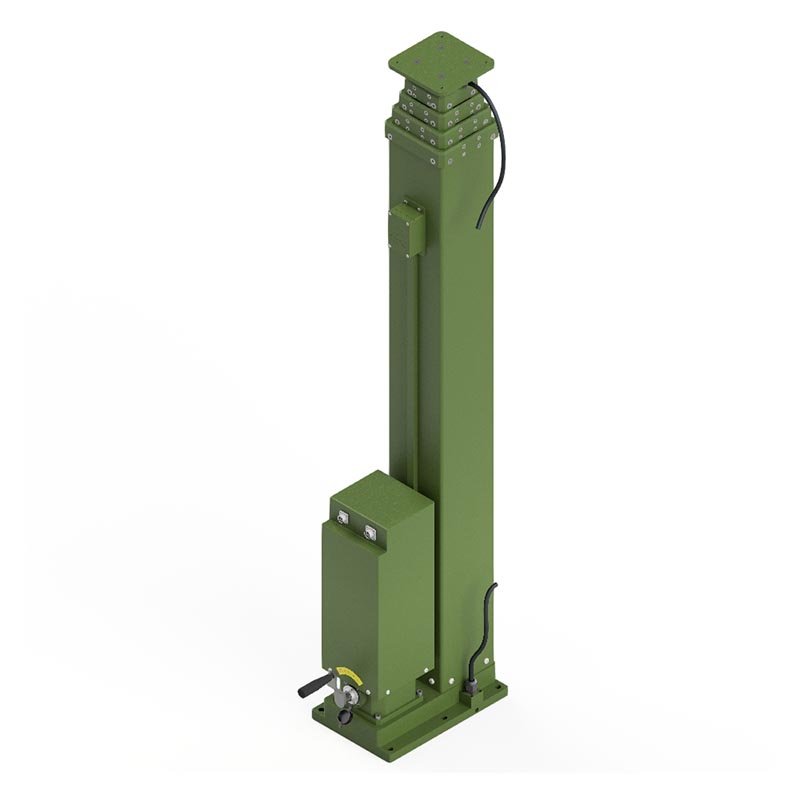
What Is a Cable Built Inside Electric Mast?
A Cable Built Inside Electric Mast is an electric mast structure in which power or control cables are routed through the internal mast space instead of being extensively exposed on the outside.
Depending on the application, internal wiring may serve:
- Electric lifting and lowering systems
- Mast lighting
- Navigation and communication equipment
- Sensors and monitoring devices
- Electric furling mechanisms
- Control systems
- Other marine electrical accessories
Marine electrical systems commonly require cables to be properly secured, protected from water, and routed away from sharp edges or damaging areas.
By incorporating cable routing into the mast design from the beginning, manufacturers can achieve better integration between the structural and electrical components.
Why Is Internal Cable Routing Important?
A conventional external cable arrangement may require additional clips, conduits, protective sleeves, and fixing points. This can increase installation complexity and create more exposed components.
A Cable Built Inside Electric Mast can provide several practical benefits.
| Feature | External Cable Arrangement | Internal Cable Arrangement |
|---|---|---|
| Appearance | More visible wiring | Cleaner appearance |
| Cable protection | Requires external protection | Better structural integration |
| Installation | More routing and fixing work | Integrated routing |
| Space utilization | Requires additional external space | Uses internal mast space |
| Maintenance | More external components | More centralized routing |
| Customization | Depends on installation conditions | Can be designed with the mast |
The actual performance depends on cable specifications, sealing, structural design, installation quality, and the operating environment. Internal routing should therefore be treated as part of the overall mast engineering rather than simply hiding a cable inside a tube.
How Does a Cable Built Inside Electric Mast Work?
The basic principle is straightforward.
First, the mast structure is designed with an internal cable passage. The cable is then routed through the designated channel and connected to the relevant motor, control unit, sensor, lighting equipment, or electrical interface.
For moving systems, engineers also need to consider cable length, bending, movement range, fixing points, and protection against abrasion. Electric furling mast documentation, for example, emphasizes keeping cable runs appropriately managed and protecting wiring from water and mechanical damage.
A typical design process may include:
- Define the vessel application
- Determine mast dimensions and mounting position
- Calculate cable routing requirements
- Select suitable cable specifications
- Design internal cable passages and protection
- Integrate motor and control components
- Conduct electrical and mechanical testing
- Adapt the final assembly to the vessel
This integrated approach is particularly valuable for customized marine projects.
What Are the Main Performance Benefits?
Cleaner Installation
Internal cable routing reduces visible wiring around the mast and creates a more integrated appearance. This is particularly useful for yachts and vessels where deck appearance and equipment integration are important.
Better Space Utilization
Marine vessels often have limited installation space. Placing the cable inside the mast allows the existing mast structure to perform both structural and cable-management functions.
Reduced External Exposure
External cables may be exposed to mechanical contact, movement, weather, and other environmental factors. An internal routing design can reduce direct exposure, although appropriate sealing and protection are still essential.
Easier System Integration
When the cable route is considered during mast manufacturing, electrical components can be positioned according to the actual vessel configuration. This can make the complete system more coordinated.
Flexible Customization
Different boats have different deck heights, mast positions, equipment loads, cable lengths, control requirements, and operating conditions. A standardized mast may not always fit these requirements.
This is where ship-type customization becomes particularly important.
Why Does Ship-Type Customization Matter?
A fishing boat, sailing yacht, sightseeing vessel, workboat, and luxury yacht can have completely different requirements.
For example:
- Small boats may prioritize compact dimensions and simple operation.
- Yachts may emphasize appearance, low-noise operation, and equipment integration.
- Commercial vessels may focus on durability and operational reliability.
- Workboats may require robust structures and convenient maintenance.
- Special-purpose vessels may require non-standard dimensions and customized electrical interfaces.
Homall Industry Limited can develop the mast configuration according to the vessel's specific requirements instead of applying exactly the same structure to every ship.
Customization may involve:
- Mast dimensions
- Mounting configuration
- Cable routing
- Cable length
- Motor configuration
- Control system
- Equipment interface
- Structural requirements
- Surface treatment
- Vessel-specific installation conditions
This makes the Cable Built Inside Electric Mast concept especially suitable for OEM and project-based marine applications.
How Can Homall Industry Limited Support Marine Projects?
For B2B customers, the value of an electric mast is not only the individual product but also how effectively it can integrate into the customer's vessel.
Homall Industry Limited focuses on providing customized industrial solutions according to project requirements. For marine applications, the company can work with customers on mast dimensions, cable integration, installation requirements, and vessel-specific configurations.
A customized workflow can include:
Vessel requirements → Technical discussion → Structural design → Cable integration → Prototype/sample → Testing → Mass production
This approach helps shipbuilders and equipment suppliers reduce unnecessary modifications during installation.
What Should Buyers Check Before Ordering?
When purchasing a Cable Built Inside Electric Mast, buyers should consider more than mast height and motor power.
Key evaluation points
- Cable routing and protection
- Mast material and structural strength
- Motor performance
- Operating voltage
- Control method
- Waterproofing requirements
- Cable bending and movement
- Installation space
- Maintenance accessibility
- Vessel type and operating environment
- Customization requirements
For marine applications, electrical wiring should be properly secured and protected, while grounding and lightning-protection arrangements also need to be considered according to the vessel's electrical design.
Why Choose a Customized Electric Mast?
A customized electric mast can be developed around the actual vessel instead of forcing the vessel to accommodate a standard product.
For OEM buyers, this can provide greater flexibility in:
- Product dimensions
- Electrical configuration
- Installation position
- Cable routing
- Control interfaces
- Appearance
- Vessel compatibility
The result is a more integrated solution that combines mechanical structure, electrical wiring, and vessel-specific requirements.
Conclusion
A Cable Built Inside Electric Mast is more than an alternative cable-routing method. It is an integrated design approach that can improve installation organization, space utilization, equipment integration, and overall appearance when properly engineered.
For marine equipment manufacturers and shipbuilders, ship-type customization is especially valuable because different vessels require different dimensions, electrical systems, installation methods, and operating conditions. With customized mast structures and integrated cable solutions, Homall Industry Limited can support projects ranging from standard applications to specialized vessel configurations.
If you are developing a customized marine electric mast, need internal cable integration, or require a solution adapted to a specific boat or vessel design, contact us to discuss your requirements with Homall Industry Limited and explore a suitable customized solution.