

How Does Current Rating Affect Low Voltage Circuit Breaker Selection?
2026-11-23
Current rating is one of the first specifications engineers check when selecting a Low Voltage Circuit Breaker, but choosing the correct ampere value involves more than matching the device to the normal operating current. The rating must be considered alongside the load profile, conductor capacity, ambient temperature, installation conditions, and prospective short-circuit current. A breaker with an unsuitable rating may trip during normal operation or fail to provide the intended level of overload protection for the connected wiring.
For DC distribution and equipment protection, Wenzhou Zhechi Electric Co., Ltd. offers miniature circuit breaker configurations with a rated voltage of 250V DC and current options including 63A, 125A, or below, depending on the selected model. Understanding how rated current relates to actual load demand helps engineers narrow down the correct specification before checking breaking capacity, pole configuration, and connection requirements. The objective is to select a device that supports reliable operation while remaining compatible with the complete electrical system.
How Does Rated Current Determine the Right Breaker Size?
Rated current, commonly marked as In, is the current value assigned to a circuit breaker under specified operating conditions. It provides a reference for selecting a protective device according to the expected load and the capacity of the circuit conductors. However, it should not be confused with the instantaneous current flowing through a circuit or the maximum short-circuit current that a breaker can interrupt.
In a practical installation, the load current is determined by the equipment connected to the circuit. A DC power supply, control cabinet, communication system, or industrial device may draw a relatively stable current during normal operation. Other loads, such as motors and capacitive equipment, can have starting or transient current characteristics that need additional consideration.
The selected rated current must be suitable for the normal operating demand while also allowing the protective device to respond appropriately to overload conditions. Selecting a breaker solely because its ampere rating is close to the measured operating current can lead to unnecessary tripping or inadequate protection.
Three current values should be distinguished during selection:
- Design current (Ib): The current expected to flow through the circuit during normal operation, based on the connected load and its operating conditions.
- Rated current (In): The current rating assigned to the circuit breaker under its specified reference conditions.
- Conductor current-carrying capacity (Iz): The maximum current that the cable or conductor can carry continuously under the applicable installation conditions without exceeding its permitted temperature.
For many conventional circuit protection designs, the relationship between these values is expressed as Ib less than or equal to In, and In less than or equal to Iz. This is a useful starting point, but the complete protection design must also account for the protective device's operating characteristics and the applicable electrical installation standard.
Consider a DC control circuit with a calculated continuous load current of 28A. A 32A breaker might appear to be a reasonable candidate. However, the engineer must still confirm that the conductor has sufficient corrected current-carrying capacity, that the breaker can accommodate the load's operating profile, and that the device's trip characteristics are suitable. If the installation is exposed to high ambient temperatures or enclosed in a crowded distribution cabinet, further derating may be necessary.
Our product selection process starts with the actual application rather than the ampere marking alone. This helps distinguish between the current needed for normal operation and the electrical conditions that the protective device must withstand during a fault.
Why Must Load Characteristics and Installation Conditions Be Considered?
Two circuits with the same normal operating current may require different breaker configurations because their loads and installation environments are not necessarily identical. Current rating is affected by how the equipment operates, how frequently the load changes, and how effectively heat can dissipate from the breaker and connected conductors.
A resistive load generally has a more predictable current profile once it reaches its operating condition. A motor-driven load may draw a higher current during starting, while capacitive equipment can produce a brief inrush when power is first applied. If these temporary current demands are not considered, the selected breaker may trip even though the circuit is operating as intended.
Engineers should examine the following application factors before confirming the ampere rating.
- Continuous load: Determine the expected current during the longest normal operating period rather than relying only on a brief measurement.
- Starting and inrush current: Identify temporary current peaks from motors, capacitors, power converters, and other equipment.
- Load variation: Consider whether the equipment operates at a constant demand or experiences frequent changes in current.
- Conductor size: Confirm that the cable's corrected current-carrying capacity is compatible with the selected protective device.
- Ambient temperature: High surrounding temperatures can affect thermal trip behaviour and the usable current capacity of a breaker.
- Enclosure conditions: Closely installed devices and restricted ventilation can increase heat accumulation inside a distribution cabinet.
- Altitude and installation environment: Where relevant, verify whether the manufacturer specifies adjustments for the installation altitude or other environmental conditions.
Temperature is particularly important for miniature circuit breakers that use thermal-magnetic protection. The reference conditions under which a rated current is specified may differ from the actual conditions inside an electrical enclosure. When the surrounding temperature rises, the thermal element may respond differently. Adjacent devices can also contribute to mutual heating, especially when several breakers carry substantial loads inside a compact panel.
For this reason, engineers should use the manufacturer's temperature correction and installation guidance rather than applying a universal derating factor. Different breaker designs and trip mechanisms do not necessarily respond to temperature in the same way.
Load characteristics also affect the choice of trip characteristics. A circuit supplying equipment with a significant starting current may require a different trip curve from a circuit with a stable resistive load. The appropriate curve must still provide the required protection for the conductor and connected equipment. Increasing the rated current simply to prevent nuisance tripping is not a sound substitute for checking the actual load profile.
For DC systems, source behaviour should be included in the assessment. Battery banks, photovoltaic sources, DC power supplies, and converter-fed loads can produce different fault-current conditions. Their contribution to a fault depends on the source design, internal impedance, control strategy, and circuit arrangement.
Wenzhou Zhechi Electric Co., Ltd. provides DC miniature breaker options for electrical equipment and distribution applications. Our factory's product range includes configurations intended for overload and short-circuit protection. When evaluating a model, our engineering review should consider the actual load current, conductor size, ambient temperature, and source characteristics together rather than treating rated current as an isolated specification.
Which Current Ratings and Product Specifications Are Available?
The available current rating determines which loads a protective device can serve, but the selected ampere value must always be considered within the product's voltage and interruption limits. A breaker rated for a particular current is not automatically suitable for every circuit operating at that current. Voltage, prospective fault current, pole arrangement, and the manufacturer's specified connection method remain essential selection factors.
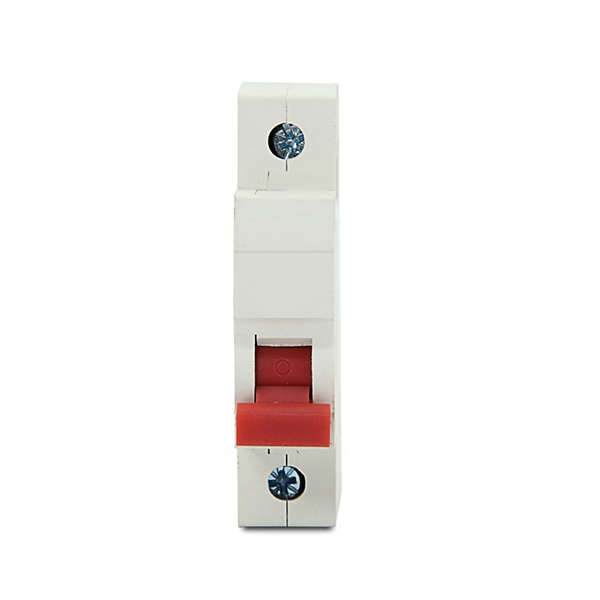
The ZHECHI DC miniature breaker information supplied for this product range identifies a rated voltage of 250V DC and current options including 63A, 125A, or below, depending on the configuration. These options provide a starting point for matching the device to different DC circuit requirements.
| Product specification | Available information | Selection consideration |
| Product category | DC miniature circuit breaker | Confirm that the product is intended for the specific DC application |
| Rated voltage | 250V DC | Must match the system voltage and approved connection arrangement |
| Current options | 63A, 125A, or below, depending on model | Select according to load demand and conductor protection requirements |
| Pole configurations | 1P, 2P, 3P, and 4P | Match the number of switched conductors and the approved DC wiring diagram |
| Protection functions | Overload and short-circuit protection | Check trip characteristics and fault interruption capability |
| Housing material | Thermoplastic shell | Review enclosure construction and applicable material specifications |
| Terminal design | U-tunnel terminal | Verify conductor compatibility and tightening requirements |
| Thermal design | Airflow cooling between adjacent breakers | Consider panel ventilation, spacing, and operating temperature |
| Operating interface | Ergonomic safety handle | Provides a manual switching interface |
| Referenced standards | IEC 60898 and GB 10963, as listed in supplied product information | Confirm the applicable standard, edition, scope, and model-specific evidence |
The 63A and 125A options should not be interpreted as interchangeable ratings for the same installation. The correct choice depends on the actual current demand and the capacity of the conductors. A higher-rated breaker may be appropriate for a circuit with greater continuous demand, but only when the wiring, terminals, connected equipment, and protection requirements are designed for that current.
Similarly, the 250V DC rating must be checked against the system voltage and the manufacturer's connection instructions. DC pole arrangements can affect the voltage handled by each interruption path. Engineers should not assume that a particular number of poles automatically permits a specific series connection or higher voltage rating.
The product range also identifies 1P, 2P, 3P, and 4P configurations. The choice depends on the circuit topology and the conductors that need to be switched. A single-pole arrangement may suit certain branch circuits, while multi-pole configurations may be required for other DC systems. The approved wiring diagram for the selected model must determine the final connection method.
Other construction details also matter during installation. The thermoplastic housing, U-tunnel terminal, and airflow cooling design contribute to the overall product construction. Our product evaluation should include terminal compatibility, conductor preparation, installation spacing, and the thermal conditions inside the distribution assembly. These factors help ensure that the breaker operates within its specified conditions.
Some technical values have not been provided in the current product information, including model-specific breaking capacity, trip curves, conductor size range, tightening torque, dimensions, and detailed derating tables. These specifications should be confirmed from the exact model datasheet before final engineering approval or bulk purchasing.
How Should Engineers Verify Current Rating Before Purchasing?
A reliable selection process begins with a clear understanding of the circuit. Instead of choosing a familiar ampere value first, engineers should establish the expected load, conductor capacity, operating environment, and fault conditions. This approach makes it easier to identify a suitable product configuration and reduces the risk of selecting a breaker based on incomplete information.
The following sequence can be used during technical evaluation:
- Calculate the design current. Determine the expected operating current from the equipment load, supply voltage, efficiency, and operating conditions. For multiple loads, consider whether they operate simultaneously and apply the appropriate demand assumptions.
- Check the conductor capacity. Identify the cable material, cross-sectional area, insulation rating, installation method, and ambient conditions. Calculate the corrected current-carrying capacity where required.
- Compare the current values. Confirm that the selected breaker rating is appropriate for the design current and does not exceed the conductor's permitted protection limit under the applicable rules.
- Review the trip characteristics. Check whether the overload and instantaneous trip behaviour is compatible with the load's normal starting and transient current.
- Verify the fault level. Determine the prospective short-circuit current and confirm that the device's rated breaking capacity is sufficient at the actual system voltage.
- Confirm voltage and pole arrangement. Check the DC voltage rating, polarity requirements, terminal connections, and approved wiring diagram.
- Review environmental conditions. Assess temperature, enclosure ventilation, installation spacing, altitude, and any manufacturer-specific derating requirements.
- Check documentation. Obtain the current datasheet, applicable test reports, installation instructions, and conformity information for the exact model.
A simple example illustrates why this process matters. Suppose an industrial DC control circuit has a calculated design current of 42A. A 63A model may appear suitable based on its nominal current rating. However, the engineer must first verify that the conductor can be protected by the selected device, that the load does not create problematic starting current, and that the breaker has adequate short-circuit breaking capacity for the installation. If the device is installed in a hot, enclosed cabinet, the manufacturer's derating guidance must also be reviewed.
This example is not a universal recommendation to use a 63A breaker for a 42A load. The final rating depends on the exact product characteristics, cable installation conditions, applicable electrical regulations, and system fault level.
Procurement teams should also distinguish between rated current and breaking capacity when comparing suppliers. Rated current concerns the device's intended current-carrying and protection conditions. Breaking capacity describes the maximum fault current that the breaker is rated to interrupt under specified test conditions. A higher ampere rating does not automatically mean a higher short-circuit breaking capacity.
Zhechi supplies DC miniature circuit breaker options for electrical equipment and distribution applications. Our factory can provide product information for evaluating current options, pole configurations, and installation requirements. Our technical team should receive the system voltage, expected load current, cable details, prospective short-circuit current, and required pole arrangement so that the appropriate model information can be checked before an order is confirmed.
For engineers, a complete technical enquiry is more useful than requesting a breaker based on amperage alone. Providing the application details at the beginning helps the supplier identify the relevant product configuration and highlight any specifications that need further confirmation.
Conclusion
Current rating directly affects whether a circuit breaker can support normal load operation while providing appropriate overload protection. The correct selection must account for design current, conductor capacity, load behaviour, ambient temperature, installation conditions, voltage, and prospective short-circuit current. For DC applications, engineers must also verify the approved pole arrangement and the product's specific DC interruption ratings. Wenzhou Zhechi Electric Co., Ltd. offers DC miniature circuit breaker options with a 250V DC rated voltage and current configurations including 63A, 125A, or below, depending on the model. Contact our team with your application details to request the relevant datasheet, confirm technical specifications, and identify a suitable configuration for your electrical protection project.
Frequently Asked Questions
1. Should a circuit breaker's rated current be higher than the normal operating current?
Generally, the rated current must be at least equal to the circuit's design current under the applicable selection rules, but it must also remain compatible with the conductor's corrected current-carrying capacity. Engineers should consider load variation, starting current, ambient temperature, installation method, and the breaker's trip characteristics before choosing the next available rating. Simply selecting a larger ampere value to avoid nuisance tripping can compromise cable protection if the conductor is not adequately sized.
2. Does a higher current rating mean a circuit breaker has a higher short-circuit breaking capacity?
No. Rated current and short-circuit breaking capacity are separate specifications. Rated current indicates the current level associated with normal operation under specified conditions, while breaking capacity identifies the fault current the device can safely interrupt at its rated voltage and test conditions. A breaker with a higher ampere rating may not have a higher breaking capacity. Both values must be checked against the actual electrical system before selection.
3. How do ambient temperature and installation conditions affect the selected breaker current rating?
High ambient temperatures and restricted ventilation can increase the thermal stress experienced by a breaker and may affect its usable current-carrying capability or trip behaviour. Several breakers installed close together can also generate mutual heating inside an enclosure. Engineers should consult the manufacturer's temperature correction and installation derating tables for the exact model. A general correction factor should not be applied without confirming that it is appropriate for the breaker design and installation conditions.