

How does Current Transformer Work?
2026-06-25
Abstract
A Current Transformer (CT) is a critical instrument transformer widely used in electrical power systems for measuring, monitoring, and protecting high-voltage circuits. It converts high primary current into a standardized low secondary current, enabling safe measurement and relay protection. This article explains the working principle, internal structure, types, applications, installation considerations, and maintenance practices of Current Transformers. It also highlights common challenges users face in real-world operations and how reliable solutions—such as those provided by Dahu—help ensure system stability, safety, and long-term performance.
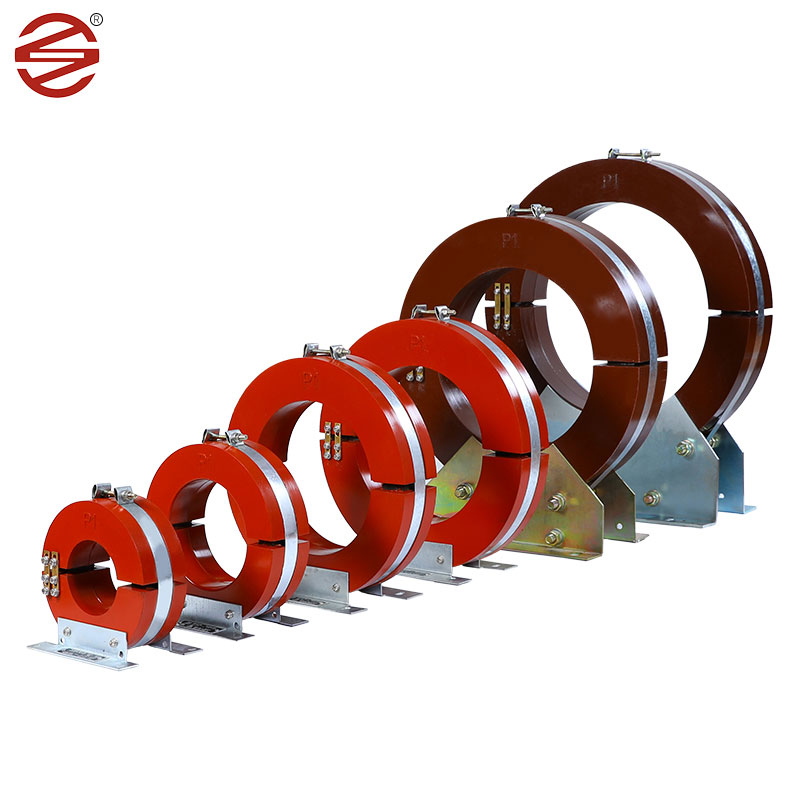
Table of Contents
- Introduction to Current Transformer
- Working Principle
- Types of Current Transformers
- Key Applications
- How to Select the Right CT
- Installation Considerations
- Maintenance Practices
- Common Problems and Troubleshooting
- Advantages of Current Transformers
- FAQ
- Conclusion
Introduction to Current Transformer
A Current Transformer is a type of instrument transformer designed to step down high current values in power systems to a safe, measurable level. It is commonly used in metering and protection circuits where direct measurement of high current would be unsafe or impractical. CTs are essential in substations, industrial plants, and energy distribution systems where accurate current monitoring is required.
Without Current Transformers, electrical engineers would face significant safety risks and technical limitations when attempting to measure large-scale currents directly. This is why CTs are fundamental components in modern electrical infrastructure.
Working Principle
The working principle of a Current Transformer is based on electromagnetic induction. When alternating current flows through the primary winding, it generates a magnetic flux in the core. This flux induces a proportional current in the secondary winding.
The relationship between primary and secondary current is defined by the turns ratio:
Primary Current ÷ Secondary Current = Number of Primary Turns ÷ Number of Secondary Turns
This transformation ensures that high currents can be safely reduced to standardized levels such as 1A or 5A for measurement instruments and protection relays.
In practice, CTs must operate with high accuracy under varying load conditions. This is where engineering precision from manufacturers like Dahu becomes critical, ensuring stable magnetic performance and low ratio error.
Types of Current Transformers
Current Transformers come in several types, each designed for specific applications:
- Wound CT: Primary winding physically connected in series with the circuit.
- Bar-type CT: Uses a straight conductor acting as the primary winding.
- Window CT: Cable passes through a toroidal core without direct electrical connection.
- Split-core CT: Designed for easy installation without disconnecting conductors.
Each type offers unique advantages depending on installation conditions, current range, and measurement accuracy requirements.
Key Applications
Current Transformers are widely used in multiple sectors due to their versatility and safety advantages:
- Electrical power metering in substations
- Industrial energy monitoring systems
- Protection relays in transmission lines
- Smart grid and automation systems
- Generator and transformer protection circuits
In large-scale power distribution networks, CTs play a vital role in ensuring system reliability and preventing equipment failure through accurate fault detection.
How to Select the Right CT
Selecting the correct Current Transformer requires careful evaluation of several parameters:
- Primary current rating: Must match system load conditions.
- Accuracy class: Determines measurement precision.
- Burden capacity: Total load on the secondary side.
- Core material: Impacts saturation characteristics and efficiency.
- Installation environment: Indoor, outdoor, or high-temperature conditions.
Choosing incorrectly can lead to measurement errors, system inefficiency, or even protection failure. High-quality solutions from Dahu are designed to minimize these risks through strict manufacturing standards.
Installation Considerations
Proper installation is essential to ensure accurate CT performance and system safety. Key considerations include:
- Ensuring correct polarity (P1 and P2 orientation)
- Avoiding open-circuit operation on secondary winding
- Proper grounding of secondary terminals
- Secure mechanical mounting to prevent vibration
Incorrect installation can lead to dangerous voltage buildup or inaccurate readings. Therefore, professional installation practices are strongly recommended.
Maintenance Practices
Although Current Transformers are generally low-maintenance devices, periodic inspection ensures long-term reliability:
- Check insulation resistance regularly
- Inspect for physical damage or overheating
- Verify terminal tightness
- Clean dust and contamination from surfaces
Preventive maintenance reduces downtime and extends equipment lifespan, especially in harsh industrial environments.
Common Problems and Troubleshooting
Users often encounter operational issues with CTs. Some common problems include:
- Incorrect readings: Often caused by wrong polarity or saturation.
- Overheating: Due to excessive burden or short-circuit conditions.
- Signal distortion: Caused by core saturation under high fault current.
To resolve these issues, engineers should verify wiring configuration, ensure correct load conditions, and use properly rated equipment. High-quality CTs from Dahu reduce such risks significantly due to optimized core design and strict testing procedures.
Advantages of Current Transformers
Current Transformers offer several key benefits that make them indispensable in power systems:
- Safe measurement of high currents
- High accuracy and reliability
- Isolation between primary and secondary circuits
- Compatibility with standard measuring instruments
- Scalability for various system sizes
These advantages make CTs a core component in modern electrical monitoring and protection infrastructure.
FAQ
Q1: What happens if a CT secondary is open-circuited?
An open secondary can generate dangerously high voltage, potentially damaging the transformer and posing a safety risk.
Q2: Can Current Transformers be used for DC current?
No, CTs are designed only for alternating current due to their reliance on electromagnetic induction.
Q3: What is the standard secondary current rating?
Common values are 1A and 5A depending on system design and instrumentation requirements.
Q4: How long does a Current Transformer last?
With proper installation and maintenance, CTs can last for decades without performance degradation.
Conclusion
Current Transformers are essential components in electrical power systems, enabling safe, accurate, and efficient current measurement and protection. Understanding their working principle, types, and installation requirements is crucial for ensuring system reliability and safety.
High-quality manufacturing plays a key role in performance consistency, and Dahu provides reliable Current Transformer solutions designed for demanding industrial applications worldwide.
For more technical support, product selection guidance, or customized solutions, contact us today and connect with the experts at Dahu to ensure your electrical systems operate at peak efficiency.