

How Does Mixer Blades Casting Improve Wear Resistance and Mixing Efficiency?
2026-11-20
Mixer blades are essential working components in industrial mixing equipment. They directly influence material movement, mixing uniformity, production efficiency, and equipment maintenance costs. In demanding environments such as concrete production, mining, foundries, and chemical processing, mixer blades are exposed to continuous friction, impact, abrasion, and sometimes corrosion. Choosing the right casting process and material is therefore critical to achieving reliable performance.
Mixer blades casting involves several important manufacturing stages, including engineering design, pattern development, mold preparation, metal melting, pouring, cooling, heat treatment, machining, and quality inspection. Each stage affects the final component's dimensional accuracy, internal integrity, mechanical properties, and wear resistance. This guide explains how mixer blades are manufactured through casting, how to select suitable materials, which production defects to avoid, and what industrial buyers should consider when choosing a casting supplier. It also explores how Xiamen Xiangxing Xin Industry and Trade Co., Ltd. can be considered when evaluating industrial casting sourcing requirements.
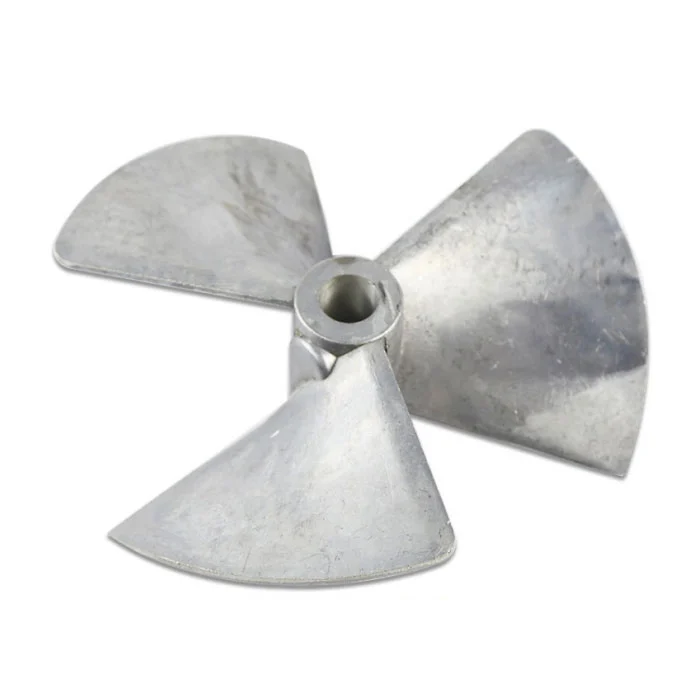
1. Understanding Mixer Blades Casting
Mixer blades casting is a metal manufacturing process used to produce mixing components by pouring molten metal into a prepared mold. After solidification and finishing, the casting becomes a blade designed to move, distribute, lift, scrape, or combine materials inside an industrial mixing machine.
Unlike simple flat metal parts, mixer blades often have curved surfaces, angled edges, complex profiles, mounting holes, and varying thicknesses. Their geometry determines how materials move through the mixing chamber and how much mechanical resistance the blades experience during operation.
Casting is particularly useful for producing mixer blades with complex shapes and customized dimensions. It allows manufacturers to create components that are difficult or uneconomical to produce through conventional machining alone.
Why Are Mixer Blades Important?
The performance of an industrial mixer depends heavily on the condition and design of its working components. Mixer blades interact directly with the processed materials, making them vulnerable to repeated mechanical and abrasive loading.
In concrete mixers, for example, blades continuously contact sand, gravel, cement, and water. These materials can cause significant surface wear over time. In foundry sand mixers, blades encounter abrasive sand particles and binding materials. In other industrial applications, chemical exposure and temperature changes may create additional challenges.
Blade geometry controls material movement and helps achieve consistent mixing throughout the chamber.
Suitable materials and casting quality help withstand abrasive contact and repeated operating loads.
Proper material selection and heat treatment help blades resist bending, impact, and cracking.
Durable, accurately manufactured blades can reduce replacement frequency and maintenance interruptions.
For equipment manufacturers and industrial operators, the goal is not simply to purchase a cast metal blade. It is to obtain a component that matches the mixer structure, material characteristics, and actual working conditions.
2. How Does the Mixer Blades Casting Process Work?
The manufacturing of cast mixer blades involves multiple coordinated operations. Every stage must be controlled to ensure that the finished component meets the required dimensions, material properties, and service conditions.
Step 1: Engineering Design and Drawing Confirmation
Production begins with reviewing the blade's design requirements. Engineers evaluate the original drawings, three-dimensional models, or physical samples provided by the customer.
Important design details include:
- Overall length, width, and thickness.
- Blade curvature, inclination, and working angle.
- Mounting holes and connection positions.
- Installation interface and dimensional tolerances.
- Material grade and expected mechanical properties.
- Operating environment and wear conditions.
Accurate drawing confirmation helps prevent problems such as incorrect mounting dimensions, unsuitable blade angles, and interference with other mixer components.
Step 2: Pattern and Mold Preparation
A pattern is produced to create the required cavity in the mold. The pattern incorporates appropriate allowances for metal shrinkage, machining, and dimensional requirements.
Depending on the selected casting method, molds may be made from prepared sand, permanent metal tooling, or other suitable materials. Mold design must consider metal flow, venting, feeding, solidification, and the geometry of the finished blade.
Step 3: Raw Material Preparation and Melting
Metal materials are prepared according to the specified alloy composition. During melting, the manufacturer controls the furnace conditions, chemical composition, and molten metal cleanliness.
For alloy castings, chemical analysis is particularly important because elements such as carbon, chromium, manganese, and other alloying additions influence the resulting microstructure and mechanical properties.
Step 4: Pouring Molten Metal
Molten metal is transferred into the prepared mold through the gating system. The pouring temperature and speed must be appropriate for the selected alloy and casting geometry.
Incorrect pouring conditions may lead to incomplete filling, turbulence, oxidation, or other defects. A well-designed gating and feeding system helps improve metal flow and compensate for shrinkage during solidification.
Step 5: Cooling and Solidification
After pouring, the metal cools and solidifies inside the mold. Cooling conditions influence grain structure, internal soundness, residual stress, and the distribution of alloying elements.
Thick and thin sections of a blade may cool at different rates. For this reason, mold design and solidification control are important for reducing shrinkage cavities and other internal defects.
Step 6: Shakeout and Cleaning
Once the casting has cooled sufficiently, it is removed from the mold. Excess material from the gating and riser systems is separated, and the surface is cleaned through appropriate processes.
Step 7: Heat Treatment and Machining
Depending on the alloy and product requirements, cast blades may undergo heat treatment to obtain the desired hardness, strength, toughness, or microstructure.
Machining is then performed on critical mounting surfaces, holes, and connection areas to achieve the required dimensional accuracy.
Step 8: Final Inspection and Packaging
The finished blades undergo dimensional, visual, and other specified inspections. Components that meet the agreed requirements are prepared for packaging and delivery.
3. Common Materials Used for Cast Mixer Blades
Material selection is one of the most important decisions in mixer blades casting. Different mixing environments create different combinations of abrasive wear, impact, corrosion, and mechanical stress. A material that performs well in one application may not be suitable for another.
3.1 High-Chromium Cast Iron
High-chromium cast iron is widely considered for applications involving severe abrasive wear. Its microstructure can contain hard chromium-rich carbides within a metallic matrix, providing resistance to abrasive material removal.
It is commonly evaluated for concrete mixer blades, mineral processing equipment, and other components exposed to abrasive particles.
However, high hardness does not automatically mean the best overall performance. Toughness, impact conditions, carbide distribution, and operating geometry must also be considered.
3.2 Manganese Steel
Manganese steel is known for its ability to undergo work hardening under suitable impact and deformation conditions. It can be considered for equipment operating in environments where impact loading is significant.
Its actual wear performance depends on the level of impact, material composition, heat treatment, and operating conditions. It should not be selected solely because of its nominal manganese content.
3.3 Alloy Steel Castings
Alloy steel castings provide a combination of mechanical strength and toughness. Their properties can be adjusted through alloy composition and heat treatment.
They may be appropriate for mixer blades that experience considerable mechanical loading or require a balance between wear resistance and resistance to fracture.
3.4 Stainless Steel Castings
Stainless steel castings are considered when corrosion resistance is an important requirement. They may be used in certain chemical, food-related, and moisture-exposed mixing applications, subject to applicable material and hygiene requirements.
Stainless steel is not automatically the best option for highly abrasive environments. The specific grade, hardness, surface condition, and process medium should be evaluated.
Material Comparison for Mixer Blades
| Material | Main Characteristics | Potential Applications | Important Considerations |
|---|---|---|---|
| High-Chromium Cast Iron | High abrasion resistance and hard carbide structure. | Concrete mixing and abrasive material processing. | Impact toughness and casting microstructure. |
| Manganese Steel | Work-hardening behavior and impact resistance. | High-impact mixing and material handling. | Performance depends on impact conditions. |
| Alloy Steel | Adjustable strength, toughness, and hardness. | General industrial mixing equipment. | Requires suitable alloy and heat treatment. |
| Stainless Steel | Corrosion resistance in suitable environments. | Chemical and moisture-exposed applications. | Grade selection and abrasive wear requirements. |
Research into concrete mixer blade wear has demonstrated that alloy composition and blade geometry both influence material loss during operation. This highlights why material selection should be based on the actual working environment rather than a general hardness ranking.
4. How Does Casting Quality Affect Blade Performance?
Casting quality has a direct influence on the reliability and service life of mixer blades. Even when the correct alloy is selected, poor mold preparation, uncontrolled pouring, or inadequate solidification can create defects that reduce component performance.
Internal Soundness
Porosity, shrinkage cavities, and inclusions can reduce the effective load-bearing area of a casting. Under repeated mechanical stress, these imperfections may become locations where cracks initiate or propagate.
Microstructure Consistency
Metal cooling rates and chemical composition influence the microstructure of the finished blade. Uneven microstructures may create variations in hardness and wear behavior across different areas of the component.
Dimensional Accuracy
Blade dimensions affect installation, clearance, and material movement. A casting that does not match the original equipment requirements may create uneven loading, excessive vibration, or interference with the mixing chamber.
Surface Quality
Rough surfaces, cold shuts, and other casting imperfections can affect the final machining process and may reduce the reliability of certain working surfaces.
5. Common Casting Methods for Mixer Blades
Different casting methods offer different advantages in terms of tooling cost, production quantity, dimensional accuracy, surface finish, and component complexity. The appropriate process depends on the blade design, material, and manufacturing requirements.
5.1 Sand Casting
Sand casting is a widely used process for producing industrial metal components. A sand mold is prepared around a pattern, and molten metal is poured into the cavity.
Its flexibility makes it suitable for producing customized mixer blades, complex geometries, and components in various sizes.
Advantages:
- Suitable for a wide range of casting alloys.
- Flexible for customized designs.
- Can accommodate relatively large components.
- Tooling can be economical for certain production quantities.
5.2 Investment Casting
Investment casting uses a disposable wax pattern and ceramic shell to produce metal components. It can achieve complex geometries and relatively fine surface details.
It may be considered for smaller mixer components or designs requiring more intricate features. However, its economics should be evaluated against component size, alloy, and production volume.
5.3 Permanent Mold Casting
Permanent mold casting uses reusable metal molds. The process can provide consistent dimensions and surface characteristics for compatible alloys and component designs.
It is more suitable when the material, geometry, and production requirements are compatible with permanent tooling. It is not universally applicable to every high-wear mixer blade alloy.
5.4 Centrifugal Casting
Centrifugal casting uses rotational force to distribute molten metal within a rotating mold. It is particularly useful for certain cylindrical or rotationally symmetrical components.
Because many mixer blades have irregular geometries, centrifugal casting is generally not the default choice for conventional blade shapes. Its suitability depends on the specific component design.
Comparison of Casting Methods
| Casting Method | Typical Strength | Potential Limitation | Application Suitability |
|---|---|---|---|
| Sand Casting | Flexible tooling and material options. | May require additional machining and finishing. | Customized industrial mixer blades. |
| Investment Casting | Complex shapes and fine details. | Higher process and tooling considerations. | Smaller precision components. |
| Permanent Mold Casting | Repeatability and surface quality for suitable alloys. | Tooling and material restrictions. | Compatible repeat-production components. |
| Centrifugal Casting | Suitable for certain rotationally symmetrical parts. | Limited suitability for irregular blade geometries. | Specialized rotational components. |
For many customized industrial mixer blades, sand casting is a practical manufacturing option. Nevertheless, the final process should be selected according to the engineering drawing, alloy requirements, production volume, and quality expectations.
6. Key Factors in Mixer Blade Design
Blade design influences mixing performance just as strongly as material selection. An incorrectly designed blade can create uneven material circulation, excessive resistance, unnecessary power consumption, and accelerated wear.
Blade Shape and Curvature
The blade profile determines how material is lifted, pushed, circulated, or scraped during rotation. Different mixer types require different geometries according to their mixing mechanisms.
Blade Angle and Inclination
The angle of the blade relative to the shaft affects material movement and contact conditions. A suitable inclination can improve material circulation while helping control abrasive loading.
Experimental research on concrete mixer blades has found that blade inclination can influence cumulative material loss. The results demonstrate that geometry and material should be evaluated together rather than independently.
Blade Thickness
Blade thickness must provide sufficient structural strength without creating unnecessary weight or excessive resistance during mixing.
Thicker sections may improve load-bearing capacity in certain areas, but excessive thickness can increase material consumption and influence cooling behavior during casting.
Mounting Structure and Hole Position
Mounting holes, connection surfaces, and fixing arrangements must match the mixer assembly. Incorrect hole spacing or dimensional deviations can cause installation difficulties and uneven mechanical loading.
Clearance Between Blade and Mixing Chamber
The clearance between the blade and the chamber wall or bottom affects mixing action and material accumulation. Insufficient clearance may cause mechanical interference, while excessive clearance may reduce scraping effectiveness and leave material residues.
Important Design Considerations
- Confirm the mixer model and operating principle.
- Use accurate original drawings or physical samples.
- Evaluate the material type and particle size.
- Determine the expected impact and abrasive loading.
- Optimize blade angle and working profile.
- Check thickness distribution and structural strength.
- Confirm mounting dimensions and installation clearance.
- Consider wear allowance and future replacement requirements.
7. Common Casting Defects and Prevention Methods
Casting defects can affect the mechanical integrity, dimensional accuracy, and service life of mixer blades. Identifying their causes during production helps manufacturers reduce rejection rates and improve consistency.
| Casting Defect | Possible Cause | Prevention Method |
|---|---|---|
| Shrinkage Porosity | Insufficient feeding during solidification. | Optimize riser design and solidification control. |
| Gas Porosity | Gas entrapment or excessive moisture. | Improve mold venting and molten metal treatment. |
| Cold Shut | Metal streams fail to fuse properly. | Optimize pouring temperature and gating design. |
| Sand Inclusion | Mold erosion or loose sand entering the cavity. | Improve mold strength and cleaning procedures. |
| Hot Cracking | Restrained contraction during solidification. | Improve mold design and cooling conditions. |
| Dimensional Deviation | Pattern errors, shrinkage variation, or deformation. | Control tooling, allowances, and inspection. |
| Uneven Hardness | Inconsistent alloy composition or heat treatment. | Control material chemistry and thermal processing. |
Why Internal Defects Deserve Special Attention
Surface inspection alone cannot reveal every internal casting defect. A blade may appear acceptable externally while containing internal shrinkage, inclusions, or porosity.
For critical components, suitable non-destructive testing methods may be necessary. The inspection method should be selected according to the material, component geometry, defect type, and applicable acceptance criteria.
8. Heat Treatment and Precision Machining
After casting, mixer blades may require additional processing to achieve the required mechanical properties and dimensional accuracy.
Heat Treatment for Improved Material Properties
Heat treatment involves controlled heating and cooling to modify the microstructure and properties of a metal component. The appropriate process depends on the alloy grade and required performance.
Common Heat Treatment Processes
- Annealing: Used for suitable alloys to improve machinability or modify material structure.
- Normalizing: Applied to certain steel castings to refine the microstructure and improve property consistency.
- Quenching: Used where the alloy and component design require increased hardness or strength.
- Tempering: Often follows quenching to adjust hardness and improve toughness.
- Solution Treatment: Used for specific alloy systems to achieve the required microstructural condition.
Not every mixer blade requires the same heat treatment. High-chromium cast iron, manganese steel, alloy steel, and stainless steel each have different processing requirements. An unsuitable heat treatment can reduce toughness, cause distortion, or produce undesirable microstructures.
Why Precision Machining Matters
Although casting creates the main component shape, critical surfaces may require additional machining to achieve accurate installation dimensions.
Common machining operations include:
- Drilling and finishing mounting holes.
- Milling connection surfaces.
- Machining locating features.
- Grinding selected surfaces when specified.
- Removing excess material from critical areas.
Accurate machining helps ensure that replacement blades fit the original mixer assembly and maintain the required operating clearance.
9. Quality Inspection and Performance Testing
Quality inspection verifies whether finished mixer blades meet the customer's technical requirements. A systematic inspection program should cover raw materials, casting quality, dimensions, mechanical properties, and final appearance.
Material and Chemical Composition Inspection
Spectrometric analysis can be used to verify the chemical composition of the alloy. This helps confirm that the material meets the specified grade and reduces the risk of incorrect raw material selection.
Dimensional Inspection
Calipers, micrometers, height gauges, coordinate measuring equipment, and suitable inspection fixtures can be used to measure critical dimensions.
Important inspection areas include overall dimensions, thickness, hole positions, mounting surfaces, and blade angles.
Hardness Testing
Hardness testing helps evaluate whether the material has achieved the specified hardness range after casting and heat treatment. The testing method and location should be appropriate for the material and component geometry.
Non-Destructive Testing
Depending on the product requirements, manufacturers may use:
- Visual Testing (VT): Identifies visible surface imperfections.
- Magnetic Particle Testing (MT): Detects certain surface and near-surface discontinuities in ferromagnetic materials.
- Liquid Penetrant Testing (PT): Detects surface-breaking defects in suitable non-porous materials.
- Ultrasonic Testing (UT): Evaluates certain internal discontinuities.
- Radiographic Testing (RT): Helps identify internal casting imperfections through radiographic examination.
Not every inspection method is necessary for every blade. Testing requirements should be agreed upon according to the component's criticality and purchase specifications.
Quality Control Checklist
| Inspection Stage | Inspection Content | Purpose |
|---|---|---|
| Raw Material | Chemical composition and material identification. | Confirm the specified alloy. |
| After Casting | Surface appearance and casting integrity. | Identify casting defects. |
| After Heat Treatment | Hardness and relevant material properties. | Verify the required condition. |
| After Machining | Dimensions and mounting features. | Ensure installation compatibility. |
| Final Inspection | Appearance, quantity, identification, and packaging. | Confirm order requirements. |
10. How to Choose a Reliable Mixer Blades Casting Supplier
Finding a suitable mixer blades casting supplier is important for equipment manufacturers, industrial distributors, and production facilities. A reliable supplier should understand the technical requirements of the application and provide consistent manufacturing quality.
Evaluate Casting and Material Capabilities
Different mixer blades require different materials, casting methods, and finishing processes. Buyers should confirm whether the supplier can manufacture the specified alloy and component geometry.
Ask about the production process, material traceability, heat treatment arrangements, and available inspection methods.
Check OEM and Custom Manufacturing Support
Industrial equipment often uses model-specific blades. Replacement components must match the original dimensions and mounting arrangements.
A supplier should be able to review customer drawings, samples, or three-dimensional models and clarify technical details before production.
Review Quality Documentation
Useful documentation may include material certificates, chemical analysis reports, dimensional inspection records, hardness reports, and applicable non-destructive testing results.
Buyers should confirm which documents are included in the quotation and which inspections require separate arrangements.
Consider Production Consistency
For repeated orders, consistency is particularly important. Differences in material composition, heat treatment, machining, and dimensional control can create variation between production batches.
Discuss batch identification, inspection procedures, sample approval, and change-control arrangements with the supplier.
Why Consider Xiamen Xiangxing Xin Industry and Trade Co., Ltd.?
Xiamen Xiangxing Xin Industry and Trade Co., Ltd. is a company name that industrial buyers can consider when evaluating sourcing options for mixer blades casting and related industrial component requirements.
When discussing a casting project with the company, buyers should clearly communicate their application, mixer model, required material, technical drawings, and expected production quantity. These details provide a practical basis for evaluating manufacturing feasibility and product requirements.
For customized mixer blades, technical communication before production is particularly important. Confirming dimensions, material specifications, machining requirements, and inspection standards can help reduce misunderstandings and improve the accuracy of the final order.
Information to Prepare Before Requesting a Quotation
- Mixer model and equipment manufacturer.
- Original blade drawings or physical samples.
- Required material grade and chemical composition.
- Overall dimensions and dimensional tolerances.
- Mounting hole positions and connection details.
- Required hardness and mechanical properties.
- Operating environment and processed material.
- Expected wear resistance and service requirements.
- Required quantity and annual purchasing volume.
- Inspection, packaging, and delivery requirements.
11. Frequently Asked Questions
Q1. What is mixer blades casting?
Mixer blades casting is a manufacturing process in which molten metal is poured into a mold to produce industrial mixing blades. The process can create complex shapes and customized components for concrete mixers, foundry equipment, and other industrial machines.
Q2. Which materials are commonly used for cast mixer blades?
Common material options include high-chromium cast iron, manganese steel, alloy steel, and stainless steel. The appropriate choice depends on abrasion, impact, corrosion, operating temperature, and required mechanical properties.
Q3. Why is high-chromium cast iron used for mixer blades?
High-chromium cast iron can provide strong resistance to abrasive wear because of its hard carbide structure. It is often considered for concrete mixing and mineral processing applications, although its toughness and suitability under impact loading must also be evaluated.
Q4. Which casting method is suitable for industrial mixer blades?
Sand casting is a common option for customized industrial mixer blades because of its flexibility and broad material compatibility. Investment casting and other methods may be appropriate for specific geometries, sizes, and production requirements.
Q5. How can the service life of mixer blades be improved?
Service life can be improved through suitable material selection, optimized blade geometry, controlled casting quality, appropriate heat treatment, accurate installation, and regular maintenance. Actual results depend on operating conditions and wear mechanisms.
Q6. What causes cracks in cast mixer blades?
Cracks may result from casting defects, residual stress, unsuitable heat treatment, excessive impact loading, or fatigue during operation. The root cause should be identified before selecting a corrective manufacturing or maintenance solution.
Q7. Does higher hardness always mean better wear resistance?
No. Hardness is only one factor. Microstructure, toughness, carbide distribution, abrasive particle characteristics, impact energy, and operating conditions also influence wear performance.
Q8. Can mixer blades be manufactured according to customer drawings?
Yes. Customized casting can be developed using customer drawings, three-dimensional models, or physical samples. Important details include blade geometry, mounting dimensions, material grade, machining requirements, and inspection standards.
Q9. Why is heat treatment important for cast mixer blades?
Heat treatment can modify the microstructure and mechanical properties of suitable casting alloys. Depending on the material, it may help achieve the required hardness, strength, toughness, or wear performance.
Q10. How can buyers check the quality of cast mixer blades?
Buyers can review chemical composition, dimensional inspection results, hardness measurements, visual inspection records, and applicable non-destructive testing reports. The inspection plan should match the component's material and service requirements.
Q11. What information is needed to obtain a mixer blade casting quotation?
Provide the mixer model, drawings or samples, material requirements, dimensions, mounting details, expected quantity, operating environment, and inspection requirements. Complete information helps manufacturers assess production feasibility and quotation accuracy.
Q12. How can casting defects be reduced during production?
Defects can be reduced through proper mold design, controlled chemical composition, suitable pouring conditions, effective feeding and venting systems, controlled solidification, and appropriate inspection procedures.
12. Conclusion: Improving Industrial Mixing Performance Through Better Casting
Mixer blades casting plays an important role in manufacturing reliable components for industrial mixing equipment. From concrete production and foundry operations to mineral processing and other demanding applications, cast mixer blades must withstand repeated mechanical loads and challenging wear conditions.
Achieving dependable performance requires more than choosing a hard metal. Material selection, blade geometry, mold design, pouring conditions, solidification, heat treatment, machining, and quality inspection all contribute to the final result.
For industrial buyers, the most effective sourcing strategy is to define actual operating conditions, confirm technical drawings, select suitable materials, and establish clear inspection requirements before production begins.
By paying attention to these manufacturing details, equipment manufacturers and industrial operators can improve component compatibility, reduce unexpected maintenance, and support more consistent mixing operations.
Looking for Reliable Mixer Blades Casting Solutions?
Xiamen Xiangxing Xin Industry and Trade Co., Ltd. welcomes inquiries from industrial equipment manufacturers, distributors, and buyers seeking customized mixer blade casting solutions.
Whether you are sourcing replacement mixer blades, developing a new industrial mixing component, or evaluating casting materials for demanding working environments, clear technical specifications are the first step toward a suitable solution.
Share your drawings, material requirements, mixer model, and project details with our team. Contact us today to discuss your mixer blades casting requirements and explore manufacturing possibilities for your next project.
Contact Us for Your Casting Project