

How Many Wires Can Fit in an American-Style Cable Junction Box
2026-11-11
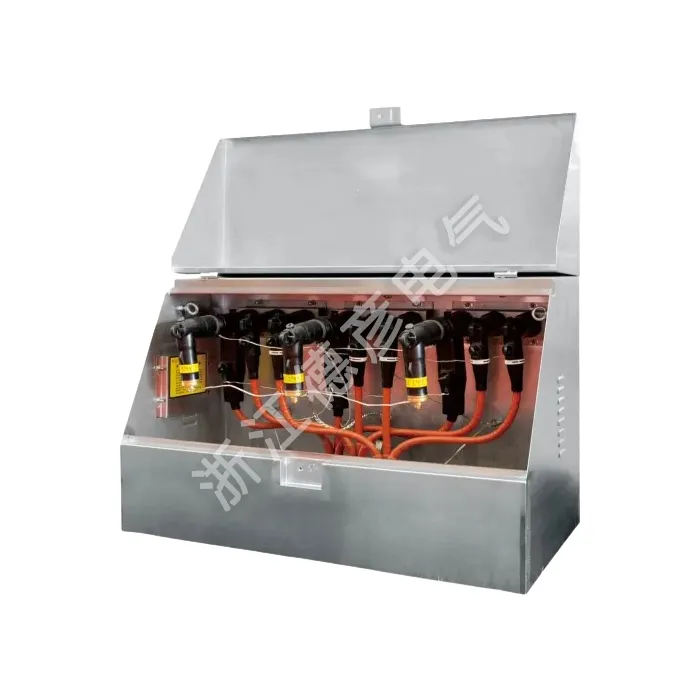
Determining the wire capacity of an American-style cable junction box is one of the most practical questions facing electricians, contractors, and facility managers. Box fill is not a matter of guesswork — it is governed by National Electrical Code (NEC) Article 314 and depends on conductor size, insulation type, device count, and grounding requirements. Choosing an undersized enclosure creates overheating and code violations; choosing an oversized one wastes budget and space. At Deyan, we manufacture American-style cable junction boxes engineered to meet NEC box-fill calculations across residential, commercial, and industrial applications, and this guide breaks down exactly how many wires each size can safely accommodate.
The Box-Fill Formula Every Installer Should Know
NEC Article 314.16 establishes a volume-based method. Each conductor is assigned a volume allowance based on its AWG size, and the total must not exceed the box's cubic-inch capacity.
Key rules for an American-style cable junction box:
-
Conductors #18 through #6: Each unbroken conductor counts as one volume allowance per Table 314.16(B).
-
Grounding conductors: All equipment grounding conductors together count as a single allowance based on the largest one.
-
Devices: Each yoke or strap counts as two conductor allowances.
-
Clamps and fittings: Internal cable clamps count as one additional allowance.
-
Pigtails: A conductor leaving the box and returning counts twice.
Wire Capacity by Box Size (Typical AWG 12/14 Residential and Commercial Wiring)
| Box Trade Size | Volume (cu. in.) | Max #14 Conductors | Max #12 Conductors | Max #10 Conductors |
|---|---|---|---|---|
| 4 x 4 x 1-1/2 | 21.0 | 9 | 8 | 6 |
| 4 x 4 x 2-1/8 | 30.3 | 13 | 11 | 8 |
| 4-11/16 x 4-11/16 x 2-1/8 | 42.0 | 18 | 15 | 11 |
| 6 x 6 x 3-1/2 | 73.0 | 31 | 26 | 19 |
Values assume no internal clamps and no devices. Deduct two allowances per device and one per clamp set. Always verify against the marked volume on the American-style cable junction box label.
Practical Sizing Guidance from Deyan
Deyan recommends the following approach when specifying an American-style cable junction box:
-
Count every conductor entering, terminating, or passing through the box.
-
Add allowances for grounding conductors, devices, and clamps.
-
Multiply by the per-conductor volume from NEC Table 314.16(B).
-
Select a box whose marked cubic-inch capacity exceeds the total by at least 10 percent for future flexibility.
-
Confirm environmental rating — NEMA 1 for dry indoor, NEMA 3R or 4 for outdoor and washdown areas.
Frequently Asked Questions
Can I exceed the conductor count if the wires are THHN rather than NM-B? No — box fill is calculated by conductor volume allowance, not insulation type, so the American-style cable junction box limit remains the same regardless of wire jacket.
Does a ground wire count toward box fill in an American-style cable junction box? Yes — all equipment grounding conductors together count as one volume allowance based on the largest conductor, and this must be included in the total.
How do internal cable clamps affect capacity in an American-style cable junction box? Each set of internal clamps adds one conductor allowance, so a box with clamps holds fewer current-carrying conductors than the same box without them.
Is a larger American-style cable junction box always the safer choice? Within reason, yes — additional volume improves heat dissipation and splicing room, but oversized boxes in exposed locations may require extra support and can increase material cost.
Do I need a different calculation for wet locations? The fill calculation is unchanged, but the American-style cable junction box must carry a NEMA 3R, 4, or 4X rating and use listed gaskets and sealed fittings.
Contact Us
Ready to specify the right enclosure for your next project? Contact Deyan today for engineering support, NEC box-fill verification, and volume pricing on American-style cable junction boxes built to your exact NEMA rating and size requirements.