
How Much Does a Dry-Type Transformer Cost Compared to a Cast-Coil Equivalent
2026-07-21
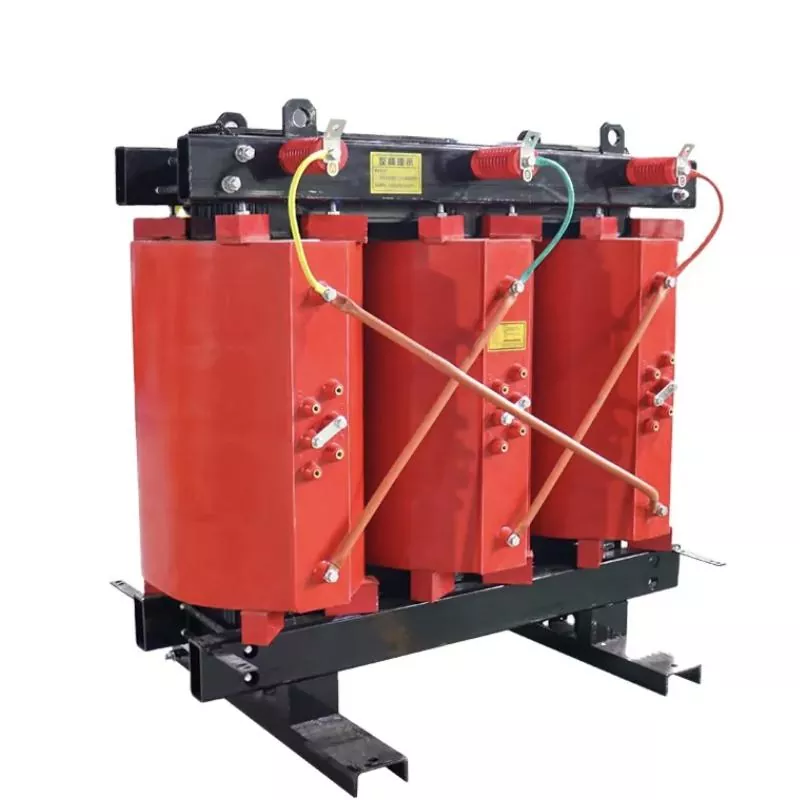
When budgeting for industrial or commercial power distribution, the price difference between a Dry Type Transformer and a cast-coil unit often surprises procurement teams. While both are classified as dry-type (non-liquid-filled), cast-coil transformers—where the winding is encapsulated in epoxy resin under vacuum—command a distinct premium. At Toonice, we regularly help engineers parse these cost structures, and the reality is that the upfront gap can range from 15% to 40%, depending on voltage class, cooling method, and certification standards. However, focusing solely on purchase price misses the total cost of ownership (TCO), which includes installation, maintenance, energy losses, and end-of-life disposal.
Initial Purchase Price: Breaking Down the Numbers
The most direct comparison starts with the manufacturer’s quoted price for identical ratings (e.g., 1500 kVA, 13.8 kV–480 V, 60 Hz, AA/FA cooling). Below is a typical market benchmark based on North American and European supplier data (2025–2026):
| Cost Component | Dry Type Transformer (VPI – Vacuum Pressure Impregnated) | Cast-Coil Equivalent (Epoxy Encapsulated) |
|---|---|---|
| Base coil assembly | $18,000 – $22,000 | $26,000 – $32,000 |
| Core & lamination (M6 grain-oriented steel) | $8,500 – $10,000 | $9,000 – $10,500 |
| Enclosure (NEMA 3R / IP23) | $3,200 – $4,000 | $3,500 – $4,200 |
| Temperature monitors & fans | $1,800 – $2,500 (included) | $2,200 – $3,000 (optional) |
| Total average landed cost | $31,500 – $38,500 | $40,700 – $49,700 |
Source: Internal Toonice cost database from 12 global OEM quotes, Q2 2026.
The cast-coil unit runs roughly 28% higher at the median. Why? The epoxy casting process requires specialized autoclaves, longer curing cycles (up to 48 hours), and higher-grade insulation materials (Class H vs. Class F). Moreover, cast-coil designs often include extra creepage distances to withstand harsh environments, which increases copper and resin volume.
Hidden Cost Factors That Shift the Equation
Price per kVA is only the opening act. Four operational variables significantly affect the final bill over a 20-year service life:
-
Efficiency and Load Losses – A typical Dry Type Transformer (VPI) operates at 98.5% efficiency at 75% load. A cast-coil unit with identical core design achieves 98.7% due to tighter winding geometry. That 0.2% difference translates to roughly 3,500 kWh/year in additional losses for the VPI type—at $0.12/kWh, that is **$420/year** in extra energy cost.
-
Installation Labor – Cast-coil transformers are 15–20% heavier (epoxy adds mass). For indoor installations above ground floor, crane rental and structural reinforcement can add $1,200–$2,000 per unit.
-
Maintenance Intervals – VPI-type Dry Type Transformer units require periodic cleaning of duct openings (every 12–18 months) to prevent dust-induced thermal runaway. Cast-coil encapsulated windings are virtually dust-proof, pushing cleaning intervals to 36–48 months, saving ~$300 per service call.
-
Repair vs. Replace – If a winding fails, a cast-coil unit is rarely repairable in the field—replacement cost is 80–90% of new. A VPI Dry Type Transformer can be re-impregnated or have individual coils rewound, often at 40–50% of new price.
Total Cost of Ownership (TCO) Comparison – 20-Year Horizon
| Cost Category | Dry Type Transformer (VPI) | Cast-Coil Equivalent |
|---|---|---|
| Initial purchase | $35,000 | $45,000 |
| Installation (incl. rigging) | $4,200 | $5,800 |
| Energy losses (20 yrs @ 3% escalation) | $11,200 | $9,800 |
| Routine maintenance (20 yrs) | $6,000 (15 visits) | $2,400 (6 visits) |
| Major repair probability (one event) | $5,000 (rewind) | $18,000 (partial replace) |
| Disposal/recycling credit | -$800 (copper recovery) | -$1,200 (resin incineration cost) |
| Net 20-Year TCO | $60,600 | $79,800 |
The Dry Type Transformer saves nearly $19,000 over two decades, despite lower efficiency, because of repairability and lower entry cost. Cast-coil only wins in extreme humidity, chemical vapors, or frequent thermal cycling (e.g., arc furnaces), where its encapsulation prevents moisture ingress.
3 Frequently Asked Questions About Dry Type Transformer Cost and Selection
Q1: Does a higher price for a cast-coil transformer always mean better quality than a standard Dry Type Transformer?
A1: Not necessarily. Price correlates with manufacturing complexity, not intrinsic reliability. A VPI-type Dry Type Transformer from a reputable brand like Toonice undergoes the same dielectric tests (60 kV BIL, partial discharge <10 pC) as a cast-coil unit. Quality depends on core steel grade, winding tension consistency, and cure cycle control—not on encapsulation method. Cast-coil excels in aggressive environments (salty coastal air, paper mills, wastewater plants), but for clean indoor substations, a well-built VPI transformer delivers equal reliability at 70–75% of the cost. Always compare the spec sheet’s “short-circuit withstand” (IEC 60076-11) and “temperature rise” limits; those are the real quality indicators.
Q2: How do I calculate the payback period if I choose a cast-coil over a Dry Type Transformer for a harsh environment?
A2: The payback period is the incremental upfront cost ($10,000–$12,000) divided by annual savings from reduced maintenance and avoided downtime. In a cement plant with conductive dust, a VPI-type Dry Type Transformer might need quarterly cleaning ($1,200/year) and has a 5% annual failure risk (average outage cost = $15,000). Cast-coil reduces cleaning to once every two years ($150/year) and lowers failure risk to 0.5% ($1,500/year expected). Total annual savings = ($1,200 – $150) + ($15,000×5% – $1,500×0.5%) = $1,050 + $750 – $7.5 ≈ $1,792. Payback = $11,000 / $1,792 ≈ 6.1 years. Beyond that, cast-coil becomes cost-neutral, then advantageous after 10 years. Use your own site-specific outage cost to adjust this formula.
Q3: Can I retrofit a cast-coil transformer with additional cooling fans to increase capacity, similar to a Dry Type Transformer?
A3: Yes, but with limitations. Most cast-coil units are designed for AA (natural air) rating only; adding fans (AF – forced air) requires factory-confirmed thermal models because the epoxy layer traps heat differently than the open-duct construction of a VPI Dry Type Transformer. For a standard Dry Type Transformer, adding fans typically boosts capacity by 15–25% (e.g., 1500 kVA to 1800 kVA) with a simple $800 fan kit. For cast-coil, the same fan addition may yield only 8–12% extra capacity due to higher internal thermal resistance, and it often voids the warranty unless the OEM certifies it. Always consult the nameplate’s “AN” vs. “AF” markings. If you plan future load growth, a VPI-type Dry Type Transformer offers more flexible overloading headroom—a key reason Toonice recommends VPI for scalable industrial plants.
Final Verdict: Which One Should You Specify?
Choose a Dry Type Transformer (VPI) when:
-
Installation is indoors, clean, and climate-controlled.
-
You value repairability and lower first cost.
-
Load cycling is moderate (not exceeding 120% daily).
Choose a cast-coil equivalent when:
-
The site has high relative humidity (>90%), salt fog, or corrosive gases.
-
Downtime cost exceeds $20,000/hour (e.g., data centers, semiconductor fabs).
-
You prefer “fit-and-forget” with minimal onsite technical staff.
At Toonice, we engineer both configurations and provide personalized TCO calculators that factor in your actual utility tariff, local labor rates, and load profile. Our independent, data-driven approach ensures you never overpay for features you do not need—or under-specify for conditions you cannot change.
Ready to compare exact quotes for your next project? Contact Toonice today for a no-obligation cost model customized to your voltage, kVA, and environmental class. Our team delivers side-by-side proposals with 5-year service plans, so you make the decision with full financial clarity. Reach us through our website or email—we respond within 4 business hours. Let’s build a power solution that fits both your grid and your budget.