

How Often Does a Solar DC Combiner Box Need Service?
2026-10-12
An O&M manager oversees two 5 MW solar plants. Plant A is in a coastal region with high humidity and salt spray. Plant B is in a dry, dusty desert environment. Both plants have the same Solar DC Combiner Box model, installed in the same year. After five years, Plant A has replaced 12 percent of its fuses and 8 percent of its surge protective devices. Plant B has replaced 3 percent of its fuses and 2 percent of its SPDs. The difference is not the equipment quality. It is the environmental conditions. This guide explains how to set service intervals based on the actual operating environment, not a fixed calendar schedule.
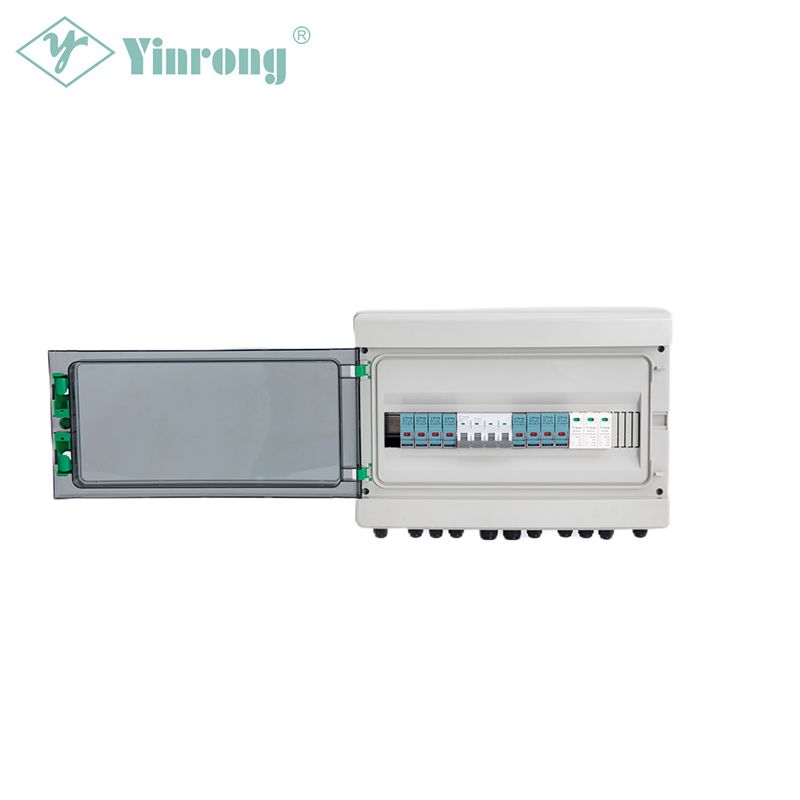
1. What Environmental Factors Accelerate Combiner Box Aging?
The service life of a Solar DC Combiner Box is determined by the degradation rate of its internal components. The most critical components are the fuses, the surge protective devices, the terminal blocks, and the enclosure seals. Each degrades at a different rate depending on the environment. The table below shows the degradation factors and their impact on component life.
| Environmental factor | Affected component | Degradation mechanism | Life reduction |
| High humidity (> 80% RH) | Terminal blocks, fuse holders | Corrosion of contacts | 30 – 50% |
| Salt spray (coastal) | Enclosure, terminals | Corrosion of metal parts | 40 – 60% |
| Dust (desert) | Seals, ventilation | Seal wear, overheating | 20 – 30% |
| High ambient temperature (> 40°C) | Fuses, SPDs | Thermal aging | 25 – 40% |
| Temperature cycling | All components | Fatigue, expansion/contraction | 15 – 25% |
In our factory, we have tested Solar DC Combiner Box components under accelerated aging conditions that simulate different environments. The data shows that a combiner box in a coastal environment ages 2 to 3 times faster than one in a dry, temperate environment. This is why a fixed annual service interval is not appropriate for all sites. Zhejiang Galaxy Fuse Co., Ltd. provides environmental derating factors for our combiner box components.
2. What Is the Recommended Service Interval for Different Environments?
The service interval should be based on the environmental severity. We classify environments into four categories: mild, moderate, severe, and extreme. The table below shows the recommended inspection and service intervals for each category.
| Environment category | Typical conditions | Visual inspection | Torque check | Fuse/SPD test |
| Mild | Dry, temperate, < 30°C, low dust | 12 months | 24 months | 36 months |
| Moderate | Humid, 30 – 40°C, moderate dust | 6 months | 12 months | 24 months |
| Severe | Coastal, > 40°C, high dust | 3 months | 6 months | 12 months |
| Extreme | Salt spray, > 45°C, heavy dust | 1 month | 3 months | 6 months |
For a coastal site with salt spray and ambient temperatures above 40°C, we recommend a visual inspection every month, a torque check every three months, and a fuse/SPD test every six months. This is more frequent than the standard annual service, but it is necessary to prevent failures. In our factory, we have seen combiner boxes in coastal areas that were serviced annually and failed within three years. The same model serviced quarterly has lasted over eight years.
3. What Does a Visual Inspection Include?
The visual inspection is the first line of defense. It does not require opening the enclosure or using test equipment. The inspector looks for signs of overheating, corrosion, moisture ingress, and physical damage. The table below shows the checklist for a visual inspection.
| Inspection item | What to look for | Action if abnormal |
| Enclosure exterior | Rust, cracks, damaged hinges | Clean and repaint; replace if cracked |
| Enclosure seals | Hardening, gaps, missing gasket | Replace seal |
| Viewing window | Condensation, discoloration | Check internal humidity; replace desiccant |
| Indicator lights | Flickering, off when should be on | Check fuse and SPD status |
| Terminal covers | Discoloration, melting, burn marks | Torque check; replace if damaged |
| Ventilation | Blocked vents, dust accumulation | Clean vents; replace filter |
Field tip: Use a thermal imaging camera during the visual inspection. A hot terminal or fuse will show up clearly even before there is visible discoloration. Thermal imaging can detect a loose connection or a degrading fuse weeks before it fails. We recommend thermal imaging at every visual inspection for severe and extreme environments.
4. How Do You Determine When to Replace Fuses and SPDs?
Fuses and SPDs are the components that degrade most predictably. A fuse does not degrade under normal load. It only operates when there is a fault. However, the fuse holder and the fuse contacts can degrade due to corrosion and thermal cycling. The SPD, on the other hand, degrades every time it absorbs a surge. The degradation is cumulative. The table below shows the replacement criteria for fuses and SPDs.
| Component | Replacement criteria | Test method | Typical replacement interval (severe environment) |
| Fuse | Visual damage, discoloration, or resistance > 120% of initial | Micro-ohmmeter | 5 – 7 years (or after 2 fault operations) |
| SPD (MOV) | Leakage current > 1 mA, or visual swelling | Leakage current tester | 3 – 5 years (or after 5 surge events) |
| SPD (GDT) | Visual damage, or breakdown voltage > 20% of rated | Insulation tester | 5 – 7 years |
| Terminal blocks | Corrosion, discoloration, or torque loss > 20% | Torque wrench | 8 – 10 years |
In our factory, we manufacture fuses and SPDs for solar DC combiner boxes. We provide a degradation curve for each product that shows the expected life as a function of surge events and environmental conditions. Zhejiang Galaxy Fuse Co., Ltd. recommends that the SPD be replaced after five surge events, regardless of the measured leakage current. This is a conservative approach that prevents unexpected failures.
Frequently Asked Questions About Solar DC Combiner Box Service Intervals
Summary for Solar O&M Managers
The service interval for a Solar DC Combiner Box should be based on the environmental conditions, not a fixed calendar. Coastal and desert environments require more frequent inspections than temperate environments. The visual inspection should include thermal imaging to detect hot spots. The torque check should be performed at every service to prevent loose connections. The fuses and SPDs should be tested and replaced according to their degradation criteria. By tailoring the service interval to the site conditions, O&M managers can prevent failures and extend the life of the combiner box. Zhejiang Galaxy Fuse Co., Ltd. has been manufacturing fuses and SPDs for solar combiner boxes for over 12 years and provides environmental derating data for our products.
Zhejiang Galaxy Fuse Co., Ltd. manufactures fuses, SPDs, and terminal blocks for Solar DC Combiner Box applications. We provide degradation curves, environmental derating factors, and maintenance guidelines for all of our products.
