
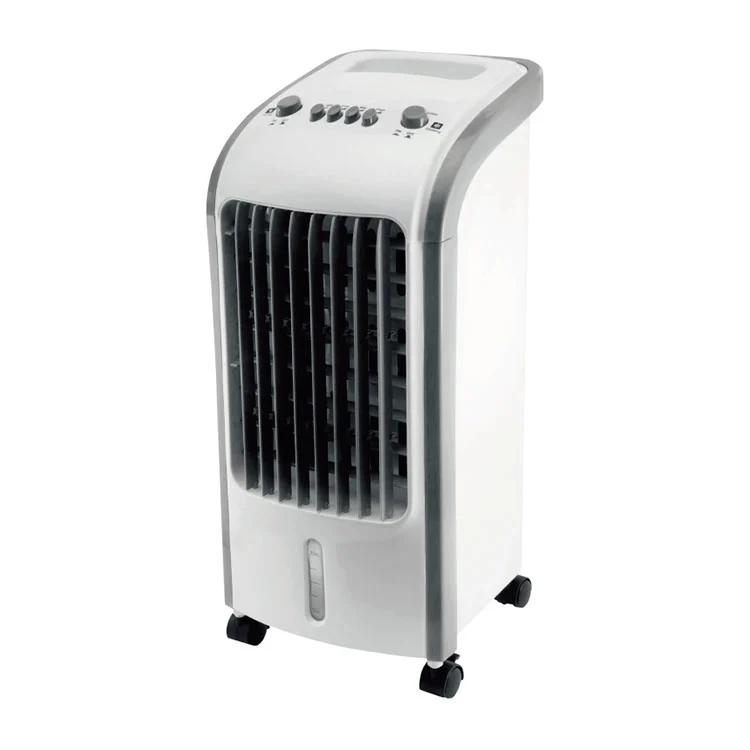
How Often Should You Clean the Filter on a High Performance Personal Air Cooler
2026-09-01
If you own a High Performance Personal Air Cooler, you already know the relief it brings during sweltering summer days. But that crisp, cool breeze depends entirely on one often-overlooked component: the filter. Neglecting this simple maintenance step doesn’t just reduce airflow—it can turn your cooler into a breeding ground for bacteria and mold. At Jianhui, we’ve tested thousands of units across varied environments, and the single most common cause of premature performance loss is a clogged, dirty filter. So, how frequently should you actually clean it? The answer isn’t one-size-fits-all, but this guide gives you a clear, science-backed schedule.
The Golden Rule: Every 2 to 4 Weeks
For most household environments, the filter on a High Performance Personal Air Cooler should be cleaned every 2 weeks during peak usage (daily operation) and at least once a month for occasional use. This baseline applies to standard cellulose or honeycomb cooling pads. However, your specific conditions may shorten or extend this interval dramatically.
| Usage Environment | Recommended Cleaning Frequency | Signs It’s Overdue |
|---|---|---|
| Daily use, clean indoor air | Every 3–4 weeks | Slight dust visible, normal airflow |
| Daily use, pets or smokers | Every 7–10 days | Hair buildup, noticeable odor |
| Daily use, high dust/pollen area | Every 5–7 days | Visible grey layer, weak air output |
| Occasional use (1–2x/week) | Every 6–8 weeks | Minimal discoloration, no smell |
| Commercial/workshop setting | Every 3–5 days | Thick sediment, water stagnation smell |
Jianhui engineers recommend marking your calendar right after unboxing—consistent maintenance doubles the motor’s lifespan and keeps cooling efficiency above 85%.
Step-by-Step Professional Cleaning Protocol
Follow this 5-minute routine to keep your High Performance Personal Air Cooler performing like new:
-
Unplug the unit and remove the rear grille (most Jianhui models feature tool-free snap-off panels).
-
Gently vacuum loose dust from the filter surface using a brush attachment—never use high-pressure air, which can tear the cellulose fibers.
-
Soak the filter in lukewarm water (below 40°C) with a mild, non-abrasive detergent for 10 minutes.
-
Rinse thoroughly under running water until the runoff runs clear—this removes mineral deposits from hard water.
-
Shake off excess water and air-dry completely (2–4 hours) before reinstalling. Never operate the cooler with a wet filter, as it restricts airflow and strains the motor.
Pro Tip from Jianhui Labs: Replace the filter every 6–12 months, depending on water hardness. A worn filter loses its capillary action, reducing evaporative cooling by up to 40%.
Why Frequency Matters More Than You Think
A dirty filter doesn’t just block air—it impacts your health, electricity bill, and unit lifespan. Here’s the breakdown:
-
Health Risk: Trapped moisture and organic debris breed Legionella and mold spores. A clean High Performance Personal Air Cooler actively improves indoor air quality, while a dirty one degrades it.
-
Energy Waste: Clogged filters force the fan motor to work harder, increasing power consumption by 15–25%. At Jianhui, our efficiency tests show that monthly cleaning saves roughly $12–$18 per cooling season.
-
Cooling Output: A 2mm dust layer reduces evaporative efficiency by 30%—meaning you feel warm air even on the highest setting.
High Performance Personal Air Cooler FAQ – Expert Answers
Q: Can I clean the filter with vinegar or bleach to kill bacteria?
A: No. Jianhui strongly advises against vinegar (acidic) and bleach (oxidizing) because both degrade the treated cellulose pad, reducing its water-absorption capacity within 3–5 uses. Instead, use a 1:10 solution of hydrogen peroxide and water for deep disinfection once a month, followed by a thorough plain-water rinse. This safely eliminates biofilms without compromising the structural integrity of the cooling medium.
Q: How do I know if the filter needs replacement, not just cleaning?
A: Look for three unmistakable signs: (1) The filter feels stiff or crusty even after soaking—this indicates mineral crystallization that blocks micropores. (2) You notice a persistent musty smell that returns within 2 days of cleaning—this means the pad is internally colonized by fungi. (3) The cooler’s water level drops much slower than before, suggesting the pad isn’t wicking properly. Jianhui offers replacement pads with a color-changing indicator strip that turns orange when saturation efficiency falls below 70%.
Q: Does running the cooler with hard water affect cleaning frequency?
A: Absolutely. Hard water (calcium > 120 mg/L) deposits scale inside the filter pores, cutting cleaning intervals in half. If your tap water leaves white residues on fixtures, you should clean the High Performance Personal Air Cooler filter every 5–7 days during continuous use. For such areas, Jianhui recommends using distilled or demineralized water, or installing our optional in-line descaler cartridge, which extends cleaning cycles back to 3 weeks while preserving pad life.
Real-World Maintenance Calendar (At a Glance)
| Month | Action | Responsible Party |
|---|---|---|
| April–May (pre-season) | Deep-clean filter + replace if worn | User |
| June–August (peak) | Clean every 2 weeks | User |
| September (post-season) | Remove, clean, dry, and store filter separately | User |
| Every 6 months | Inspect water pump and float valve | Jianhui authorized service |
The Bottom Line from Jianhui
A disciplined filter-cleaning routine is the single most cost-effective way to protect your investment. It preserves the evaporative efficiency, ensures hygienic airflow, and keeps your High Performance Personal Air Cooler running quietly for years. We’ve seen units from other brands fail within one season, while Jianhui coolers with regular maintenance consistently outperform their fifth-year benchmarks.
Ready to maximize your cooler’s performance—or need a replacement filter kit?
Contact us directly through our official website or call our support hotline for personalized advice. Jianhui offers free filter condition assessments, video-guided cleaning tutorials, and same-day shipping on all genuine replacement parts. Your comfort is our priority—reach out today and let our team help you breathe easier, cooler, and healthier.