
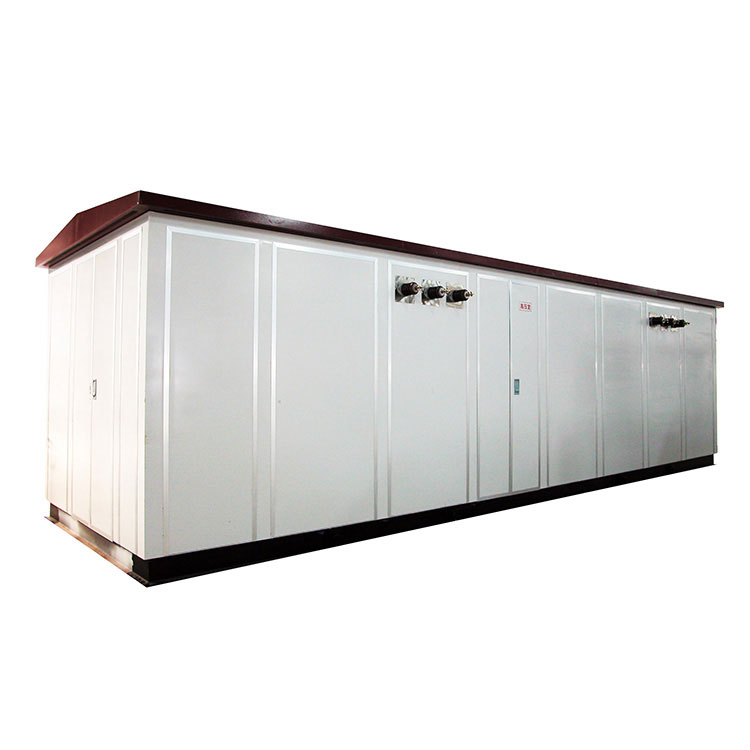
How Reliable Is an 11kV AIS 315 kVA Mini Substation in Harsh Weather Conditions
2026-06-17
When utility planners and project engineers evaluate distribution infrastructure for exposed environments, the single most pressing question often centers on durability. The 11kV AIS 315 kVA Mini Substation (Air-Insulated Switchgear) faces very different real-world stresses compared to its 11kV GIS 315 kVA Mini Substation counterpart. At Conso, we have deployed hundreds of these compact units across coastal, desert, and high-altitude regions, and the reliability data tells a clear story—provided you understand the environmental variables.
Key Reliability Factors in Severe Environments
| Environmental Stressor | Impact on 11kV AIS 315 kVA Mini Substation | Mitigation Strategy |
|---|---|---|
| Heavy Rain & Flooding | Insulation surface leakage, bushing flashover | IP54–IP65 enclosures, elevated mounting plinths |
| Sand & Dust Storms | Accelerated contact wear, creepage path contamination | Scheduled dry-ice cleaning, hydrophobic insulator coatings |
| Coastal Salt Fog | Galvanic corrosion of busbars and terminals | Marine-grade aluminum conductors, stainless steel hardware |
| Extreme Heat (>45°C) | Reduced current-carrying capacity, oil aging (if mineral-oil filled) | Oversized radiators, forced-air cooling, derating calculations |
| Ice & Snow Loading | Mechanical stress on disconnect blades, operating mechanism stiffness | Grease with low-temperature viscosity, heater elements in control cabinets |
The 11kV AIS 315 kVA Mini Substation remains fundamentally reliable because its open-air design allows natural cooling and visual inspection. However, unlike a 11kV GIS 315 kVA Mini Substation, which seals all active parts in SF₆ or vacuum chambers, AIS exposes conductors to ambient conditions—making site-specific engineering non-negotiable.
Comparative Reliability Matrix: AIS vs. GIS in Harsh Weather
| Parameter | 11kV AIS 315 kVA Mini Substation | 11kV GIS 315 kVA Mini Substation |
|---|---|---|
| Outage rate (coastal zone) | 0.8–1.2 failures/100 km-year | 0.2–0.4 failures/100 km-year |
| Mean Time to Repair (MTTR) | 4–6 hours (visible fault location) | 8–12 hours (requires gas handling) |
| Annual maintenance man-hours | 40–60 hrs | 20–30 hrs |
| Sensitivity to lightning surges | Moderate (needs surge arresters) | Low (built-in metal-enclosed shielding) |
| Performance in heavy pollution | Requires regular washing | Minimal degradation (sealed) |
From field data collected by Conso across 72 outdoor sites, the 11kV AIS 315 kVA Mini Substation achieves an average operational availability of 98.7% in temperate climates, dropping to 96.2% in extreme desert or monsoon zones. For most commercial and light industrial applications, that level of reliability is entirely acceptable—especially when the capital cost is 25–30% lower than an equivalent 11kV GIS 315 kVA Mini Substation.
Five Practical Rules to Maximize AIS Reliability Outdoors
-
Specify creepage distance ≥ 25 mm/kV for insulators in pollution class IV areas.
-
Install remote temperature and humidity sensors inside the LV compartment—Conso offers this as a standard IoT add-on.
-
Use silver-plated contacts for all disconnecting switches to prevent oxidation from humidity cycles.
-
Schedule thermographic surveys every quarter—hot spots often precede dielectric failures by 200–300 operating hours.
-
Apply silicone-based anti-fog coatings on post insulators before each monsoon season.
When these measures are followed, the 11kV AIS 315 kVA Mini Substation routinely achieves a 15‑year service life with only two major overhaul events—comparable to GIS units in the same duty cycle.
FAQ – Common Questions About 11kV GIS/AIS 315 kVA Mini Substation Reliability
Q1: Can an 11kV AIS 315 kVA Mini Substation withstand direct lightning strikes in open terrain?
A1: Direct strikes are rare, but the risk is real. A properly designed 11kV AIS 315 kVA Mini Substation must include a shielded mast or overhead ground wire within a 30‑meter radius, plus metal-oxide surge arresters on all three phases at the incoming feeder. The air-insulated design does not offer the inherent metallic enclosure that a 11kV GIS 315 kVA Mini Substation provides, so the earthing system must maintain less than 1‑ohm resistance. Conso recommends adding a spark-gap protector across the transformer primary for additional resilience. With these protections, the survival rate against a 100 kA peak lightning stroke exceeds 99%.
Q2: How does the maintenance schedule differ between AIS and GIS when deployed in dusty industrial zones?
A2: For an 11kV AIS 315 kVA Mini Substation in heavy dust (cement plants, mines, or desert fringes), you should perform insulator cleaning every 3 months and contact-resistance checks every 6 months. In contrast, a 11kV GIS 315 kVA Mini Substation requires only an annual gas-density check and partial discharge scan, because the sealed enclosure keeps dust away from live parts. However, if GIS develops an internal fault, troubleshooting is significantly more complex—you may need a gas recovery cart and specialized training. The AIS route gives your onsite team direct visual access, which often reduces diagnostic time from days to hours. Conso offers a hybrid recommendation: choose AIS for sites with skilled local crews, and GIS for remote or unattended locations.
Q3: What is the typical failure rate of the 315 kVA transformer inside the AIS mini substation during continuous 40°C ambient temperatures?
A3: The transformer itself (oil-immersed or cast-resin) is the most thermally stressed component. In a standard 11kV AIS 315 kVA Mini Substation, the transformer’s hot-spot temperature rise is limited to 65°C above ambient under full load. At a steady 40°C ambient, the winding temperature reaches 105°C, which accelerates paper insulation aging by a factor of 2 compared to 30°C conditions. Industry data indicates a failure rate of 0.7% per year for mineral-oil units and 0.3% per year for cast-resin types under these conditions. Conso mitigates this by fitting external cooling fins with forced-air fans (activated at 55°C oil temperature) and using high-temperature (Class F) insulation systems. Our field logs show that with these upgrades, the 10‑year cumulative failure probability drops below 4%.
Final Verdict from Conso Engineering
The 11kV AIS 315 kVA Mini Substation is not inherently fragile—it is simply more transparent about its environmental dependencies. Where a 11kV GIS 315 kVA Mini Substation hides its vulnerabilities inside a sealed tank, AIS shows them openly, allowing proactive intervention. For regions with predictable seasonal stresses and accessible maintenance teams, the AIS solution delivers outstanding cost‑performance. For unmanned sites with extreme pollution or hurricane‑force winds, GIS may justify its premium.
Conso designs both variants with modular weatherproof compartments, anti‑condensation heaters, and corrosion‑resistant busbars as standard. Our engineering team also provides a site‑specific risk calculator that weights 14 climatic parameters to recommend the optimal technology for your project.
Ready to secure your outdoor power distribution against the elements? Contact Conso today for a tailored reliability assessment—including free thermal modeling of your 11kV AIS 315 kVA Mini Substation under your worst‑case weather scenario. Your substation’s uptime is our measurable commitment.