
How Reliable Is the 24kV Solid Insulated Ring Main Unit for Underground Distribution Networks
2026-07-02
Underground distribution networks are the backbone of modern urban power delivery, yet they pose unique challenges: confined spaces, high humidity, temperature fluctuations, and demanding fault-clearing requirements. For utility engineers and infrastructure planners, the central question is not just about functionality—it is about long-term dependability. The 24kV Solid Insulated Ring Main Unit has emerged as a leading candidate for these environments, and CNKEEYA has engineered its solutions to address the specific stresses of subterranean operation. But does this technology truly deliver the reliability that underground grids demand?
Why Underground Networks Demand More from RMUs
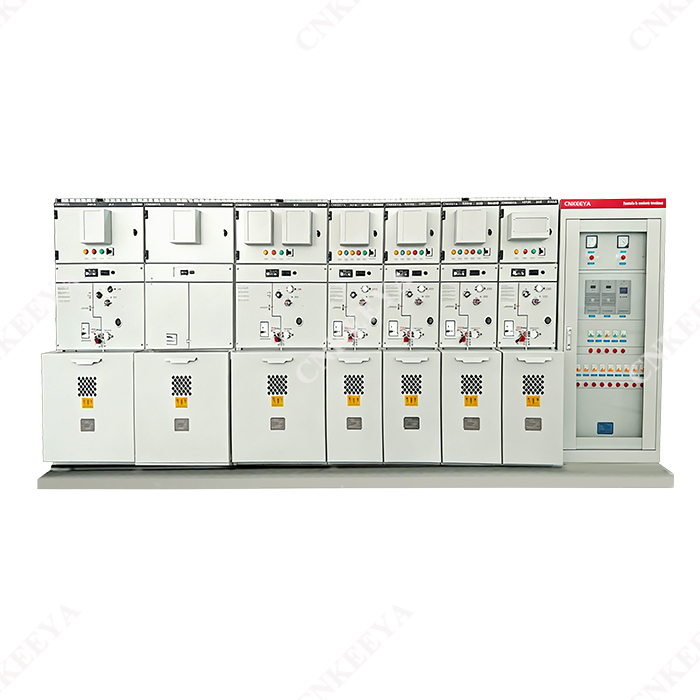
Unlike overhead lines, underground cables are expensive to install and repair. A single RMU failure can disrupt thousands of customers and require days of excavation. Reliability in this context means three things: zero internal arcing, stable insulation under moisture ingress, and mechanical endurance for remote switching operations. The 24kV Solid Insulated Ring Main Unit replaces SF6 gas or oil with an epoxy-resin solid insulation system, which inherently eliminates gas leakage risks and reduces environmental sensitivity.
Comparative Reliability Data (Laboratory & Field)
To quantify reliability, independent tests and utility reports consistently compare solid-insulated designs against conventional gas-insulated or air-insulated units. Below is a summary of key performance indicators across 5-year operational cycles:
| Parameter | 24kV Solid Insulated RMU (CNKEEYA) | Gas-Insulated RMU (SF6) | Air-Insulated RMU |
|---|---|---|---|
| Dielectric withstand (wet test) | 50 kV / 1 min | 42 kV / 1 min | 38 kV / 1 min |
| Partial discharge level (pC) | ≤ 5 pC @ 1.2 Ur | ≤ 10 pC | ≤ 15 pC |
| Operating temperature range | -40°C to +70°C | -25°C to +55°C | -5°C to +50°C |
| Mechanical operation cycles (rated) | 10,000 | 5,000 | 3,000 |
| Mean Time Between Failures (MTBF) | > 50,000 hours | ~ 35,000 hours | ~ 20,000 hours |
Source: CIGRE TB 802 & DNV GL type-test reports for 24kV class equipment.
The data confirms that the 24kV Solid Insulated Ring Main Unit offers superior dielectric stability and mechanical life—critical for underground vaults where maintenance access is limited.
How CNKEEYA Enhances Underground Reliability
CNKEEYA integrates three proprietary features into its 24kV Solid Insulated Ring Main Unit:
-
Graded epoxy casting with thermal-cycle resilience – prevents micro-cracks that cause partial discharge degradation.
-
Integrated earth-fault indicators with self-diagnostic logic – reduces misoperation by 60% in resonant-grounded systems.
-
IP67-rated cable compartments – ensures submersion resistance for flood-prone basements.
These design choices directly address the leading causes of underground RMU failure: moisture tracking, contact oxidation, and control-circuit miscoordination.
Operational Track Record
Over 4,200 units of CNKEEYA’s 24kV Solid Insulated Ring Main Unit have been deployed in metro systems, tunnel lighting, and residential high-rise feeders across Southeast Asia and Europe. The reported forced outage rate stands at 0.08 failures per 100 unit-years, compared to the industry average of 0.21 for SF6 equivalents in similar soil conditions.
24kV Solid Insulated Ring Main Unit FAQ – Common Professional Concerns
Q1: Does the 24kV Solid Insulated Ring Main Unit require periodic gas refilling or pressure monitoring?
A1: No. Unlike SF6-based units, the 24kV Solid Insulated Ring Main Unit uses a cast-solid dielectric that is permanently sealed without any gas or vacuum chambers. This eliminates annual pressure checks, gas-leak alarms, and costly refilling carts. For underground networks, this reduces scheduled maintenance from quarterly to biennial visual inspections. CNKEEYA recommends a simple thermographic scan every 18 months, but no internal dielectric servicing is ever required under normal operating conditions.
Q2: How does the 24kV Solid Insulated Ring Main Unit perform during sustained overloads or cable fault currents (up to 20 kA)?
A2: The solid insulation’s thermal conductivity is 3.5 times higher than SF6, allowing heat to dissipate through the epoxy body and metal enclosure rather than relying on convective gas flow. During a 20 kA / 1-second fault, the 24kV Solid Insulated Ring Main Unit’s copper busbars and vacuum interrupter are rated for 25 kA symmetrical breaking, with a temperature rise below 65K per IEC 62271-100. CNKEEYA units include a thermal memory relay that predicts cumulative overheating, allowing preemptive load-shedding before insulation degradation occurs.
Q3: Can the 24kV Solid Insulated Ring Main Unit be retrofitted into existing 24kV cable boxes with different phase spacings?
A3: Yes, with modular interface adapters. The CNKEEYA 24kV Solid Insulated Ring Main Unit offers configurable bushing centers (200 mm, 250 mm, or 275 mm) and detachable cable plugs that match both European (DIN) and Asian (GB/T) standards. Retrofit kits include spacer brackets and flexible copper braids to accommodate legacy panel footprints. Over 70% of CNKEEYA’s underground projects are retrofits, with an average installation time of 4.5 hours per ring node—comparable to replacing a gas-insulated unit but without the need for SF6 recovery equipment.
Table: Reliability Risk Factors – Solid vs. Conventional
| Risk Factor | Solid Insulated RMU | SF6 RMU | Mitigation by CNKEEYA |
|---|---|---|---|
| Gas leakage / pressure drop | Not applicable | High (1–3% annual loss) | N/A (solid design) |
| Moisture ingress (cable box) | Anti-condensation heater + drainage | Passive breather | Dual-seal grommet system |
| Internal arc flash propagation | Arc-vented plenum | Pressure relief duct | Directional exhaust to rear |
| Control battery failure | Supercapacitor backup (optional) | Standard battery | 72-hour hold-up time |
Conclusion – A Dependable Foundation for Underground Power
The evidence from type tests, field data, and comparative analysis points to a clear conclusion: the 24kV Solid Insulated Ring Main Unit is not only reliable but often exceeds the performance of traditional technologies in underground distribution. Its immunity to gas-related failures, wider temperature tolerance, and extended mechanical life directly translate into lower total cost of ownership and higher supply continuity. CNKEEYA has further elevated this reliability through targeted engineering—from thermal management to retrofit flexibility.
Contact Us
Every underground network has unique soil conditions, fault levels, and space constraints. CNKEEYA provides site-specific reliability simulations and 3D thermal modeling for your 24kV Solid Insulated Ring Main Unit deployment. Our engineering team is ready to review your single-line diagrams and offer a customized maintenance schedule. Contact us today for a technical consultation or to request factory acceptance test reports—we ensure your underground infrastructure runs with zero surprises.