

How to Choose and Use IDC Flat Cable for Reliable Connections?
2026-06-23
Abstract
IDC Flat Cable is widely used in modern electronic systems where high-density signal transmission, stable connectivity, and space-saving wiring are essential. From industrial control equipment to computing systems and communication devices, IDC (Insulation Displacement Connector) flat cables provide a reliable and efficient interconnection method. This article explains how IDC flat cable works, its key benefits, selection criteria, and practical applications. It also addresses common customer pain points such as signal integrity issues, installation complexity, and durability concerns. The goal is to help engineers, procurement teams, and system integrators make informed decisions when selecting IDC flat cable solutions, including high-quality offerings from JYE.
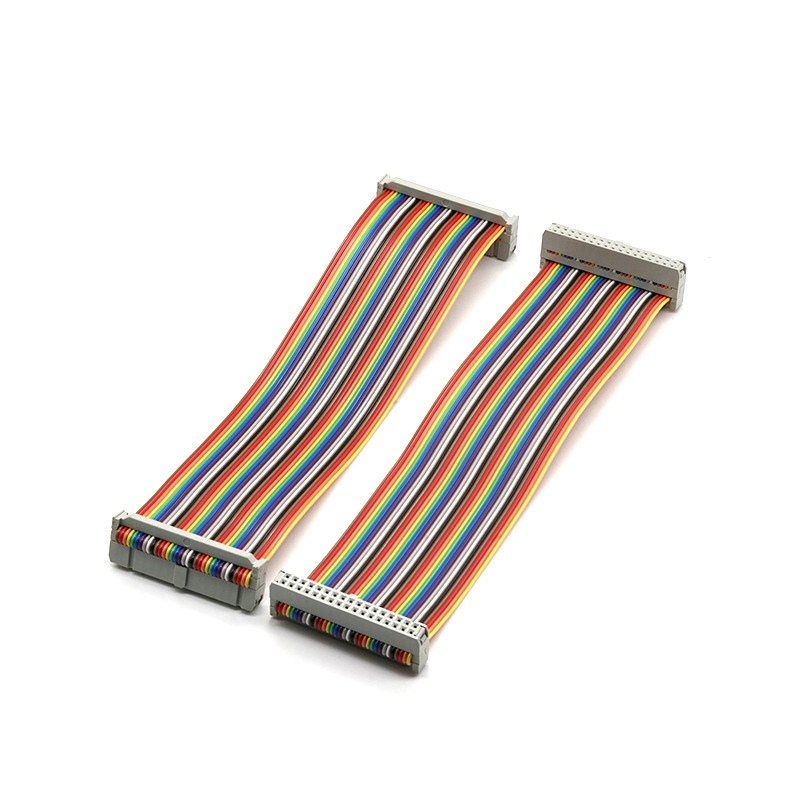
Table of Contents
- Article Outline
- What is IDC Flat Cable?
- How IDC Technology Works
- Key Advantages of IDC Flat Cable
- How to Choose the Right IDC Flat Cable
- Typical Applications
- IDC Flat Cable vs Round Cable
- Installation and Handling Tips
- Frequently Asked Questions
- Conclusion and Contact
Article Outline
- Introduction to IDC Flat Cable structure and usage scenarios
- Technical explanation of insulation displacement contact method
- Performance benefits in industrial and electronic environments
- Selection criteria including pitch, conductor count, and insulation material
- Comparison with alternative wiring solutions
- Installation best practices to reduce failure rates
- Industry applications and engineering insights
What is IDC Flat Cable?
IDC Flat Cable is a type of ribbon-style cable designed for mass termination using insulation displacement connectors. Unlike traditional wiring methods that require stripping and soldering, IDC technology allows conductors to be connected through precisely engineered metal contacts that pierce the insulation without damaging the conductor core.
This structure makes IDC flat cables highly efficient for high-density wiring systems. They are commonly used in internal computer wiring, industrial automation panels, and communication hardware. Manufacturers like JYE provide IDC flat cable solutions that ensure consistent performance under demanding electrical conditions.
How IDC Technology Works
The working principle of IDC flat cable is based on controlled insulation displacement. When the connector is pressed onto the cable, sharp metal contacts penetrate the insulation layer and establish direct contact with the conductor.
This process follows three key stages:
- Positioning: The flat cable is aligned precisely within the connector slot.
- Compression: The connector is pressed using a tool or machine.
- Contact Formation: Metal blades displace insulation and form a secure electrical connection.
This eliminates manual stripping and soldering, significantly reducing assembly time and human error. Products from JYE are engineered to ensure uniform contact force across all pins, improving reliability in mass production environments.
Key Advantages of IDC Flat Cable
IDC flat cable is preferred in many industries due to its efficiency and performance stability. The following table summarizes its key advantages:
| Feature | Benefit |
|---|---|
| Quick Termination | Reduces assembly time and labor cost |
| High Density Wiring | Supports compact electronic designs |
| Reliable Contact | Stable electrical performance under vibration |
| No Wire Stripping | Minimizes human error during installation |
| Scalable Production | Ideal for automated manufacturing processes |
In addition, IDC flat cables from JYE are designed with high-quality insulation materials that improve durability and resistance to environmental stress.
How to Choose the Right IDC Flat Cable
Selecting the correct IDC flat cable requires careful evaluation of electrical, mechanical, and environmental requirements. Poor selection can lead to signal degradation or connection failure.
Key selection criteria include:
- Pitch Size: Common options include 0.5mm, 1.0mm, and 1.27mm depending on circuit density.
- Number of Conductors: Must match system interface requirements.
- Insulation Material: PVC or more advanced flame-retardant materials for safety compliance.
- Voltage Rating: Ensure compatibility with system power levels.
- Operating Environment: Temperature, humidity, and vibration resistance.
Engineers often underestimate the importance of insulation material quality. Premium suppliers like JYE focus on maintaining consistent dielectric strength across production batches, which helps reduce field failures.
Typical Applications
IDC flat cables are used across a wide range of industries due to their flexibility and reliability.
- Industrial automation control systems
- Computer internal wiring (motherboards, drives)
- Telecommunication equipment
- Medical devices
- Embedded systems and robotics
In automation environments, IDC flat cables reduce wiring complexity inside control cabinets, making maintenance easier and improving system uptime.
IDC Flat Cable vs Round Cable
Understanding the differences between IDC flat cable and traditional round cable helps in making better engineering decisions.
| Aspect | IDC Flat Cable | Round Cable |
|---|---|---|
| Installation Speed | Fast with IDC connectors | Slower due to manual stripping |
| Space Efficiency | High-density layout | Requires more space |
| Flexibility | Moderate flexibility | Higher flexibility |
| Manufacturing Cost | Lower in mass production | Higher due to manual work |
While round cables are preferred for heavy-duty external applications, IDC flat cables dominate internal electronic assemblies where space and efficiency are critical. JYE provides both solutions, allowing customers to select based on system requirements.
Installation and Handling Tips
Proper installation is critical to ensure long-term reliability of IDC flat cable systems. Even high-quality products can fail if improperly handled.
- Ensure correct alignment before pressing connectors
- Avoid excessive bending near termination points
- Use recommended crimping tools for consistent pressure
- Do not reuse IDC connectors once terminated
- Store cables in dry, temperature-controlled environments
Manufacturers such as JYE often provide installation guidelines to help engineers achieve optimal performance and minimize connection failure rates.
Frequently Asked Questions
Q1: Can IDC flat cable be reused after termination?
No, IDC connections are designed for one-time termination. Reuse may compromise contact reliability.
Q2: What is the lifespan of IDC flat cables?
With proper installation, they can last many years, depending on environmental conditions and load.
Q3: Are IDC flat cables suitable for high-vibration environments?
Yes, but only if properly secured. High-quality solutions from JYE offer improved vibration resistance.
Q4: What industries rely most on IDC flat cables?
Electronics manufacturing, industrial automation, telecommunications, and medical equipment sectors.
Q5: How do I reduce signal interference in IDC systems?
Use shielded designs, proper grounding, and high-quality insulation materials.
Conclusion and Contact
IDC Flat Cable plays a critical role in modern electronic interconnection systems by providing efficient, compact, and reliable wiring solutions. Understanding its structure, selection criteria, and installation methods helps ensure optimal system performance and long-term stability.
For engineering-grade IDC flat cable solutions tailored to industrial and electronic applications, JYE delivers consistent quality and technical support to meet diverse project requirements.
If you are looking for customized specifications, bulk supply, or technical consultation, contact us at JYE today to discuss your IDC flat cable needs and receive professional support for your project.