
How to correctly wire a 2-pole 63A Miniature Circuit Breaker for home main circuit protection
2026-11-20
As the critical first safety barrier for residential electrical systems, a properly installed 63A Miniature Circuit Breaker provides full protection against dangerous overloads and sudden short circuit faults for the entire household power supply. At Tush-An, we have 18 years of experience manufacturing certified residential and commercial low-voltage electrical protection devices, delivering clear, code-compliant installation guidance to help electricians and property owners avoid common wiring errors that lead to safety hazards.
Standard Step-by-Step Wiring Procedures
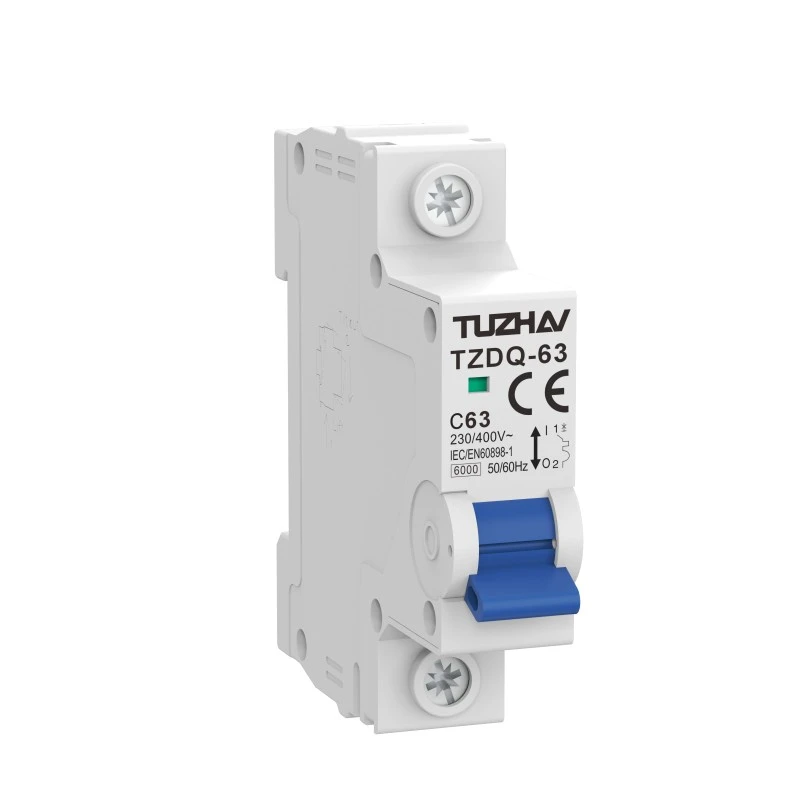
Following industry-standard safety protocols for the 63A Miniature Circuit Breaker ensures stable long-term operation and full compliance with local residential electrical codes. Tush-An’s electrical engineering team recommends this verified wiring workflow for all home main circuit installations:
- Completely shut off the upstream power supply and confirm zero voltage on all incoming lines with a certified multimeter
- Mount the breaker firmly on the standard 35mm DIN rail inside the home distribution box
- Connect the live and neutral incoming power wires to the top two line terminals of the 2-pole breaker
- Connect the outgoing load wires that lead to the household sub-circuit distribution system to the bottom two load terminals
- Tighten every terminal screw to the specified torque value to prevent loose connections that cause overheating
Key Installation Parameter Reference Table
| Parameter | Standard Specification for 2-Pole 63A Miniature Circuit Breaker |
|---|---|
| DIN Rail Mounting Width | 36 mm (2 modular units) |
| Recommended Wire Gauge | 16 mm² – 25 mm² copper power cable |
| Terminal Screw Torque | 2.5 N·m |
| Maximum Operating Voltage | 230V / 400V AC |
63A Miniature Circuit Breaker FAQ
-
Is it allowed to use a 2-pole 63A Miniature Circuit Breaker as the main protection for a 230V single-phase residential power supply?
Yes, this configuration is fully compliant with IEC 60898 and most global residential electrical codes, and it cuts off both live and neutral lines simultaneously when a fault occurs for maximum safety. -
What happens if the terminal screws on Tush-An 63A Miniature Circuit Breaker are not tightened to the correct torque during wiring?
Loose terminals will cause abnormal contact resistance, leading to continuous overheating at the connection point, which can melt the insulation, trigger unexpected tripping, and even create fire risks in severe cases. -
Can I use a 32A wire to connect a 63A Miniature Circuit Breaker for home main circuit wiring?
This is strongly not recommended, as the 32A wire cannot safely carry the maximum 63A current, which will cause the wire to overheat before the breaker trips, creating a major hidden electrical safety hazard.
If you need detailed electrical code compliance consultation, product specification documents, or bulk certified low-voltage protection devices for your residential or commercial project, contact us today. The Tush-An professional electrical engineering team will provide you with fully tested, safety-certified 63A Miniature Circuit Breaker solutions and full technical support to keep every electrical installation reliable and hazard-free.