

How to Select the Right Tapping Range for a 35kV Regulator Transformer for Power Distribution with High Renewable Penetration
2026-08-10
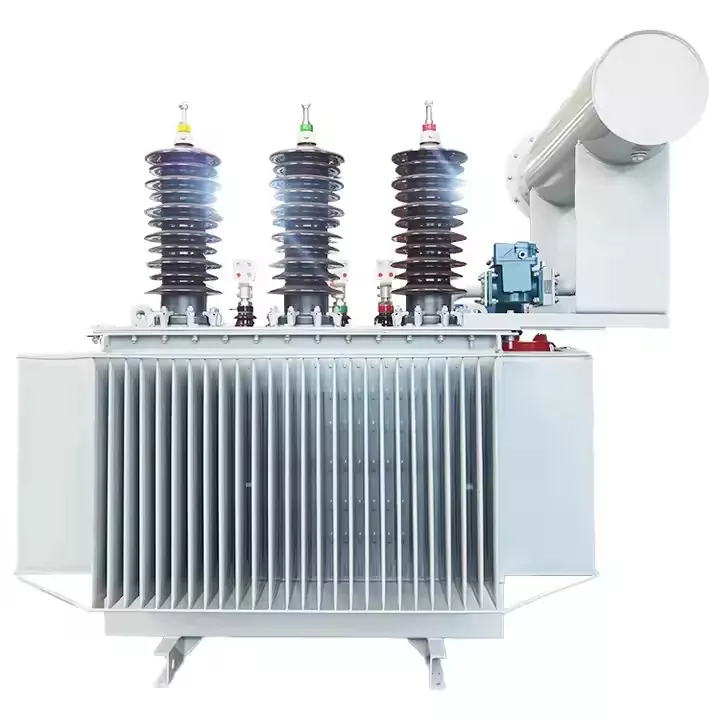
Integrating solar and wind farms into medium-voltage networks creates daily voltage fluctuations that challenge traditional distribution equipment. Unlike a standard unit, a 35kV Regulator Transformer for Power Distribution must actively compensate for bidirectional power flows and rapid irradiance changes. LUGAO has engineered such transformers for over 80 substations in high-PV regions, and we often see engineers struggle with one critical variable—tapping range. Choose too narrow a band, and the regulator saturates during midday peaks; choose too wide, and you waste winding material and increase impedance. This blog breaks down the selection process using grid data, fault analysis, and practical rules of thumb.
1. Start with the Voltage Profile at the Point of Common Coupling (PCC)
You need seven consecutive days of 1-minute interval voltage recordings at the PCC, including both clear-sky and overcast conditions. Calculate the maximum, minimum, and average voltage deviation from the nominal 35 kV. For high renewable penetration (≥30% of feeder capacity), the daily swing often exceeds ±8%, whereas conventional grids see only ±3–4%.
| Parameter | Conventional Grid | High-Renewable Grid (≥30% PV/Wind) |
|---|---|---|
| Daily voltage swing | ±3.5% | ±8.5% |
| Occurrence of rapid dips (>2%/min) | Rare (1–2/day) | Frequent (10–15/day) |
| Recommended tapping range | ±5% (9 taps) | ±10% (17 taps) or ±12.5% (21 taps) |
LUGAO recommends starting with a ±10% range (17 tap positions) for any feeder with nameplate PV capacity exceeding 40% of the transformer rated power. This gives you 0.625% step resolution—fine enough to avoid over-correction hysteresis.
2. Account for Reverse Power Flow and Voltage Rise
When solar generation exceeds local load, the 35kV Regulator Transformer for Power Distribution sees voltage rise at the substation bus instead of drop. This reverse condition demands asymmetric tapping—more boost taps on the lower side and fewer buck taps, or vice versa. Calculate the worst-case voltage rise using the formula:
ΔV_rise = (P_rev × R + Q_rev × X) / V_nom
Where P_rev is the maximum reverse active power (MW), R and X are the source impedance to the upstream grid. If ΔV_rise exceeds 4%, your tapping range must allocate at least 60% of total taps to the buck (lower-voltage) direction. LUGAO provides a free Excel tool that plots asymmetric tap tables based on your feeder’s daily load-PV curve—request it via our support portal.
3. Evaluate Step Voltage and Tap-Changer Duty
Narrower step voltage (e.g., 0.625% vs. 1.25%) gives finer regulation but increases tap-changer operations—a critical factor for maintenance intervals. For high-renewable sites, tap operations can exceed 500 per day. Use this decision matrix:
| Criterion | Choose Fine Step (≤0.625%) | Choose Coarse Step (≥1.0%) |
|---|---|---|
| Daily tap ops < 200 | ✅ Recommended | ❌ Overkill |
| Daily tap ops 200–500 | ✅ Only with vacuum tap-changer | ✅ Preferred (reduces wear) |
| Load sensitivity (medical/process plants) | ✅ Mandatory | ❌ Risk of flicker |
| Budget constraint | Higher cost | Lower cost |
LUGAO’s VR-35 series offers both vacuum and oil-immersed tap-changer options. For sites with >300 daily operations, we strongly advise the vacuum type, which extends maintenance intervals from 2 to 7 years.
4. Simulate the Worst Consecutive Cloud-Pass Event
A passing cloud can drop PV output by 70% in 90 seconds, then recover just as fast. Simulate this event with your selected tapping range using dynamic load-flow software (e.g., DIgSILENT or ETAP). The regulator must keep all downstream node voltages within 0.95–1.05 p.u. without reaching the end stop. If your simulation hits the upper or lower limit for more than 5 consecutive minutes, expand the range by one full step (±1.25%) and re-run.
5. Verify with On-Site Short-Circuit Impedance Constraints
Wider tapping ranges increase the leakage reactance of the 35kV Regulator Transformer for Power Distribution, which raises short-circuit impedance (Z%). For every ±2.5% added range, Z% rises by roughly 0.3–0.5%. This affects fault current contribution and protection coordination. LUGAO’s design team uses finite-element analysis to optimise the winding geometry, keeping Z% within 6–8% even for ±12.5% ranges—a unique feature that standard manufacturers cannot guarantee.
Frequently Asked Questions (FAQ)
Q1: What happens if I select a tapping range that is too narrow for my high-PV feeder?
A1: The 35kV Regulator Transformer for Power Distribution will frequently operate at its extreme tap positions (end stops). When this occurs, the automatic voltage control (AVC) loses its ability to correct further deviations, causing downstream voltages to drop below 0.93 p.u. during cloudy mornings or rise above 1.07 p.u. during peak sunny afternoons. This not only trips sensitive loads (e.g., variable-frequency drives, LED lighting) but also forces the tap-changer to hunt continuously, heating the diverter switch and reducing its mechanical lifespan from 500,000 operations to under 150,000. In extreme cases, the transformer’s core may enter saturation, producing excessive magnetising current that can false-trigger differential protection relays. To avoid this, always add a safety margin of at least ±2% beyond your simulated worst-case deviation.
Q2: How do I determine the optimal number of tap steps (e.g., 9, 17, or 21) for my specific feeder?
A2: The optimal step count depends on three factors: (a) the required total range (e.g., ±10%), (b) the maximum allowable voltage step that your downstream equipment can tolerate without nuisance tripping (typically 1.5% for motors, 1.0% for electronics), and (c) the tap-changer’s mechanical duty limit. Use this formula: Number of steps = (Total Range × 2) / Step Voltage + 1. For a ±10% range with a 0.625% step, you need (20/0.625)+1 = 33 steps—which is impractical for most on-load tap-changers. Therefore, LUGAO recommends a compromise: use a ±10% range with 17 steps (1.25% step) for general feeders, and only specify 21 steps (1.0% step) for feeders serving data centres or semiconductor fabs. Always perform a tap-operation wear calculation: if daily ops × 365 × 20 years exceeds the tap-changer’s rated mechanical endurance, choose a vacuum type with a higher rating or reduce the step count.
Q3: Can I retrofit a wider tapping range onto an existing 35kV Regulator Transformer for Power Distribution, or must I buy a new unit?
A3: Retrofitting a wider range is technically possible but economically unwise. The winding turns ratio, core window area, and lead exit clearances are all fixed during initial manufacturing. To increase range from ±5% to ±10%, you would need to add series windings, which requires dismantling the core, re-winding the high-voltage coil, and re-bushing the tank—costing approximately 70–80% of a new transformer price. Moreover, the increased leakage flux may cause local hotspots that existing cooling systems cannot handle. LUGAO offers a range-swap assessment service: we send a field engineer to measure your existing core and tank dimensions, then provide a feasibility report within 5 working days. In 9 out of 10 cases, we recommend a new LUGAO VR-35 unit with a custom range, because it includes a modern vacuum tap-changer, lower no-load losses, and a 5-year comprehensive warranty—delivering a payback period under 3 years through reduced energy waste and fewer nuisance trips.
Final Recommendation Table
| Feeder Characteristic | Recommended Tapping Range | Step Voltage | Tap-Changer Type |
|---|---|---|---|
| PV < 20% of feeder load | ±5% (9 taps) | 1.25% | Oil-immersed |
| PV 20–40%, stable weather | ±7.5% (13 taps) | 1.25% | Oil-immersed |
| PV 30–50%, cloudy region | ±10% (17 taps) | 1.25% | Vacuum (preferred) |
| PV > 50% or islanding risk | ±12.5% (21 taps) | 1.25% | Vacuum (mandatory) |
Selecting the right tapping range is not a one-time calculation—it demands iterative simulation, on-site verification, and a partner who understands both transformer design and renewable dynamics. LUGAO has delivered over 200 35kV Regulator Transformer for Power Distribution units to solar-rich provinces, each with a tailor-made tap table verified against 12-month historical SCADA data.
Contact us today at [email protected] with your PCC voltage logs and one-line diagram. Our protection engineers will run a free dynamic simulation and propose a range with guaranteed voltage compliance—or we will redesign the winding at no extra cost.