

How to Transport and Install a 132kV 40000kVA Oil Immersed Transformer Safely
2026-11-16
Moving a 132kV 40000kVA oil immersed transformer from factory to foundation is one of the highest-risk logistics operations in power engineering. At Youbian, we have supported utilities and EPC contractors through hundreds of heavy transformer deliveries, and the difference between a smooth commissioning and a costly failure almost always comes down to preparation. This guide shares the field-proven procedures our engineers apply to protect the unit, the site crew, and the project schedule.
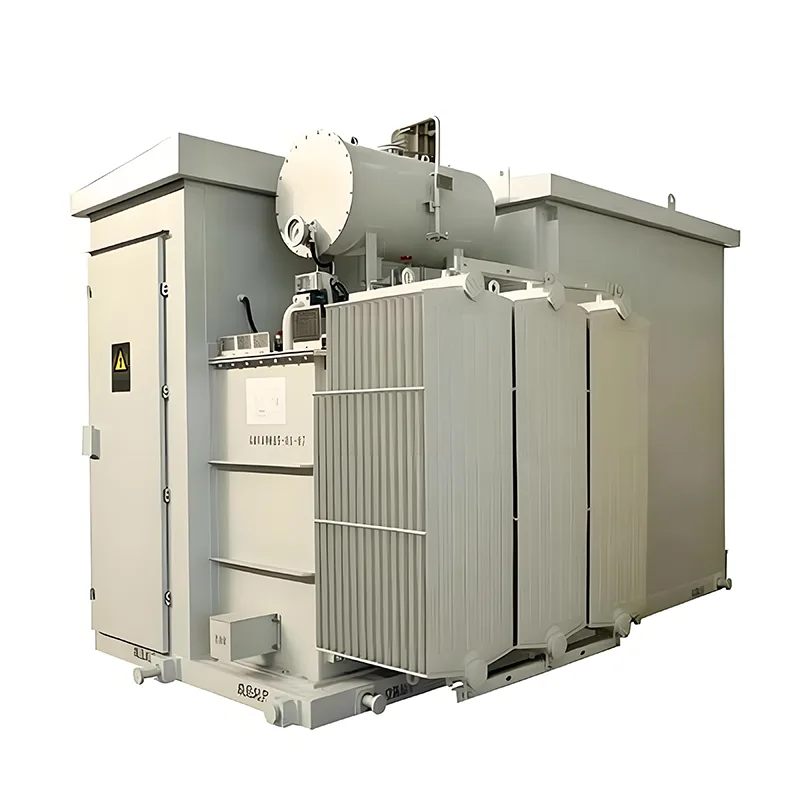
1. Pre-Shipment Engineering Review
Before any lifting plan is approved, Youbian engineers verify the transport configuration against the actual unit data:
| Check Item | Requirement | Why It Matters |
|---|---|---|
| Transport mass & center of gravity | Confirmed against final test report | Prevents crane overload and tipping |
| Oil level for transport | Reduced per manufacturer instruction, usually nitrogen-filled | Limits sloshing loads and moisture ingress |
| Impact recorder | Installed and zeroed before departure | Provides evidence for warranty claims |
| Shock & tilt limits | Typically ≤3g vertical, ≤15° tilt | Exceeding limits can shift windings |
2. Transport Execution
-
Use a hydraulic multi-axle trailer rated at least 1.25× the transport mass.
-
Secure the 132kV 40000kVA oil immersed transformer with longitudinal and lateral lashings checked at every stop.
-
Maintain nitrogen positive pressure throughout transit and log gauge readings daily.
-
Plan routes around bridge load limits, overhead clearance, and road gradients; a route survey is mandatory, not optional.
3. Site Receiving and Inspection
On arrival, Youbian recommends a joint inspection before unloading: read the impact recorder, check nitrogen pressure, inspect bushings and radiators for damage, and perform an insulation resistance test. Any anomaly should be documented with photos and reported immediately.
4. Installation Sequence
| Stage | Key Activity | Acceptance Criterion |
|---|---|---|
| Foundation | Verify level, load capacity, and grounding grid | Deviation ≤2 mm/m |
| Placement | Jack, slide, or crane per approved rigging plan | No stress on tank walls |
| Assembly | Fit radiators, bushings, conservator, Buchholz relay | Torque values per drawing |
| Oil filling | Vacuum oil filling under ≤1 mbar | Dielectric strength ≥60 kV/2.5 mm |
| Testing | Ratio, winding resistance, IR, SFRA, pressure test | Compliance with IEC 60076 |
5. Safety Controls Throughout
-
Exclude non-essential personnel from lifting and oil-handling zones.
-
Use certified rigging and grounded equipment near energized systems.
-
Enforce hot-work and confined-space permits during oil processing.
FAQ
Q: What nitrogen pressure should be maintained during transport of a 132kV 40000kVA oil immersed transformer?
A: A positive pressure of approximately 0.01–0.03 MPa is typically maintained; Youbian specifies the exact value on the unit nameplate and shipping documents, and pressure must be logged daily and verified on arrival before unloading is approved.
Q: How long can a 132kV 40000kVA oil immersed transformer remain without oil filling after arrival?
A: Exposure should be minimized; core and insulation should not remain exposed for more than 12–24 hours depending on humidity, and Youbian recommends vacuum oil filling within the shortest practical window with continuous dew-point monitoring.
Q: What tests confirm a 132kV 40000kVA oil immersed transformer is ready for energization?
A: Insulation resistance, winding resistance, turns ratio, SFRA, bushing tests, oil dielectric strength and moisture content, plus protection relay checks must all pass per IEC 60076 and the approved commissioning plan before Youbian authorizes energization.
Safe delivery and installation of a 132kV 40000kVA oil immersed transformer depend on disciplined planning, verified equipment, and experienced supervision. Contact Youbian today to request a tailored transport and installation plan, factory test documentation, or a technical consultation for your next substation project.