
What Are the Key Design Standards for an Industrial Control Console in Hazardous Areas
2026-06-25
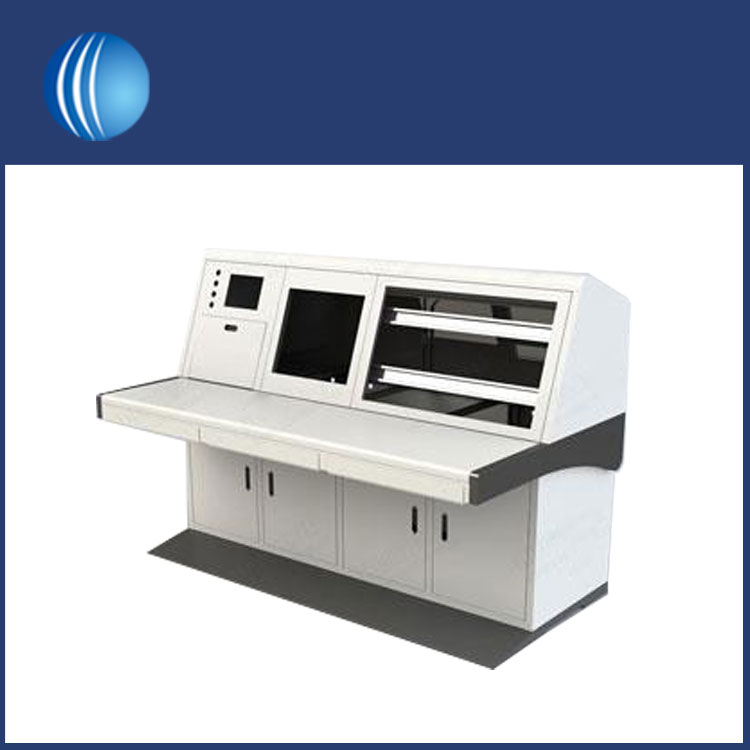
Operating an Industrial Control Console in hazardous areas—where flammable gases, vapors, dust, or fibers are present—demands more than robust functionality. It requires strict adherence to international standards that govern safety, reliability, and operational continuity. For mission-critical environments such as oil refineries, chemical plants, and grain processing facilities, a non-compliant console is not an option. SKYT specializes in engineering Industrial Control Console solutions that meet and exceed these rigorous requirements, ensuring both personnel protection and process integrity.
Core Regulatory Frameworks Governing Hazardous Locations
The design of any Industrial Control Console destined for classified zones must align with one or more of the following global standards. Compliance is not a one-time checkbox but an ongoing engineering discipline.
| Standard | Region | Key Focus Area |
|---|---|---|
| IEC 60079 Series | International | Electrical equipment in explosive atmospheres (protection types, temperature classes) |
| NFPA 70 (NEC Article 500) | North America | Class/Division system for gas, dust, and fiber hazards |
| ATEX Directive 2014/34/EU | European Union | Equipment grouping (I/II/III) and category levels for surface industries |
| UL 1203 | North America | Explosion-proof and dust-ignition-proof electrical enclosures |
| CSA C22.2 No. 30 | Canada | Explosive atmosphere protection for industrial control equipment |
Five Critical Design Standards for Your Industrial Control Console
When engineering a SKYT Industrial Control Console for Zone 1 or Class I, Division 1 environments, our design process rigorously addresses these five pillars:
1. Enclosure Type and Protection Method (Ex d, Ex e, Ex p)
The enclosure is the first line of defense. Explosion-proof (Ex d) enclosures contain internal explosions without propagating to the external atmosphere. Increased safety (Ex e) prevents arcs or sparks under normal operation. Pressurized (Ex p) maintains a positive internal pressure to exclude flammable gases. SKYT selects the optimal method based on the specific gas group (IIA, IIB, IIC) and temperature class (T1–T6) of your site.
2. Ingress Protection (IP) and NEMA Ratings
A hazardous area console must resist dust ingress and moisture intrusion. Minimum requirements typically start at IP66 (dust-tight and protected against powerful water jets) or NEMA 4X (corrosion-resistant, indoor/outdoor). For offshore or washdown applications, SKYT often designs to IP67 or NEMA 7 (hazardous locations) with additional chemical-resistant coatings.
3. Thermal Management and Surface Temperature Limits
Every component inside an Industrial Control Console generates heat. The standard mandates that the maximum external surface temperature must stay below the auto-ignition temperature of the surrounding atmosphere. This involves:
-
Derating power supplies and processors.
-
Using heat sinks over forced-air cooling (which can introduce external contaminants).
-
SKYT employs computational fluid dynamics (CFD) modeling to validate thermal performance without compromising the sealed integrity.
4. Cable Glanding and Conduit Entry Sealing
Improper cable entries are a primary failure point. Standards require certified explosion-proof cable glands that maintain the enclosure’s protection level. Additionally, all unused entries must be plugged with listed blanking elements. SKYT integrates pre-configured entry plates with multi-cable transit systems that simplify installation while preserving the hazardous-area rating.
5. Grounding, Bonding, and Electrostatic Discharge (ESD) Control
A floating ground can turn a metal console into an ignition source. The design must ensure:
-
Continuous bonding between all metallic parts.
-
Low-impedance grounding paths (<1 ohm).
-
Use of antistatic paints and non-sparking hardware.
Every SKYT Industrial Control Console undergoes a 100% continuity test before shipment, with documented traceability.
Frequently Asked Questions About Industrial Control Console in Hazardous Areas
Q1: Can I use a standard commercial Industrial Control Console if I install it inside a purged cabinet?
A1: No. A standard commercial console lacks the internal component spacing, creepage distances, and fault current ratings required by IEC 60079. Even when placed inside a purged cabinet, the console itself must be evaluated as part of the total system. Under NEC and ATEX, the internal components must be suitable for the zone classification, or the entire assembly must be certified as a single unit. SKYT offers fully integrated, pre-certified systems that eliminate this field-engineering risk, saving you weeks of project validation time.
Q2: What documentation must accompany a certified Industrial Control Console for a hazardous area?
A2: At minimum, you require an EC-Type Examination Certificate (for ATEX) or a Control Drawing (for NEC/CSA) that defines the maximum ratings, cable entry specifications, and any field-wiring limitations. Additionally, the manufacturer must provide an Instruction Manual specific to installation, operation, and maintenance in explosive atmospheres. SKYT delivers a complete dossier including certificates, drawings, and a traceable test report for each serialized console—ensuring your plant’s audit trail is always inspection-ready.
Q3: How often does an Industrial Control Console in a hazardous zone require recertification or requalification?
A3: The hardware certification itself does not expire, but the installation must be periodically inspected per local regulations (e.g., NEC 70E or IEC 60079-17 recommends at least every 3 years in moderate risk zones, and annually in high-risk areas). However, if you modify the console—adding a new HMI, changing a power module, or replacing a wiring harness—the modified assembly must be re-evaluated by a notified body. SKYT offers modular designs where field-replaceable parts are pre-approved, so you can swap components without triggering a full recertification, reducing downtime and compliance overhead.
Why SKYT Leads in Hazardous-Area Console Engineering
Beyond meeting minimum standards, SKYT embeds practical intelligence into every Industrial Control Console:
-
Material selection: 316L stainless steel or powder-coated aluminum with 500+ hour salt-spray resistance.
-
Operator interface: Daylight-readable displays with glove-friendly touchscreens, certified for Zone 2/22.
-
Cable management: Internal segregated raceways for power, signal, and fiber to prevent EMI coupling.
-
Testing: Each console is subjected to dielectric strength, insulation resistance, and internal arc tests.
Our engineering team collaborates with your process safety group to map each console’s placement, ingress points, and emergency-stop architecture, ensuring that the final product not only passes certification but also enhances daily operator confidence.
Ready to Secure Your Hazardous-Area Operations?
Designing a compliant Industrial Control Console is a specialized discipline—one that SKYT has refined across thousands of global installations. Do not leave safety to interpretation. Contact our engineering desk today for a no-obligation standards review of your current console specification. We will provide a gap analysis, a preliminary thermal simulation, and a budgetary proposal within 5 business days.