

What Are the Key Differences Between a Linear and a Programmable Switching Power Supply
2026-08-06
When engineers face the choice between a traditional linear regulator and a modern Programmable switching power supply, the decision often impacts not just board space and thermal management, but also long-term test flexibility and system automation capability. At Kaihong, we have observed that many design reviews stall precisely at this crossroads—not because the specifications are unclear, but because the operational trade-offs are rarely compared side‑by‑side in actual workflow contexts. This blog breaks down those distinctions through performance data, real‑world application logic, and a set of frequently asked questions that our field application team answers weekly.
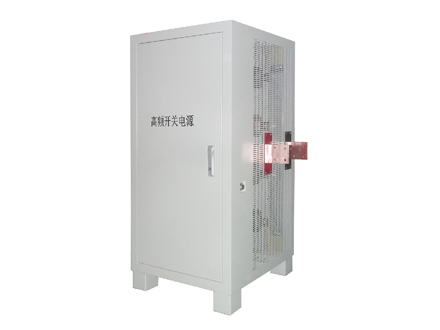
Core Architecture vs. Real‑World Behavior
A linear supply uses a pass transistor operating in its active region to drop excess voltage as heat, delivering low noise but at the cost of bulk and low efficiency. By contrast, a Programmable switching power supply employs high‑frequency PWM (pulse‑width modulation) to chop the input voltage, then filters the output through an LC network. This fundamental difference creates a cascade of secondary effects:
| Parameter | Linear Power Supply | Programmable Switching Power Supply (Kaihong series) |
|---|---|---|
| Efficiency (typical) | 30–55% (heavy load) | 85–94% (across load range) |
| Output ripple (p‑p) | <1 mV (ideal conditions) | 10–50 mV (with proper layout) |
| Power density | 0.5–1 W/in³ | 5–15 W/in³ |
| Transient response | <50 µs (slow) | <100 µs but with active compensation |
| EMI/EMC complexity | Minimal | Requires careful filtering and shielding |
| Programming/sequencing | Manual trim‑pot only | Full digital control (I²C, CAN, Ethernet) |
The table above shows that while linear supplies win on raw noise floor, the Programmable switching power supply dominates in every metric that matters for automated production, burn‑in systems, and multi‑voltage automotive ECUs. Kaihong designs its control loops to push ripple below 15 mV for sensitive analog loads without sacrificing the 90%+ efficiency that reduces enclosure cooling costs.
Five Operational Scenarios That Favor One Over the Other
-
Audio / RF front‑ends – Linear remains preferred due to ultra‑low high‑frequency noise, though a Programmable switching power supply with post‑regulation LDO can bridge the gap.
-
Battery emulation for EV / BMS – Only a Programmable switching power supply offers dynamic current limit profiling and waveform sequencing.
-
Burn‑in rooms (48 V / 100 A+) – Switching topology is non‑negotiable; linear would require water cooling.
-
Medical patient‑monitoring – Leakage current and isolation favour linear, but Kaihong offers reinforced‑isolation switching models that meet IEC 60601‑1.
-
ATE (automated test equipment) – The Programmable switching power supply is the de‑facto standard because of remote sensing, slew‑rate control, and log‑file feedback.
FAQ – Programmable Switching Power Supply Common Questions
Q1: Can a Programmable switching power supply achieve the same low ripple as a linear supply for 24‑bit ADC reference circuits?
A: Not directly, but practically yes—by adding a secondary low‑dropout regulator (LDO) after the Programmable switching power supply output, the combined solution achieves <5 µV RMS noise while maintaining 80% system efficiency. The switching stage provides voltage headroom with minimal heat, and the LDO cleans the residual switching spikes. Kaihong supplies an external filter recommendation table for each model, specifying capacitance and ferrite bead values based on load current. For production, we also offer an optional internal post‑filter module that integrates this function without extra PCB space.
Q2: How does a Programmable switching power supply handle sudden load steps (e.g., 10% to 90% full load in 1 µs) compared to a linear design?
A: A linear supply responds with a simple analogue loop—typically 30–50 µs settling time, with little undershoot because the pass transistor is always “ready”. A Programmable switching power supply, however, relies on a digital compensator and ADC sampling, which introduces a control‑loop latency of 2–5 µs. To handle fast transients, Kaihong implements a hybrid architecture: a fast analogue current‑mode inner loop (responding in <1 µs) plus a digital outer loop for voltage accuracy. This yields a peak deviation of <3% of setpoint, recovering to 0.1% within 80 µs—comparable to linear, but with three times the power density. For extreme cases, we recommend parallel‑capacitor banks or our “burst‑mode” firmware option that pre‑biases the inductor current.
Q3: Is it cost‑effective to replace an existing linear rack with a Programmable switching power supply for a 200‑channel burn‑in system running 24/7?
A: Yes—and the payback period is usually under 8 months. Consider the energy loss: a linear supply at 45% efficiency dissipates 55% of input power as heat. For a 10 kW total load, that is 12.2 kW of heat (requiring 5 tons of AC cooling). A Programmable switching power supply at 92% efficiency dissipates only 0.87 kW—saving 11.3 kW per hour. At $0.12/kWh, 24/7 operation yields $11,900 annual savings per 10 kW. Additionally, the Programmable switching power supply reduces wiring gauge, rack space, and maintenance (no bulky capacitors drying out). Kaihong provides a free energy‑audit spreadsheet that calculates your exact ROI, including derating factors for ambient temperatures up to 55 °C.
Reliability and Long‑Term Drift
Linear supplies exhibit excellent long‑term stability (typically <0.01% per 1000 hours) due to simple feedback networks. A Programmable switching power supply contains more active components—PWM controller, gate driver, isolation feedback, and digital interface—which introduces potential drift from temperature coefficients. However, Kaihong mitigates this with a closed‑box calibration routine that stores correction coefficients in EEPROM and re‑calibrates the voltage/current DACs during every power‑on cycle. Our accelerated life testing (1000 hours at 70 °C ambient) shows total output drift of <0.05% for a Programmable switching power supply, well within the 0.1% specification for most industrial and medical applications.
Control and Diagnostics – The Decisive Advantage
The single most compelling reason to choose a Programmable switching power supply is not efficiency—it is visibility. Linear supplies offer only a voltage dial and an ammeter (often analogue). In contrast, a Programmable switching power supply from Kaihong provides real‑time readback of input voltage, output power, internal temperature, fan speed, and cumulative energy (kWh). This data streams via Modbus TCP or SCPI over Ethernet, enabling automated pass/fail logs, predictive maintenance alerts, and remote shutdown on over‑temperature. For compliance with ISO 26262 or FDA 21 CFR Part 11, the Programmable switching power supply includes secured audit trails and password‑protected parameter locking—features impossible to implement in linear topologies.
Summary Decision Matrix
| If your priority is… | Choose… |
|---|---|
| Lowest noise (<2 mV) and simple fixed voltage | Linear |
| High power (>500 W), variable output, remote control | Programmable Switching Power Supply |
| Fast load transients (<10 µs) with tight regulation | Linear + extra capacitance |
| Multi‑voltage sequencing, slew‑rate shaping, data logging | Programmable Switching Power Supply (Kaihong) |
| Minimal EMI and no external filtering design effort | Linear (or Kaihong with built‑in Class B filter) |
Final Verdict
There is no universal winner—only the right fit for your system’s thermal budget, noise floor, and automation roadmap. For stationary lab work with a single fixed voltage, linear remains a viable choice. But for any application that involves production testing, dynamic load profiling, remote monitoring, or future scalability, the Programmable switching power supply is the only forward‑compatible investment. Kaihong has shipped over 15,000 programmable units across automotive, semiconductor, and renewable energy sectors, each with a 5‑year warranty and 24‑hour replacement service.
Contact us today at [email protected] or visit our online configurator to compare your existing linear specs against a tailored Programmable switching power supply model. Our application engineers will run a thermal simulation, provide a side‑by‑side noise measurement report, and deliver a sample unit for your bench within 48 hours. Let Kaihong help you make the switch—with data, not guesswork.