

What Are the Main Fire Safety Standards for a European Prefabricated Outdoor Transformer Box Substation
2026-06-18
When utility managers, industrial facility owners, or renewable project developers evaluate a European Prefabricated Outdoor Transformer Box Substation, the first concern is rarely voltage ratings or footprint—it is fire safety. A single thermal event in a compact, pad-mounted enclosure can lead to catastrophic downtime, environmental penalties, and reputational damage. At Lugao Power, we have engineered and supplied hundreds of these units across Europe, and we consistently observe that compliance with fire safety standards is the non-negotiable foundation of any successful deployment.
This blog breaks down the mandatory fire safety frameworks, material requirements, and testing protocols that govern every European Prefabricated Outdoor Transformer Box Substation, while showing you how Lugao Power builds beyond minimum compliance to deliver true operational security.
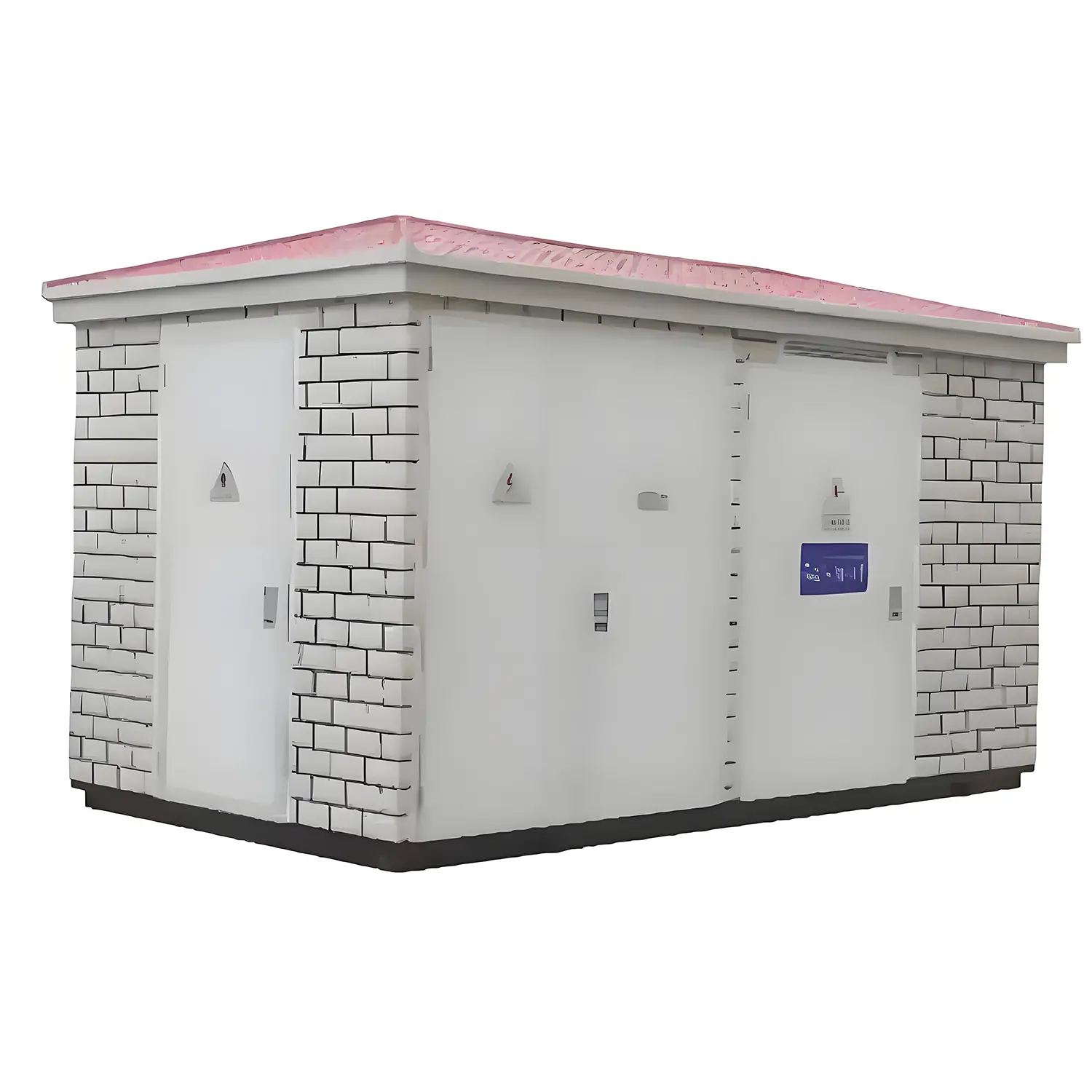
The Core Fire Safety Standards You Must Know
Three normative documents form the fire safety spine for any European Prefabricated Outdoor Transformer Box Substation installed in EU member states or projects following European best practices. The table below summarises their scope and critical clauses.
| Standard | Title | Key Fire Requirement for Substations |
|---|---|---|
| IEC 62271-202 | High-voltage switchgear – Part 202: Prefabricated substations | Internal arc fault containment (AFL/AFR); flame-retardant enclosures; temperature rise limits under short-circuit |
| EN 13501-1 | Fire classification of construction products | Mandates Euroclass B-s3, d2 or higher for enclosure panels (limited flame spread, low smoke, no flaming droplets) |
| CEN/TS 1187 | External fire exposure roof tests | Requires roof assemblies to resist radiant heat and flying brands (test 4) for outdoor installations near forests or high-risk zones |
Beyond these, national appendices (e.g., German VDE 0101, French UTE C13-100) often add local insulation oil fire-point thresholds (minimum 300°C for natural esters) and mandatory spacing distances to site boundaries.
Material-Level Fire Protections That Actually Matter
A European Prefabricated Outdoor Transformer Box Substation is not a single component—it is a system of barriers, fluids, and active devices. Lugao Power applies a three-layer defence strategy:
-
Enclosure Core – Mineral wool or aerogel composite panels with Euroclass A2-s1, d0 rating (non-combustible) for all HV/LV compartments. This buys at least 90 minutes of fire resistance (REI 90) per EN 13501-2.
-
Insulating Fluid – Synthetic ester or natural ester fluids (e.g., rapeseed-based) with fire points > 350°C, compared to 160°C for conventional mineral oil. These fluids are self-extinguishing and biodegradable.
-
Passive Protection – Integrated flame-arresting ventilation louvers that close automatically when internal temperature exceeds 120°C, plus pressure-relief flaps that direct hot gases downward away from operator walkways.
Active systems (gas detection, dry-powder auto-extinguishers) remain optional, but Lugao Power recommends them for high-value urban or tunnel-adjacent installations.
Testing and Certification – What a Valid Certificate Looks Like
Many suppliers claim “IEC-compliant,” but fire safety certification for a European Prefabricated Outdoor Transformer Box Substation requires witnessed type tests in accredited labs (e.g., KEMA, CESI, or FGH). Valid reports must include:
-
Internal arc test (IAC) at rated short-time current for 1 s, with indicators (cotton flags) placed around the enclosure showing no ignition.
-
Glow-wire test (IEC 60695-2-11) on all polymeric parts – no flame persistence > 30 s after wire removal.
-
Roof fire test per CEN/TS 1187 – no penetration of flames through the roof deck within 30 minutes of exposure.
Lugao Power provides a full test dossier with every shipment, including third-party witness signatures, not self-declared performance sheets. This documentation is often the difference between passing a local inspection and facing a stop-work order.
Frequently Asked Questions (FAQ)
Q1: Does a European Prefabricated Outdoor Transformer Box Substation require an automatic fire suppression system by law?
A: Under the harmonised standard IEC 62271-202, automatic suppression is not mandated for all installations. However, national regulations (e.g., Italy’s DM 01/02/1986 for civil protection) and insurer requirements (e.g., FM Global or Allianz Risk) often make it compulsory when the substation is within 5 metres of a building entrance, fuel storage, or public footpath. Lugao Power offers modular dry-chemical and aerosol-based kits that fit inside the MV compartment without increasing the footprint, and we assist clients in conducting a formal fire risk assessment (FRA) to determine local necessity. Our experience shows that over 70% of urban projects now opt for suppression as a risk-mitigation measure, even when not strictly mandated.
Q2: Can I replace mineral oil with an ester fluid in an existing European Prefabricated Outdoor Transformer Box Substation to improve fire safety?
A: Yes, but the retrofit is not a simple “drain-and-fill” operation. Ester fluids have different viscosity, oxidation stability, and moisture-affinity profiles than mineral oil. The transformer’s cellulose insulation (Kraft paper) must be thermally upgraded to accept higher operating temperatures (up to 110°C for synthetic esters), and the tank gaskets (typically NBR) must be swapped for FKM or HNBR to prevent leakage. Additionally, the pressure-relief settings and oil-level indicators need recalibration. Lugao Power performs complete retrofitting studies, including dielectric strength verification and dissolved gas analysis (DGA) baselines, before any fluid exchange. We have successfully converted over 200 units across Scandinavia and the Balkans, achieving fire point improvements from 160°C to >350°C without derating the transformer.
Q3: How often must the fire-resistant enclosure of a European Prefabricated Outdoor Transformer Box Substation be re-certified or inspected?
A: There is no single “expiry date” for the enclosure’s fire rating, but EN 50110-1 mandates annual visual inspections and a full thermographic scan of all bolted connections. Every 6 years, a qualified engineer must perform a non-destructive test (NDT) on the panel joints and sealants, because thermal cycling can degrade intumescent strips and gaskets. If the substation is located in a seismic zone or near heavy traffic, Lugao Power recommends a compressed 3-year cycle with peel-testing of fire-stopping compounds around cable entries. We provide a detailed inspection checklist with every unit, and our after-sales team can perform on-site audits to ensure your certification remains valid for both local fire brigades and ISO 45001 auditors.
Why Lugao Power Exceeds the Minimum
Many manufacturers treat fire safety as a checkbox. We treat it as an engineering philosophy. Every European Prefabricated Outdoor Transformer Box Substation leaving our workshop undergoes a full-scale temperature-rise test with flame-sensor arrays, and we document material traceability back to the mill certificates for steel and the batch numbers for ester fluids. Our units consistently achieve EBI 30 (external fire exposure without failure) under the SP Fire 105 method – a benchmark rarely pursued by competitors.
We also offer a unique “Fire Safety Plus” package that includes:
-
Dual-frequency UV/IR flame detectors
-
Nitrogen-injected passive extinguishing (no agent refill needed for 10 years)
-
Remote alarm transmission to your SCADA or building management system
Ready to Specify a Fire-Safe European Prefabricated Outdoor Transformer Box Substation ?
Fire safety is not a secondary feature—it is a primary design driver that affects insurance premiums, permitting timelines, and community acceptance. Lugao Power has delivered over 1,200 substations across 34 countries, with zero fire-related incidents in operation. Our engineering team provides free fire-risk modelling for your specific site coordinates and load profile.
Contact us today to request a compliance matrix tailored to your national authority. Ask for our 30-page Fire Safety Design Guide – we will send it within 2 working hours. Your project deserves a substation that protects not just your grid, but your people and your peace of mind. Lugao Power – fire-smart, future-ready.