

What are the most common failure modes in medium voltage switchgear
2026-04-20
Medium voltage switchgear is the backbone of industrial and utility power distribution. Understanding its failure modes is critical for reliability and safety. At Wzonpa, we have analyzed thousands of field incidents to identify the most frequent causes of downtime. This guide outlines the primary failure mechanisms, supported by data and practical answers to common questions.
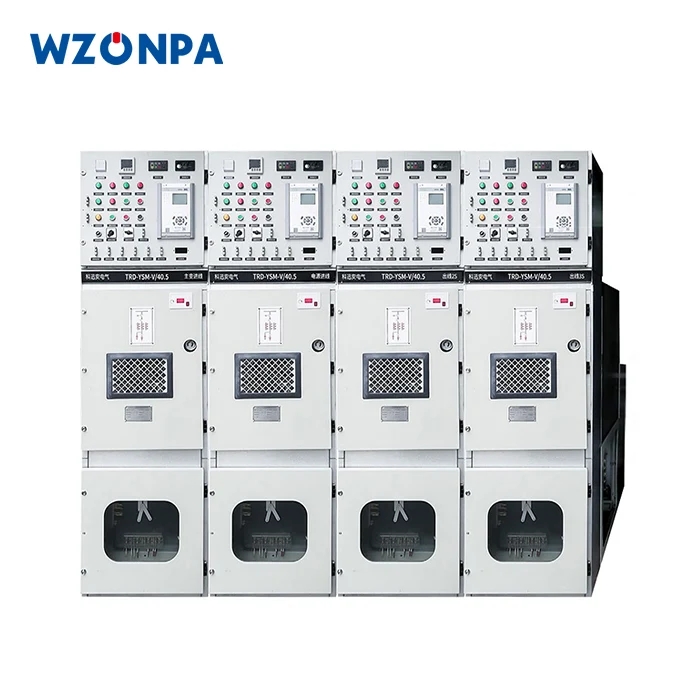
Most Common Failure Modes in MV Switchgear
The table below summarizes the leading failure modes based on industry surveys and maintenance records.
| Failure Mode | Typical Cause | Early Indicator | Impact Level |
|---|---|---|---|
| Partial Discharge (PD) | Insulation voids, surface contamination | Audible buzzing, elevated temperature | High (progressive) |
| Mechanical Wear | Frequent breaker operations, poor lubrication | Unusual noise, slow mechanism response | Medium to High |
| Moisture Ingress | Failed gaskets, condensation, poor sealing | Visible rust, reduced insulation resistance | Critical |
| Contact Degradation | Overloading, loose connections, oxidation | Hot spots on thermal imaging | High (arc flash risk) |
| Auxiliary Component Failure | Control relay, heater, or trip coil malfunction | Erratic control signals, alarm logs | Medium |
Detailed Analysis of Key Failure Modes
1. Partial Discharge (Internal and Surface)
PD is the most insidious failure. Over time, electrical trees form in epoxy or air voids, leading to complete breakdown. Regular ultrasonic or high-frequency current transformer (HFCT) monitoring is essential.
2. Mechanical Failures in Operating Mechanisms
Spring-charged mechanisms, latches, and linkages corrode or lose lubrication. This prevents the breaker from closing or tripping on demand. Wzonpa recommends dynamic timing tests annually.
3. Insulation Breakdown from Contamination
Dust, salt, or chemical residue on insulators creates leakage paths. In humid environments, flashover occurs at lower than rated voltages. Silicone-based cleaning and anti-tracking coatings reduce risk.
MV Switchgear FAQ – Common Questions Answered
What is the most dangerous failure mode in MV Switchgear and why?
The most dangerous failure is internal arc fault (arc flash). It often results from a combination of contact degradation and insulation breakdown. An arc can reach temperatures over 10,000°C, vaporizing copper and steel, generating a pressure wave that blows doors open. This poses fatal risks to operators and destroys adjacent equipment. Proper arc-resistant construction and fast fault clearing are the only defenses.
How often should MV Switchgear be tested to detect early failure modes?
Wzonpa follows the ANSI/NETA MTS standard: visual inspection every 6 months, thermography and contact resistance tests annually, and partial discharge survey every 1 to 3 years depending on criticality. For harsh environments (high humidity, dust, or chemical exposure), increase frequency to quarterly checks. Early detection reduces catastrophic failure probability by over 70%.
Can predictive maintenance eliminate all MV Switchgear failures?
No method eliminates all failures, but predictive maintenance reduces unplanned outages by 80-90%. Vibration analysis, oil dielectric testing (for oil breakers), and continuous PD monitoring catch most developing faults. However, random component defects and lightning-induced surges remain unpredictable. A hybrid strategy – predictive for gradual wear, plus protective relaying for rare events – provides the best outcome.
Best Practices for Failure Prevention
-
Thermography every 12 months – detect hot spots on connections.
-
Insulation resistance (megger) testing at 5kV or 10kV – track trends, not just pass/fail.
-
Contact resistance (DLRO) – micro-ohm readings identify pitted or loose contacts.
-
Moisture control – space heaters with thermostats, plus silica gel breathers.
Why Choose Wzonpa for MV Switchgear Reliability
Wzonpa provides diagnostic tools and retrofill solutions specifically designed to target these failure modes. From PD sensors to contact resistance meters, our equipment meets IEEE and IEC standards. Field service support is available globally.
Contact us today for a customized MV Switchgear health assessment or to request a quote on monitoring equipment. Visit our website or email [email protected] to speak with an application engineer.