

What Are the Testing Requirements for a 10kV Indoor Current Transformer
2026-09-23
Ensuring the reliability and safety of electrical systems begins with rigorous testing of critical components. For engineers and procurement specialists, understanding the exact testing protocols for a 10kV Indoor Current Transformer is essential to guarantee accurate metering, reliable protection, and long-term operational stability. At Anqiang Power, we apply strict quality control measures to ensure every 10kV Indoor Current Transformer meets international standards before it reaches your facility. This guide outlines the core testing requirements, procedures, and acceptance criteria.
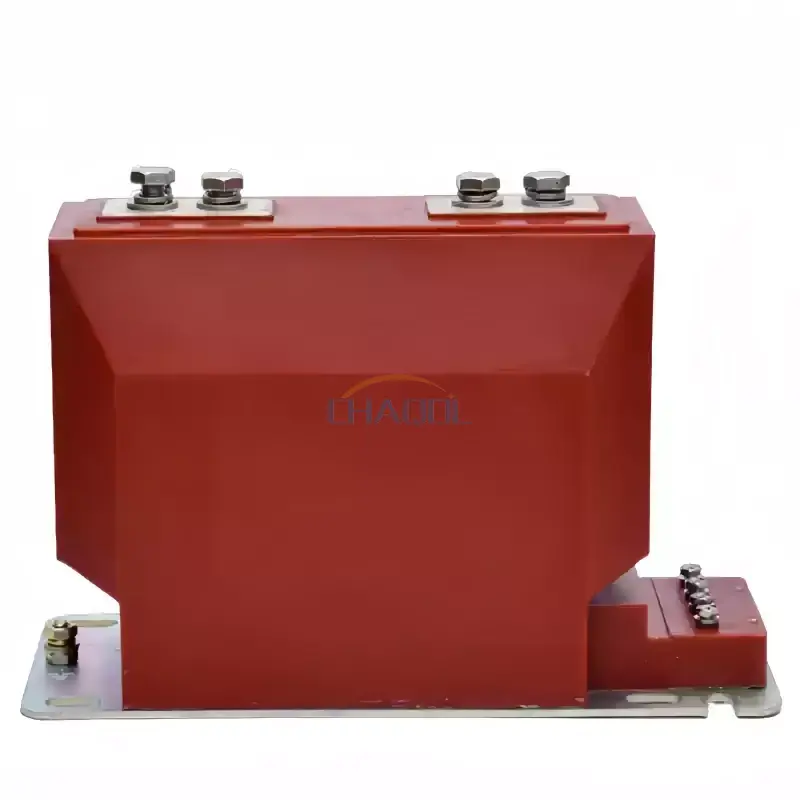
Why Testing a 10kV Indoor Current Transformer Matters
A 10kV Indoor Current Transformer operates in demanding environments where accuracy and insulation integrity directly impact system safety. Routine and type tests verify that the unit can withstand electrical, thermal, and mechanical stresses without failure. Below are the primary testing categories.
Core Testing Requirements for a 10kV Indoor Current Transformer
| Test Category | Purpose | Key Standards |
|---|---|---|
| Insulation Resistance | Verify insulation health | IEC 61869-1, GB 20840.1 |
| Power Frequency Withstand | Confirm dielectric strength | IEC 61869-2 |
| Ratio & Polarity | Ensure correct transformation | IEEE C57.13 |
| Burden & Accuracy | Validate metering performance | IEC 61869-2 |
| Partial Discharge | Detect internal defects | IEC 61869-1 |
1. Insulation Resistance Test
Measure primary-to-secondary and secondary-to-ground resistance using a megohmmeter. Values below 1000 MΩ may indicate moisture or contamination, requiring further investigation before commissioning.
2. Power Frequency Withstand Voltage Test
Apply a high voltage (e.g., 28 kV for 10kV class) for one minute. No breakdown or flashover is acceptable. This confirms the 10kV Indoor Current Transformer can endure transient overvoltages.
3. Ratio and Polarity Verification
Confirm the turns ratio matches nameplate data and that polarity is correct for differential and directional protection schemes. Errors beyond ±0.5% are typically rejected.
4. Burden and Accuracy Test
Load the secondary circuit with rated burden and measure composite error. A 10kV Indoor Current Transformer for metering must maintain accuracy class 0.2 or 0.5, while protection cores require 5P or 10P.
5. Partial Discharge Measurement
Conduct at 1.2× rated voltage. Discharge levels above 10 pC indicate insulation weaknesses that could lead to premature failure.
Recommended Test Sequence
-
Visual inspection and nameplate verification.
-
Insulation resistance measurement.
-
Power frequency withstand test.
-
Ratio, polarity, and burden testing.
-
Partial discharge assessment.
-
Final documentation review.
Anqiang Power follows this sequence for every 10kV Indoor Current Transformer, ensuring traceable and repeatable results.
FAQ: Common Questions About 10kV Indoor Current Transformer Testing
Q1: How often should a 10kV Indoor Current Transformer be tested after installation?
A1: After initial commissioning tests, a 10kV Indoor Current Transformer should undergo routine testing every 2–3 years, or immediately after any fault event, visual damage, or unexpected meter reading deviation. Preventive maintenance testing helps detect insulation degradation before it causes failure.
Q2: What is the acceptable partial discharge level for a 10kV Indoor Current Transformer?
A2: According to IEC 61869-1, the maximum acceptable partial discharge level for a 10kV Indoor Current Transformer is typically 10 pC at 1.2 times the rated voltage. Exceeding this value suggests internal voids, contamination, or inadequate impregnation, and the unit should be replaced or reconditioned.
Q3: Can a 10kV Indoor Current Transformer be tested on-site, or must it be sent to a laboratory?
A3: Most tests, including insulation resistance, ratio, polarity, and burden, can be performed on-site with portable equipment. However, partial discharge and power frequency withstand tests may require a controlled laboratory environment. Anqiang Power provides detailed on-site testing guidelines and factory test reports for every 10kV Indoor Current Transformer.
Contact Us
For expert guidance on testing requirements, product selection, or custom solutions for your 10kV Indoor Current Transformer needs, contact Anqiang Power today. Our engineering team is ready to support your project with certified testing documentation and reliable products. Reach out now to request a quote or technical consultation.