

What Are the Wiring and Connection Methods for a 20 kV Voltage Transformer
2026-11-04
Proper wiring and connection of a 20 kV Voltage Transformer directly affect measurement accuracy, protection reliability, and personnel safety in medium-voltage systems. Whether you are commissioning new switchgear or replacing an existing unit, understanding the correct connection methods is essential. Youbian has supported utilities, industrial plants, and EPC contractors with reliable instrument transformers for decades, and this guide summarizes the wiring practices our engineers recommend for 20 kV Voltage Transformer installations.
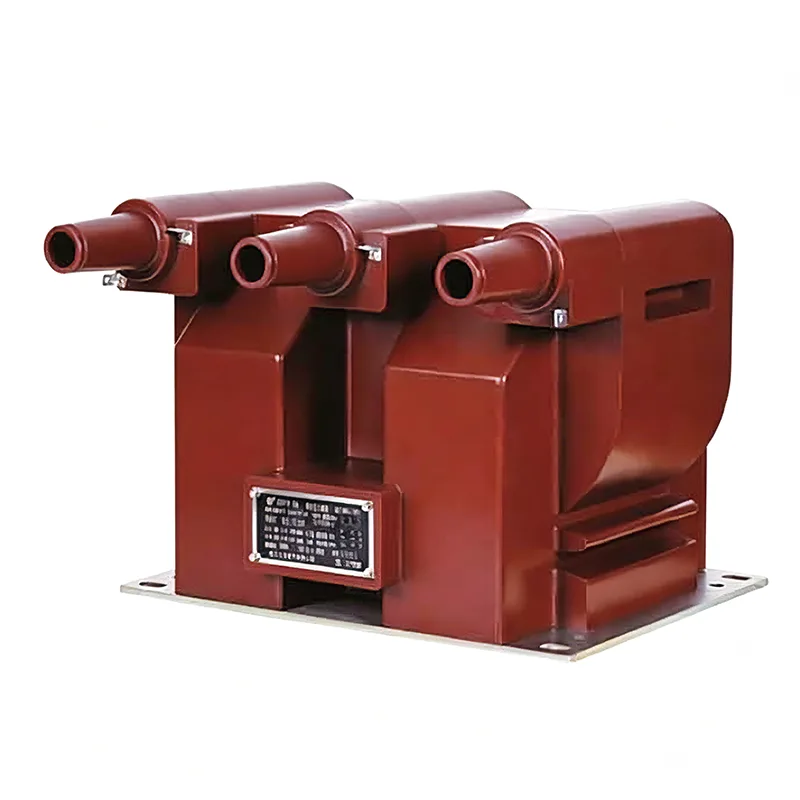
Understanding the Terminal Layout
A 20 kV Voltage Transformer typically provides primary terminals (A, N) and secondary terminals (a, n) for the measurement winding, plus a residual voltage winding (da, dn) for earth-fault protection. Before wiring, confirm the terminal markings on the nameplate and verify the ratio and burden against the system design.
| Terminal | Function | Typical Connection |
|---|---|---|
| A, N | Primary winding | Connected to the 20 kV busbar or cable via fuses |
| a, n | Secondary measurement winding | To meters, transducers, or protection relays |
| da, dn | Residual voltage winding | Open-delta connection for earth-fault detection |
| Earth terminal | Housing and screen earthing | Bonded to station earth grid |
Primary-Side Connection Methods
-
Fuse-protected connection: A high-voltage fuse is installed in series with the primary terminal to isolate faults and protect the network.
-
Busbar connection: The 20 kV Voltage Transformer is mounted directly on the busbar compartment with rigid bars, ensuring short, low-impedance leads.
-
Cable connection: Used in retrofit or compact switchgear, with stress-controlled terminations and adequate creepage distance.
-
Withdrawable truck mounting: Common in metal-clad switchgear, allowing safe isolation for maintenance.
Secondary-Side Wiring Practices
| Practice | Requirement | Reason |
|---|---|---|
| Secondary earthing | One point of the secondary winding earthed at the transformer | Prevents floating potentials and protects operators |
| Cable sizing | Adequate cross-section to limit burden voltage drop | Maintains accuracy class |
| Screening | Screened secondary cables with screen earthed at one end | Reduces EMI in relay circuits |
| Phase identification | Clear marking of a, n, da, dn | Avoids wiring errors during commissioning |
| Burden check | Total burden within rated VA | Prevents ratio and phase errors |
Residual Voltage and Open-Delta Connection
For unearthed or resonant-earthed 20 kV networks, the residual winding is wired in open delta. The voltage across the open-delta terminals rises during an earth fault, triggering the protection relay. Youbian recommends verifying the residual voltage ratio (typically 1/3 of the phase-to-phase ratio) and confirming polarity before energization.
Safety and Commissioning Checks
-
Verify insulation resistance of primary and secondary circuits.
-
Confirm polarity with a DC or AC test.
-
Measure ratio and burden at rated voltage.
-
Check that secondary earthing is single-point and secure.
-
Inspect creepage distances and clearances for the 20 kV Voltage Transformer.
FAQ: 20 kV Voltage Transformer Common Questions
Q: Can the secondary winding of a 20 kV Voltage Transformer be left unearthed?
A: No. One point of the secondary winding must be solidly earthed to prevent dangerous floating potentials and to provide a stable reference for relays and meters.
Q: How is a 20 kV Voltage Transformer connected for earth-fault protection?
A: The residual winding is connected in open delta, so that a zero-sequence voltage appears across the terminals during an earth fault and energizes the protection relay.
Q: What should be checked before energizing a newly wired 20 kV Voltage Transformer?
A: Confirm polarity, insulation resistance, ratio and burden, single-point secondary earthing, terminal tightness, and correct phase marking before applying primary voltage.
Conclusion
Correct wiring and connection of a 20 kV Voltage Transformer safeguard accuracy, protection performance, and operator safety. Following the terminal layout, earthing rules, and commissioning checks outlined above helps avoid the most common installation errors. For project-specific guidance, drawings, or product selection, contact us at Youbian today — our engineering team will help you specify and wire the right 20 kV Voltage Transformer for your system.