

What Causes Zero Sequence Current in a Zero Sequence Current Transformer
2026-10-08
Zero sequence current is one of the most important indicators of ground faults and system imbalance in modern power networks. At Anqiang Power, engineers frequently receive questions about why this current appears in a Zero Sequence Current Transformer and what it means for protection settings. Understanding the root causes helps technicians distinguish between normal residual current and a genuine fault condition that requires immediate attention.
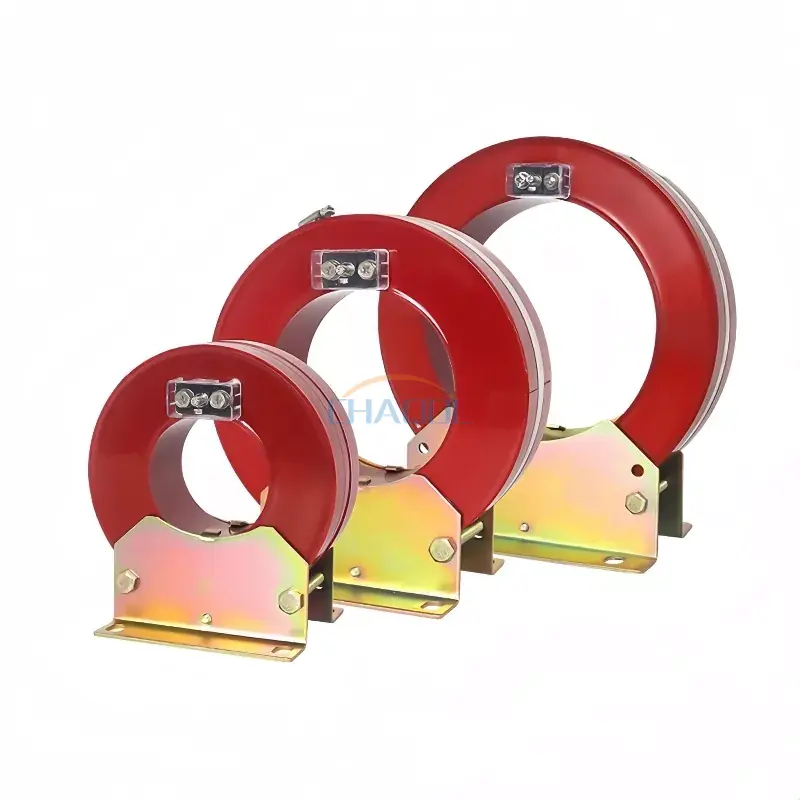
How a Zero Sequence Current Transformer Measures Residual Current
A Zero Sequence Current Transformer encircles all three phase conductors (and sometimes the neutral) inside a single magnetic core. Under balanced load conditions, the vector sum of the three phase currents equals zero, so the flux produced inside the core cancels out and no secondary current flows. When the sum is no longer zero, the Zero Sequence Current Transformer produces an output proportional to that residual current. This residual current is what protection relays interpret as zero sequence current.
Main Causes of Zero Sequence Current
The causes can be grouped into fault-related and non-fault-related categories.
| Category | Cause | Typical Behaviour |
|---|---|---|
| Fault-related | Insulation breakdown to earth | Sudden, large residual current |
| Fault-related | Cable or winding earth fault | Persistent, relay trip level |
| Fault-related | Arcing ground fault | Intermittent, unstable reading |
| Non-fault | Unbalanced single-phase loads | Small, steady residual current |
| Non-fault | Harmonics and switching transients | Distorted waveform, short duration |
| Non-fault | Incorrect cable routing | False residual current |
| Non-fault | Core saturation or residual magnetism | Offset or drifting output |
1. Insulation Failure and Earth Faults
The most common cause is a breakdown of insulation between a conductor and earth. Current escapes to ground instead of returning through the neutral, so the sum of the phase currents is no longer zero. A Zero Sequence Current Transformer detects this imbalance directly, which is why it is the preferred sensor for sensitive earth fault protection.
2. Unbalanced Loads
Single-phase loads, unequal tap settings, or uneven phase impedances create a small standing residual current. This is normal and must be distinguished from a fault by setting the relay pickup above the maximum unbalanced load current.
3. Harmonics and Transients
Triplen harmonics (3rd, 9th, 15th) add in phase rather than cancelling, producing residual current even without a fault. Capacitor switching and motor starting also create short transients that a Zero Sequence Current Transformer may register momentarily.
4. Installation and Routing Errors
If the return conductor is routed outside the core, or if the cable screen is not terminated correctly, the Zero Sequence Current Transformer sees a false residual current. Correct window routing and screen grounding are essential.
5. Core-Related Effects
Residual magnetism, saturation, and temperature drift can introduce measurement offset. Anqiang Power recommends regular demagnetisation and ratio verification to keep readings accurate.
Key Design and Selection Points
-
Verify the Zero Sequence Current Transformer ratio and burden match the relay input.
-
Choose a core size that accommodates all conductors with adequate clearance.
-
Confirm sensitivity for high-impedance faults, which may produce only a few amperes.
-
Use shielded leads and single-point grounding to reduce noise.
-
Test with primary injection before commissioning.
FAQ
What is a Zero Sequence Current Transformer used for?
A Zero Sequence Current Transformer is used to measure the vector sum of phase currents so that earth faults and unbalanced conditions can be detected and cleared quickly.
Can a Zero Sequence Current Transformer detect high impedance faults?
Yes, a sensitive Zero Sequence Current Transformer with a low ratio and high accuracy core can detect high impedance faults that produce only small residual currents.
What is the difference between residual current and zero sequence current?
Residual current is the measured sum of phase and neutral currents, while zero sequence current is the symmetrical component derived from that imbalance in a Zero Sequence Current Transformer installation.
Contact Us
For expert guidance on selecting, testing, or troubleshooting a Zero Sequence Current Transformer for your project, contact Anqiang Power today and let our engineering team help you achieve reliable earth fault protection.