

What Is a Differential Current Circuit Breaker RCBO and Why Is It Essential for Modern Electrical Systems?
2026-01-09
In modern electrical installations, safety, reliability, and efficiency are no longer optional—they are essential. As electrical loads become more complex and safety regulations more stringent, traditional protection devices often fall short of providing comprehensive protection. This is where the Differential Current Circuit Breaker RCBO stands out. By combining multiple protective functions into a single compact device, RCBOs have become a preferred solution for residential, commercial, and industrial applications. Companies like Wenzhou Santuo Electrical Co., Ltd. have been at the forefront of developing high-quality RCBO solutions that meet international standards while addressing real-world electrical challenges.
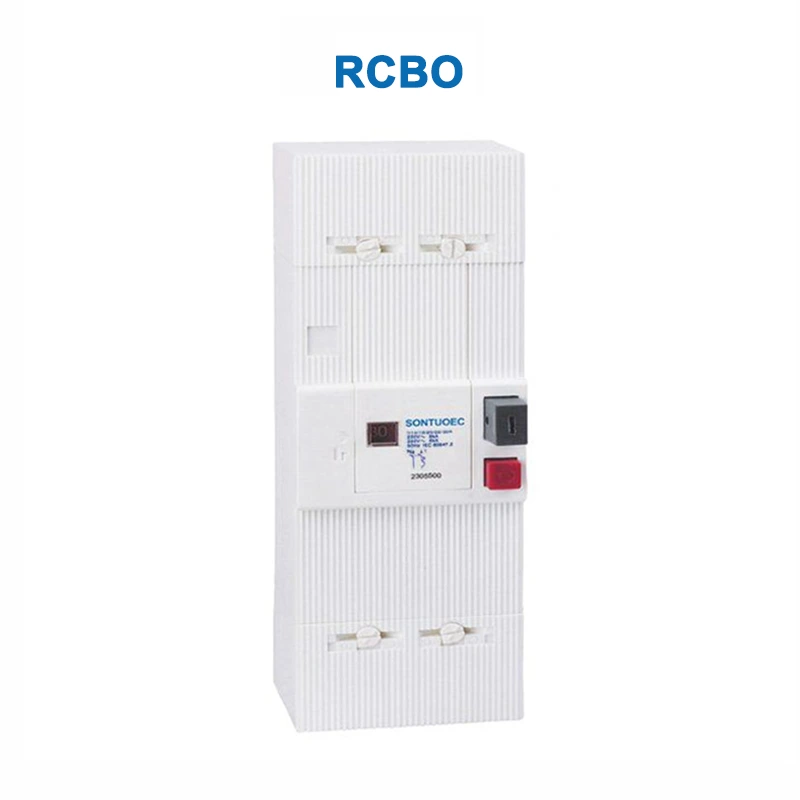
Dual-Function Protection: How Does an RCBO Work?
A Differential Current Circuit Breaker RCBO integrates two critical protection mechanisms in one unit:
-
Residual current (earth leakage) protection
-
Overcurrent and short-circuit protection
This dual-function design ensures that both human safety and equipment protection are addressed simultaneously, reducing the need for separate devices and simplifying electrical panel layouts.
Key Functions and Roles of a Differential Current Circuit Breaker RCBO
The primary role of an RCBO is to detect abnormal electrical conditions and disconnect the circuit instantly to prevent hazards. Its core functions include:
-
Preventing electric shock caused by leakage currents
-
Protecting wiring from overload and short-circuit damage
-
Reducing the risk of electrical fires
-
Ensuring stable and compliant electrical system operation
RCBO vs MCB vs RCCB: A Clear Comparison
| Device Type | Overcurrent Protection | Earth Leakage Protection | Space Efficiency |
|---|---|---|---|
| MCB | ✔ Yes | ✘ No | High |
| RCCB | ✘ No | ✔ Yes | Medium |
| RCBO | ✔ Yes | ✔ Yes | Very High |
This comparison clearly shows why the Differential Current Circuit Breaker RCBO is considered a more advanced and efficient solution.
Practical Effects and Application Benefits
Using an RCBO delivers tangible benefits in real applications:
-
Faster fault isolation, minimizing downtime
-
Improved safety for end-users and maintenance staff
-
Simplified installation and reduced wiring complexity
-
Compliance with IEC and other international standards
These advantages make RCBOs especially suitable for homes, offices, hospitals, and industrial facilities.
Why Is the Differential Current Circuit Breaker RCBO So Important?
The importance of RCBOs lies in their ability to provide comprehensive protection in a single device. As safety codes increasingly demand both leakage and overcurrent protection at the circuit level, RCBOs are becoming a standard requirement rather than an upgrade option.
Wenzhou Santuo Electrical Co., Ltd. designs RCBO products with precision engineering, stable tripping characteristics, and long service life—helping customers meet safety regulations while optimizing system performance.
Key Advantages at a Glance
-
Integrated protection improves overall system safety
-
Compact design saves panel space and installation cost
-
High reliability enhances user confidence
-
Strong market acceptance boosts project value
Conclusion
The Differential Current Circuit Breaker RCBO is more than just a protective device—it is a critical component of modern electrical safety strategy. By combining efficiency, safety, and compliance in one solution, RCBOs represent a smart investment for any electrical system. If you are looking for reliable, certified, and cost-effective RCBO solutions backed by professional manufacturing expertise, Wenzhou Santuo Electrical Co., Ltd. is ready to support your projects.
For product details, technical support, or customized solutions, contact us today and take the next step toward safer electrical systems.