
What Is a Low Voltage Self-Healing Shunt Capacitor and Why Does It Matter for Modern Power Systems?
2026-02-06
In modern electrical distribution networks, maintaining stable voltage levels and reducing energy losses are critical for improving operational efficiency and lowering operating costs. The Low Voltage Self-Healing Shunt Capacitor has become an essential component in industrial and commercial power factor correction systems. By compensating reactive power, improving power quality, and extending equipment life, this technology supports energy-efficient electrical infrastructures. At Zhejiang Geyue Electric Technology Co., Ltd., we focus on developing reliable capacitor solutions engineered for safety, durability, and performance. This article explores the role, effectiveness, importance, and application benefits of the Low Voltage Self-Healing Shunt Capacitor, providing practical insights for engineers, buyers, and decision-makers.
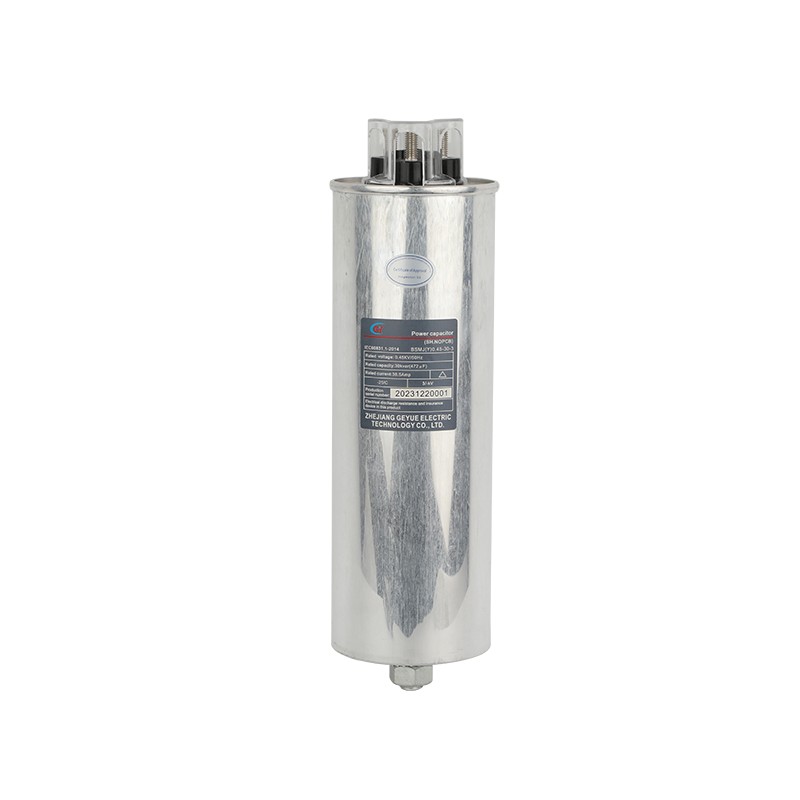
Understanding the Basics of Low Voltage Self-Healing Shunt Capacitors
A Low Voltage Self-Healing Shunt Capacitor is designed to operate in low-voltage power distribution systems, typically installed in parallel (shunt) with electrical loads to improve power factor and stabilize voltage. The "self-healing" function refers to its ability to automatically isolate dielectric faults, ensuring continuous operation without catastrophic failure.
Key characteristics include:
-
Parallel connection for reactive power compensation
-
Metallized film dielectric enabling self-healing capability
-
Enhanced safety through overpressure protection
-
Reduced energy loss and improved system efficiency
This combination makes the capacitor an optimal solution for industries seeking cost-effective and stable power management.
Role and Function in Power Systems
The Low Voltage Self-Healing Shunt Capacitor plays several critical roles within electrical systems:
-
Power Factor Correction
Reduces reactive power demand and improves system efficiency. -
Voltage Stabilization
Maintains consistent voltage levels across distribution networks. -
Loss Reduction
Minimizes line losses and enhances transmission effectiveness. -
Equipment Protection
Reduces thermal stress and prolongs machinery lifespan. -
Energy Cost Optimization
Helps avoid utility penalties related to poor power factor.
These roles demonstrate why many industrial facilities rely on capacitor banks equipped with self-healing shunt technology.
Performance Advantages and Application Effects
Companies integrating a Low Voltage Self-Healing Shunt Capacitor often experience measurable operational improvements:
-
Lower electricity bills due to reduced reactive power consumption
-
Increased efficiency of transformers and motors
-
Improved system reliability and reduced downtime
-
Compliance with modern energy management standards
Industries such as manufacturing, mining, renewable energy, commercial buildings, and automation frequently deploy these capacitors to ensure stable electrical environments.
Simple Comparison Table
Below is a simplified overview showing how a Low Voltage Self-Healing Shunt Capacitor compares with traditional capacitors:
| Feature | Low Voltage Self-Healing Shunt Capacitor | Conventional Capacitor |
|---|---|---|
| Fault Recovery | Automatic self-healing | Limited or none |
| Service Life | Long operational lifespan | Moderate lifespan |
| Safety | High due to internal protection | Lower safety margin |
| Efficiency | Optimized power factor | Standard performance |
| Maintenance | Reduced requirements | More frequent checks |
This comparison highlights why modern facilities increasingly transition to self-healing solutions.
Key Technical Elements
From a professional engineering perspective, several technical features enhance the value of the Low Voltage Self-Healing Shunt Capacitor developed by Zhejiang Geyue Electric Technology Co., Ltd.:
-
Metallized polypropylene film construction
-
Compact cylindrical or rectangular design
-
Stable capacitance over temperature variations
-
Compliance with international electrical standards
-
Flexible customization for project-specific needs
Such attributes ensure consistent performance under demanding industrial conditions.
Importance in Energy Efficiency Strategies
Energy efficiency initiatives across global markets emphasize reducing waste and improving grid stability. The Low Voltage Self-Healing Shunt Capacitor supports these goals by:
-
Decreasing reactive power circulation
-
Lowering carbon footprint through optimized energy use
-
Supporting smart grid integration
-
Improving operational sustainability
For organizations prioritizing environmental and economic balance, these capacitors represent a practical technological investment.
Application Scenarios
Typical deployment environments include:
-
Factory power distribution cabinets
-
Commercial building power systems
-
Renewable energy inverters
-
HVAC installations
-
Automated production lines
Each scenario benefits from improved voltage regulation and reduced electrical stress.
Why Choose Zhejiang Geyue Electric Technology Co., Ltd.
As a specialized manufacturer, Zhejiang Geyue Electric Technology Co., Ltd. provides advanced capacitor technologies designed with precision engineering and quality assurance. Our solutions focus on:
-
Consistent product reliability
-
Strict quality control processes
-
Competitive production capabilities
-
Technical consultation and customization
We aim to help customers enhance system performance while maintaining cost efficiency.
Conclusion
The Low Voltage Self-Healing Shunt Capacitor has become a cornerstone technology for improving power factor, enhancing voltage stability, and reducing energy costs in modern electrical systems. With its self-repairing capability, operational durability, and efficiency benefits, it represents a valuable addition to industrial and commercial power infrastructures. Backed by innovation and manufacturing expertise, Zhejiang Geyue Electric Technology Co., Ltd. is committed to delivering dependable capacitor solutions that meet evolving energy demands.
If you are seeking reliable performance and tailored power factor correction solutions, contact us today to explore how our products can support your next project.