

What Is the Difference Between a 150KVA Dry Type Isolation Transformer and a Standard Distribution Transformer
2026-09-23
When specifying electrical equipment for industrial, commercial, or healthcare facilities, engineers frequently compare a 150KVA Dry Type Isolation Transformer with a standard distribution transformer. While both devices adjust voltage levels, they serve fundamentally different purposes. GUANGBIAN manufactures both categories and regularly helps facility managers select the right solution for their power quality and safety requirements.
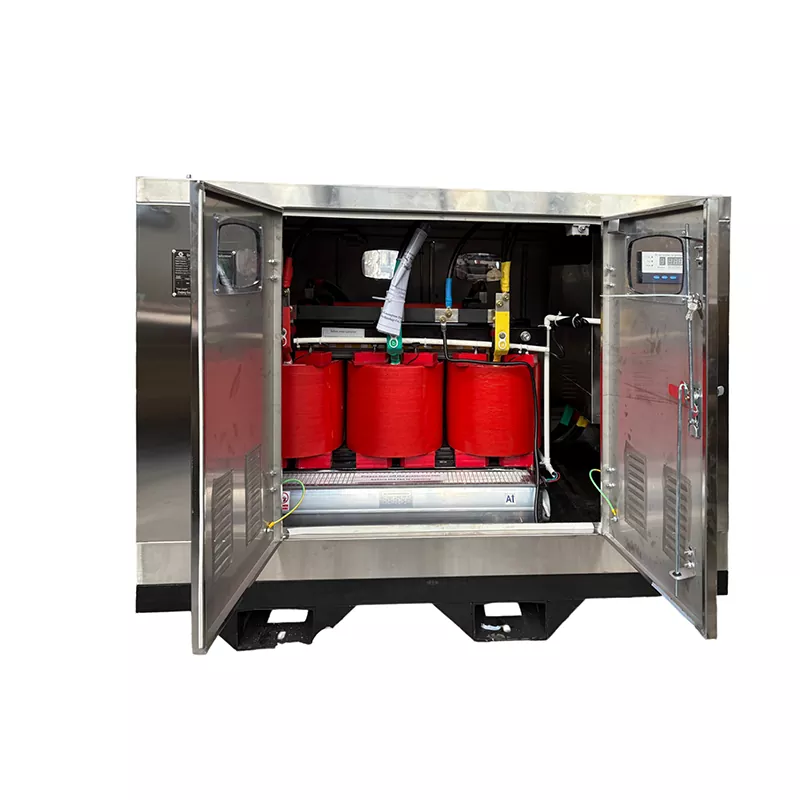
Core Design Differences
A 150KVA Dry Type Isolation Transformer uses a primary and secondary winding separated by reinforced insulation, with no direct electrical connection between them. A standard distribution transformer typically relies on autotransformer or conventional two-winding construction, where voltage regulation is the primary goal rather than electrical isolation.
| Feature | 150KVA Dry Type Isolation Transformer | Standard Distribution Transformer |
|---|---|---|
| Electrical Isolation | Galvanic isolation between primary and secondary | Often none or minimal |
| Cooling Method | Air-cooled (dry type) | Liquid-filled or dry type |
| Noise Level | Lower, suitable for indoor installation | Higher for liquid-filled units |
| Maintenance | Minimal, no oil testing required | Oil sampling and testing needed |
| Harmonic Mitigation | Integrated shielding available | Limited |
| Typical Applications | Medical imaging, data centers, labs | General power distribution |
| Fire Risk | Low, no flammable liquids | Higher with oil-filled designs |
Key Performance Advantages of the 150KVA Dry Type Isolation Transformer
-
Noise reduction: The absence of liquid cooling and core isolation lowers audible hum.
-
Common-mode noise rejection: The electrostatic shield blocks high-frequency interference.
-
Safety compliance: Meets IEEE and IEC standards for dry-type isolation in occupied spaces.
-
Installation flexibility: Can be placed near load centers without ventilation piping.
-
Environmental benefits: No oil leakage risk, simpler recycling at end of life.
When a Standard Distribution Transformer Is Preferred
Standard distribution transformers remain cost-effective for outdoor pad-mounted installations, utility-owned substations, and general step-down applications where isolation is not mandated. They handle larger capacity ranges and offer proven reliability in harsh environments.
150KVA Dry Type Isolation Transformer FAQ
Q1: What is the primary function of a 150KVA Dry Type Isolation Transformer?
A1: The primary function is to provide galvanic isolation between the input and output circuits while stepping voltage up or down. This isolation blocks common-mode noise, transient surges, and ground loops that can damage sensitive equipment or compromise patient safety in medical settings. GUANGBIAN designs each unit with reinforced insulation and optional electrostatic shielding to meet rigorous isolation requirements.
Q2: Can a 150KVA Dry Type Isolation Transformer be used outdoors?
A2: Yes, but only when installed in a weather-protected enclosure rated NEMA 3R or higher. The dry-type construction is not inherently waterproof, so GUANGBIAN offers optional vented or sealed cabinets for outdoor installations. For exposed locations, a liquid-filled distribution transformer is often more economical.
Q3: How does a 150KVA Dry Type Isolation Transformer improve power quality?
A3: It reduces electrical noise by isolating the load from upstream disturbances. The separate windings prevent harmonic currents from propagating between primary and secondary sides. With GUANGBIAN's shielded isolation design, common-mode noise attenuation can reach 60 dB or better, protecting medical imaging systems, programmable logic controllers, and data center equipment.
Q4: What maintenance does a 150KVA Dry Type Isolation Transformer require?
A4: Maintenance is minimal compared to oil-filled units. Routine tasks include visual inspection for dust accumulation, checking terminal torque, and verifying ventilation clearance. GUANGBIAN recommends annual infrared scanning and insulation resistance testing to confirm winding integrity.
Q5: Is a 150KVA Dry Type Isolation Transformer more expensive than a standard distribution transformer?
A5: Yes, the initial cost is typically 20% to 40% higher due to additional insulation, shielding, and dry-type construction materials. However, the total cost of ownership can be lower when factoring in reduced maintenance, no oil testing, and lower fire insurance premiums.
Selection Guidance from GUANGBIAN
Choosing between these transformer types depends on your isolation requirements, installation environment, and load sensitivity. GUANGBIAN provides engineering support to match the correct 150KVA Dry Type Isolation Transformer to your application.
Contact us today for a customized quotation, technical datasheets, or a free consultation with our transformer engineers. Our team will help you specify the ideal solution for your facility's power quality and safety needs.