

What Is the Difference Between a 20 kV Voltage Transformer and a Current Transformer
2026-09-30
In medium voltage power systems, selecting the correct instrument transformer is critical for accurate measurement, reliable protection, and safe operation. A 20 kV Voltage Transformer and a current transformer both serve as interface devices between high voltage equipment and low voltage monitoring instruments, yet they perform fundamentally different roles. Youbian designs and manufactures both types for industrial, utility, and commercial applications, and this guide explains how they differ in function, construction, wiring, and application so engineers can specify the right device with confidence.
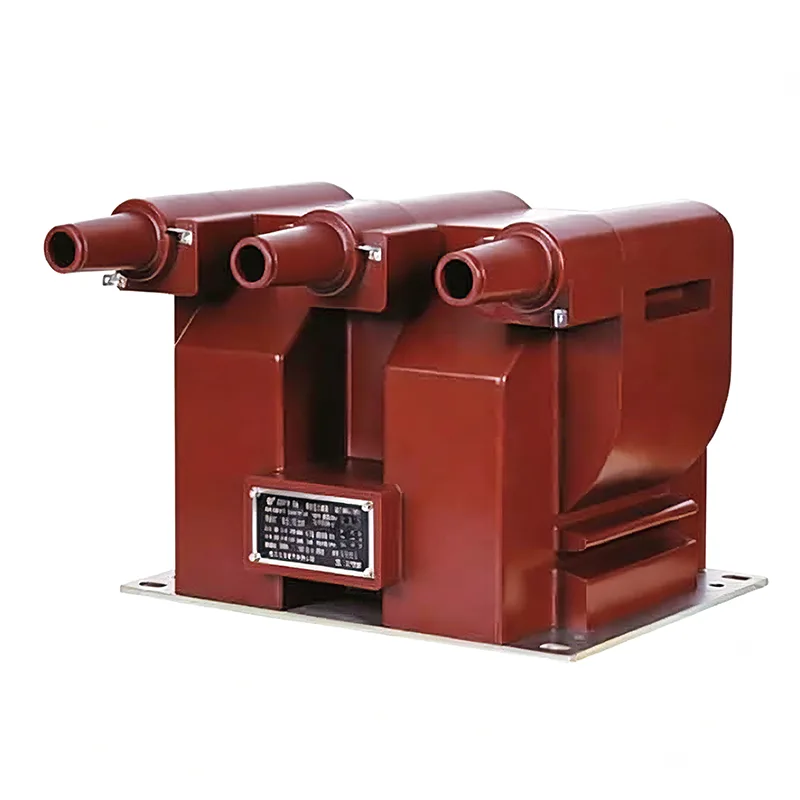
Core Functional Difference
A 20 kV Voltage Transformer steps down high voltage to a standardized low voltage output, typically 100 V or 110 V, proportional to the primary voltage. It supplies voltage signals to meters, relays, and power quality analyzers.
A current transformer steps down high current to a standardized low current output, typically 1 A or 5 A, proportional to the primary current. It supplies current signals for measurement and protection.
In short, one transforms voltage, the other transforms current. Youbian emphasizes that confusing the two leads to incorrect metering, protection misoperation, or equipment damage.
Comparison Table
| Parameter | 20 kV Voltage Transformer | Current Transformer |
|---|---|---|
| Measured quantity | Voltage | Current |
| Primary connection | Parallel with the line | Series with the line |
| Secondary output | 100 V, 110 V, or 100/√3 V | 1 A or 5 A |
| Secondary load | High impedance (voltmeters, relays) | Low impedance (ammeters, relays) |
| Secondary open circuit | Permitted with care | Strictly prohibited |
| Secondary short circuit | Strictly prohibited | Permitted |
| Typical accuracy class | 0.2, 0.5, 1.0, 3.0 | 0.2S, 0.5S, 5P, 10P |
| Insulation type | Epoxy cast, oil immersed, SF6 | Epoxy cast, oil immersed |
| Primary application | Metering, protection, synchronization | Metering, protection, control |
Key Design and Safety Differences
Youbian highlights several practical distinctions:
-
Winding design: A 20 kV Voltage Transformer uses many primary turns of thin conductor, while a current transformer uses few primary turns of heavy conductor.
-
Burden behavior: Voltage transformer accuracy depends on burden in VA at a specified power factor. Current transformer accuracy depends on burden in VA and secondary cable resistance.
-
Safety rules: Never short a voltage transformer secondary. Never open a current transformer secondary under load, because dangerous high voltage will appear.
-
Polarity marking: Both use P1/P2 and S1/S2 markings, but polarity significance differs for differential and directional protection schemes.
Selection Checklist
-
Confirm the system voltage rating, for example 20 kV nominal with applicable insulation level.
-
Determine whether voltage or current signal is required.
-
Define accuracy class and burden for metering or protection.
-
Verify installation environment: indoor, outdoor, GIS, or switchgear.
-
Check applicable standards such as IEC 61869 or IEEE C57.13.
-
Consult Youbian engineering support for customized ratios and dimensions.
FAQ
What is a 20 kV Voltage Transformer used for?
A 20 kV Voltage Transformer is used to step down 20 kV primary voltage to a safe, standardized secondary voltage for metering, protection relays, synchronization, and voltage monitoring in medium voltage switchgear and substations.
Can a 20 kV Voltage Transformer be used for current measurement?
No. A 20 kV Voltage Transformer measures voltage only. Current measurement requires a current transformer connected in series with the primary conductor, because the two devices respond to different physical quantities and have incompatible secondary characteristics.
What happens if the secondary of a 20 kV Voltage Transformer is shorted?
Shorting the secondary of a 20 kV Voltage Transformer produces excessive current that can overheat and destroy the windings. The secondary must remain connected to its burden or be left open with appropriate precautions, never shorted.
How do I choose between a voltage transformer and a current transformer for a 20 kV switchgear panel?
Choose based on the signal your instrument requires. Use a 20 kV Voltage Transformer for voltage metering, undervoltage or overvoltage protection, and synchronization. Use a current transformer for current metering, overcurrent protection, and power measurement. Most panels require both.
Contact Us
Youbian provides a complete range of 20 kV Voltage Transformer and current transformer solutions engineered to IEC and IEEE standards. Our team supports ratio selection, accuracy verification, insulation coordination, and after-sales service for projects worldwide. Contact Youbian today to request a quotation, technical datasheet, or application consultation for your medium voltage system.