

What Is the Difference Between an Indoor Vacuum Circuit Breaker and an Oil Circuit Breaker?
2026-10-27
A plant electrical engineer is planning to replace a 10 kV oil circuit breaker that has been in service for 25 years. The breaker has leaked oil twice in the past three years, and the maintenance team has to drain and filter the oil every time the contacts are inspected. The engineer proposes replacing it with an Indoor High Voltage Vacuum Circuit Breaker. The plant manager asks a simple question: what is the actual difference, and why should we pay more for the vacuum type? The answer is not just the arc quenching medium. It is the difference in maintenance effort, safety risk, service life, and the total cost of ownership over the next 20 years. This guide explains the difference and how to make the replacement decision.
1. Why Does the Arc Quenching Medium Change Everything?
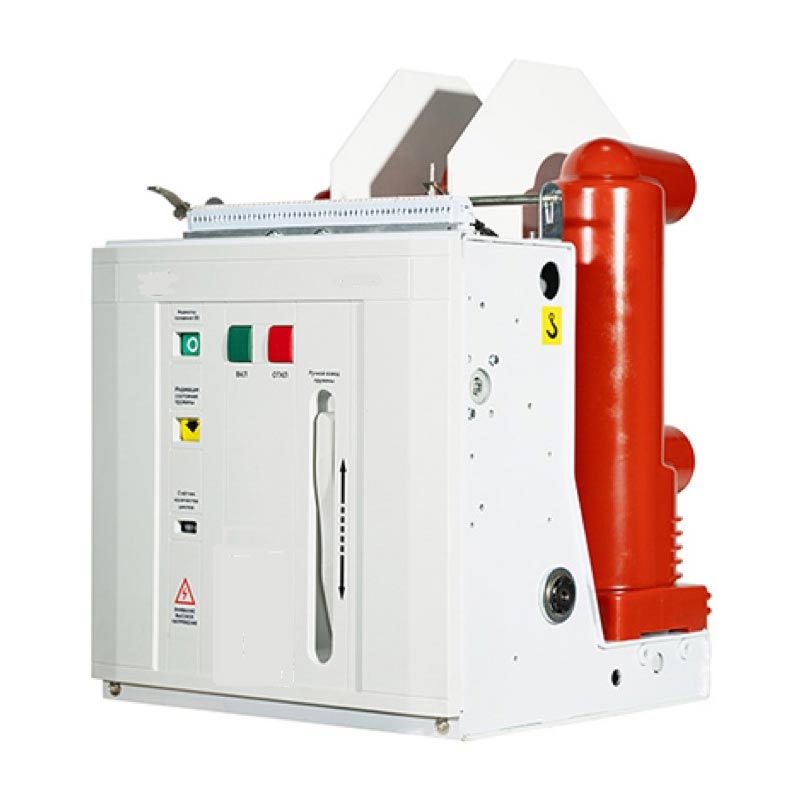
Both an oil circuit breaker and an Indoor High Voltage Vacuum Circuit Breaker interrupt fault current by extinguishing the arc that forms when the contacts separate. The difference is the medium in which the arc is extinguished. In an oil circuit breaker, the contacts are immersed in transformer oil. The arc vaporizes the oil and creates a gas bubble. The hydrogen in the gas has high thermal conductivity and cools the arc until it extinguishes at the current zero. In a vacuum circuit breaker, the contacts are sealed in a vacuum chamber. The arc is sustained by metal vapor from the contacts and extinguishes within half a cycle when the current reaches zero. The vacuum interrupter is sealed for life and does not require any medium replacement. The table below compares the arc quenching characteristics of the two types.
| Parameter | Oil circuit breaker | Indoor High Voltage Vacuum Circuit Breaker |
| Arc quenching medium | Transformer oil | Vacuum (below 10⁻⁴ Pa) |
| Arc duration | 2 – 4 cycles | 0.5 – 1 cycle |
| Contact erosion per interruption | Moderate to high | Very low |
| Medium replacement | Oil filtering or replacement | None (sealed for life) |
| Fire risk | High (oil is flammable) | None |
In our factory, we manufacture Indoor High Voltage Vacuum Circuit Breaker units for 12 kV, 24 kV, and 40.5 kV systems. Each interrupter is tested for vacuum integrity before assembly. Zhejiang Usune Electric Co., Ltd. has been manufacturing vacuum circuit breakers for over 12 years.
2. How Does the Maintenance Burden Compare Over the Service Life?
The maintenance requirement is the most visible difference in daily operation. An oil circuit breaker requires periodic oil testing, oil filtering or replacement, contact inspection, and bushing cleaning. The oil absorbs moisture and carbon particles from the arc, which reduces its dielectric strength. The contacts erode and must be dressed or replaced. The maintenance interval is typically every 2 to 3 years, and each service requires the breaker to be taken out of service. An Indoor High Voltage Vacuum Circuit Breaker requires only periodic inspection of the operating mechanism and the contact resistance. The vacuum interrupter itself does not require maintenance. The maintenance interval is typically every 5 to 10 years. The table below shows the maintenance activities and their frequency for the two types.
| Maintenance activity | Oil circuit breaker | Indoor High Voltage Vacuum Circuit Breaker |
| Oil dielectric test | Every 12 months | Not applicable |
| Oil filtering or replacement | Every 2 – 3 years | Not applicable |
| Contact inspection | Every 2 – 3 years (requires oil drain) | Every 5 years (contact resistance check) |
| Vacuum integrity test | Not applicable | Every 5 years (optional) |
| Operating mechanism service | Every 2 years | Every 5 years |
| Typical downtime per service | 8 – 16 hours | 2 – 4 hours |
Switchgear engineer's note: The maintenance cost of an oil circuit breaker over 20 years is typically 40 to 60 percent of its original purchase price. The maintenance cost of an Indoor High Voltage Vacuum Circuit Breaker over the same period is 10 to 20 percent. The higher purchase price of the vacuum breaker is recovered within 6 to 10 years through lower maintenance cost and reduced downtime. In our factory, we provide a life-cycle cost comparison for customers who are considering a retrofit. Zhejiang Usune Electric Co., Ltd. also offers a retrofit kit that allows the vacuum breaker to be installed in the existing oil breaker cubicle.
3. What Are the Safety Differences in Normal Operation and Fault Conditions?
The safety difference is most significant during a fault. An oil circuit breaker contains a large volume of flammable oil. If the breaker fails to interrupt the fault, the oil can vaporize and the pressure can rupture the tank, causing an oil fire and spraying hot oil into the switch room. The arc products can also contaminate the surrounding area. An Indoor High Voltage Vacuum Circuit Breaker contains no oil and no pressurized gas. If the vacuum interrupter fails, the failure is usually contained within the ceramic or glass envelope. The arc products are metal vapor, which condenses quickly and does not create a fire hazard. The table below compares the safety characteristics of the two types.
| Safety aspect | Oil circuit breaker | Indoor High Voltage Vacuum Circuit Breaker |
| Flammable material | Transformer oil (large volume) | None |
| Fire risk during fault | High | None |
| Explosion risk | Moderate (tank rupture) | Very low (sealed interrupter) |
| Arc products | Hot oil vapor and gas | Metal vapor (condenses quickly) |
| Environmental impact | Oil disposal required | No oil disposal |
In our factory, we test every Indoor High Voltage Vacuum Circuit Breaker for internal arc containment according to IEC 62271-200. The test verifies that the enclosure can withstand an internal arc without endangering the operator. Zhejiang Usune Electric Co., Ltd. provides the internal arc test report with each switchgear assembly.
4. Why Does the Vacuum Breaker Have a Longer Service Life?
The service life of a circuit breaker is determined by the wear of the contacts and the degradation of the insulation. In an oil circuit breaker, the contacts erode with each interruption, and the oil degrades with each arc. The breaker must be refurbished or replaced after 10 to 15 years. In an Indoor High Voltage Vacuum Circuit Breaker, the contacts are sealed in a vacuum and the arc is extinguished with minimal contact erosion. The interrupter is designed for 10,000 to 30,000 full-load operations, compared to 2,000 to 5,000 for an oil breaker. The operating mechanism is the component that requires the most maintenance, and it can be replaced or refurbished independently of the interrupter. The typical service life of a vacuum breaker is 20 to 30 years.
5. How Should an Engineer Decide Between Retrofit and New Installation?
The decision between retrofitting a vacuum breaker into an existing oil breaker cubicle and installing a new switchgear lineup depends on three factors. The first is the condition of the existing cubicle. If the cubicle is structurally sound and the busbar and cable connections are in good condition, a retrofit is usually the most economical option. The second is the available space. A vacuum breaker is smaller and lighter than an oil breaker of the same rating, so it can usually fit in the existing cubicle. The third is the project schedule. A retrofit can be completed in 1 to 2 days per breaker, while a new installation requires 2 to 4 weeks. In our factory, we provide a retrofit kit that includes the vacuum breaker, the adapter frame, the new operating mechanism, and the interconnection wiring. Zhejiang Usune Electric Co., Ltd. provides on-site engineering support for retrofit projects.
Frequently Asked Questions About Indoor Vacuum and Oil Circuit Breakers
Summary for Switchgear Engineers and Plant Managers
The difference between an Indoor High Voltage Vacuum Circuit Breaker and an oil circuit breaker is not just the arc quenching medium. It is the maintenance burden, the safety risk, the service life, and the total cost of ownership. The vacuum breaker requires less maintenance, has no fire risk, and lasts 20 to 30 years. The oil breaker requires periodic oil testing and contact inspection, has a fire risk, and lasts 10 to 15 years. For plants that are replacing aging oil breakers, the vacuum breaker is the better long-term choice. The retrofit option allows the existing cubicle to be reused, which reduces the cost and the downtime. Zhejiang Usune Electric Co., Ltd. has been manufacturing Indoor High Voltage Vacuum Circuit Breaker units for over 12 years and provides full retrofit and life-cycle cost support for our customers.