

What Is the Difference Between Ring Main Unit and Conventional Medium Voltage Switchgear?
2026-10-14
A distribution design engineer is laying out the electrical infrastructure for a three-building industrial park. The utility requires a ring main configuration for reliability. The engineer has two options. Option A is a conventional medium voltage switchgear room with separate incoming, metering, and outgoing panels, plus a bus tie and a dedicated protection relay panel. Option B is a Ring Main Unit Switchgear installed in a compact outdoor enclosure at the perimeter of the park. Option A requires a 60 square meter building and 14 weeks of construction. Option B requires a 6 square meter concrete pad and 4 weeks of delivery and installation. The engineer must decide which option is better for this application. This guide explains the differences.
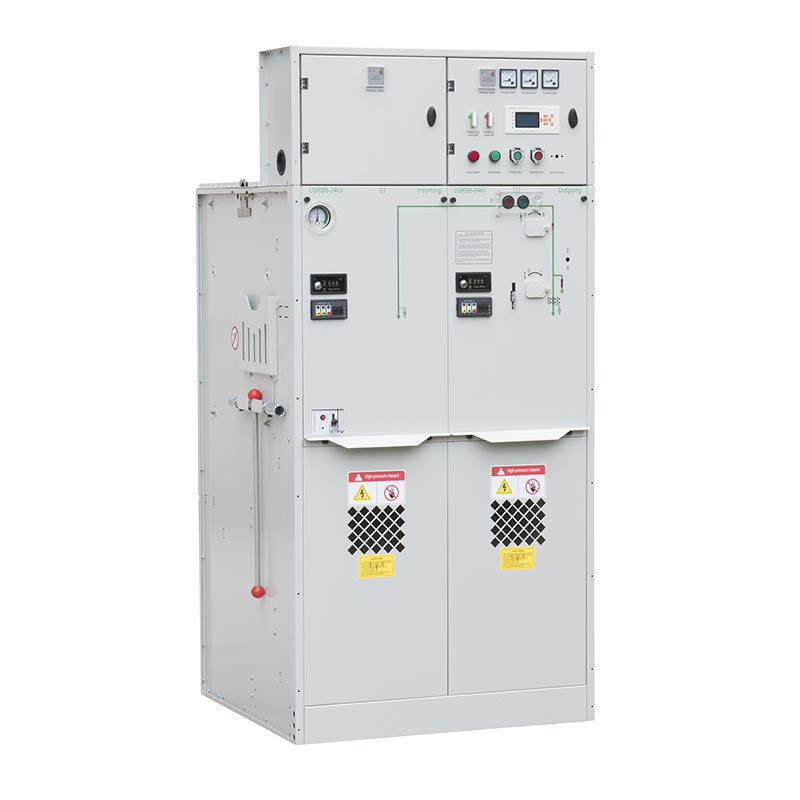
1. What Is a Ring Main Unit Switchgear and How Does It Differ From Conventional Switchgear?
A Ring Main Unit Switchgear is a factory-assembled, compact switchgear assembly that contains the incoming, outgoing, and bus tie functions in a single enclosure. It is designed specifically for ring main distribution networks, where power can be fed from either direction. The core components are two load break switches (for the ring incoming and outgoing) and one transformer protection switch-fuse combination or circuit breaker. Conventional medium voltage switchgear, by contrast, is a modular assembly of separate panels. Each function—incoming, metering, outgoing, bus tie—has its own panel. The panels are connected by a main busbar. The table below shows the functional differences.
| Feature | Ring Main Unit Switchgear | Conventional medium voltage switchgear |
| Configuration | Integrated, single enclosure | Modular, multiple panels |
| Typical functions | 2 load break switches + 1 transformer protection | Incoming, metering, outgoing, bus tie, protection |
| Busbar system | Internal, pre-assembled | External, field-assembled |
| Footprint (for 3-function unit) | 0.8 – 1.2 m² | 4 – 6 m² |
| Installation time | 1 – 2 days | 2 – 4 weeks |
In our factory, we manufacture Ring Main Unit Switchgear with rated voltages from 12 kV to 36 kV and rated currents up to 630 A. The units are type-tested to IEC 62271-200 and IEC 62271-103. Zhejiang Usune Electric Co., Ltd. has been producing ring main units for over 15 years.
2. How Do the Protection and Interlock Systems Compare?
The protection philosophy differs between the two designs. A Ring Main Unit Switchgear typically uses a switch-fuse combination for transformer protection. The fuse provides short-circuit protection, and the switch provides load break and isolation. The interlock system is mechanical and is designed to prevent incorrect operation. A conventional switchgear uses a circuit breaker with a protective relay. The relay provides overcurrent, earth fault, and other protection functions. The interlock system is electromechanical and can be integrated with the relay logic. The table below compares the protection and interlock features.
| Feature | Ring Main Unit Switchgear | Conventional medium voltage switchgear |
| Transformer protection | Switch-fuse combination | Circuit breaker + relay |
| Short-circuit protection | Fuse (current-limiting) | Relay (adjustable) |
| Earth fault protection | Optional (relay or sensor) | Standard (relay) |
| Interlock type | Mechanical (key or cam) | Electromechanical (solenoid or motor) |
| Remote control | Limited (optional motor operation) | Standard (SCADA integration) |
The switch-fuse combination in a Ring Main Unit Switchgear is simpler and less expensive than a circuit breaker with a relay. It is also faster at clearing high fault currents because the fuse is current-limiting. However, the fuse must be replaced after a fault, and the protection curve is fixed. The circuit breaker in conventional switchgear can be reset after a fault and the relay settings can be adjusted. For applications where remote control and adjustable protection are required, conventional switchgear is the better choice. For simple ring main distribution, the ring main unit is more economical.
3. What Are the Footprint and Installation Differences?
The footprint difference is one of the most significant advantages of a Ring Main Unit Switchgear. A conventional switchgear room requires a building with a concrete floor, cable trenches, ventilation, and lighting. The building must be sized to allow safe working clearances around the panels. A ring main unit can be installed outdoors on a concrete pad. It requires no building and no cable trench. The cables enter from below through a sealed gland plate. The table below compares the footprint and installation requirements.
| Requirement | Ring Main Unit Switchgear | Conventional medium voltage switchgear |
| Footprint | 0.8 – 1.5 m² | 12 – 20 m² (including clearances) |
| Building required | No (outdoor enclosure) | Yes (indoor room) |
| Foundation | Concrete pad | Reinforced concrete floor |
| Cable trench | Not required (direct burial or surface) | Required |
| Installation time | 1 – 2 days | 2 – 4 weeks |
| Permitting | Simple (equipment permit) | Complex (building permit) |
Design tip: The ring main unit is not suitable for every application. If the switchgear must be located indoors, or if the environment is highly corrosive, a conventional switchgear room may be more appropriate. However, for outdoor distribution in industrial parks, commercial complexes, and residential developments, the ring main unit reduces the civil works cost by 60 to 80 percent and the installation time by 70 percent.
4. How Do You Select Between the Two for a Specific Project?
The selection depends on four factors: the required protection functions, the need for remote control, the available space, and the budget. The table below shows the selection guide for common applications.
| Application | Recommended solution | Reason |
| Industrial park ring main | Ring Main Unit Switchgear | Compact; outdoor; low cost |
| Utility substation | Conventional switchgear | Remote control; adjustable protection |
| Wind farm collector | Ring Main Unit Switchgear | Outdoor; compact; reliable |
| Data center | Conventional switchgear | High reliability; SCADA integration |
| Commercial building | Ring Main Unit Switchgear | Space saving; outdoor installation |
| Petrochemical plant | Conventional switchgear | Arc-rated; advanced protection |
In our factory, we produce both Ring Main Unit Switchgear and conventional medium voltage switchgear. We provide a selection guide that helps customers choose the right solution for their application. Zhejiang Usune Electric Co., Ltd. also offers custom configurations for special requirements, such as arc-rated enclosures for petrochemical applications or remote monitoring for utility networks.
Frequently Asked Questions About Ring Main Unit and Conventional Switchgear
Summary for Design Engineers and Project Managers
The difference between a Ring Main Unit Switchgear and conventional medium voltage switchgear is the level of integration, the protection philosophy, and the installation requirements. A ring main unit is compact, factory-assembled, and designed for outdoor installation. Conventional switchgear is modular, field-assembled, and designed for indoor installation with advanced protection and remote control. The selection depends on the application requirements, the available space, and the budget. For industrial park ring mains and commercial distribution, the ring main unit is usually the better choice. For utility substations and critical facilities, conventional switchgear is preferred. Zhejiang Usune Electric Co., Ltd. has been manufacturing both types of switchgear for over 15 years and provides full technical support for our customers.
Zhejiang Usune Electric Co., Ltd. manufactures Ring Main Unit Switchgear and conventional medium voltage switchgear in ratings from 12 kV to 36 kV. We provide type test reports, selection guides, and custom configurations for all of our products.
