

What Is the Difference Between Steel and PP Chemical Storage Cabinets?
2026-10-16
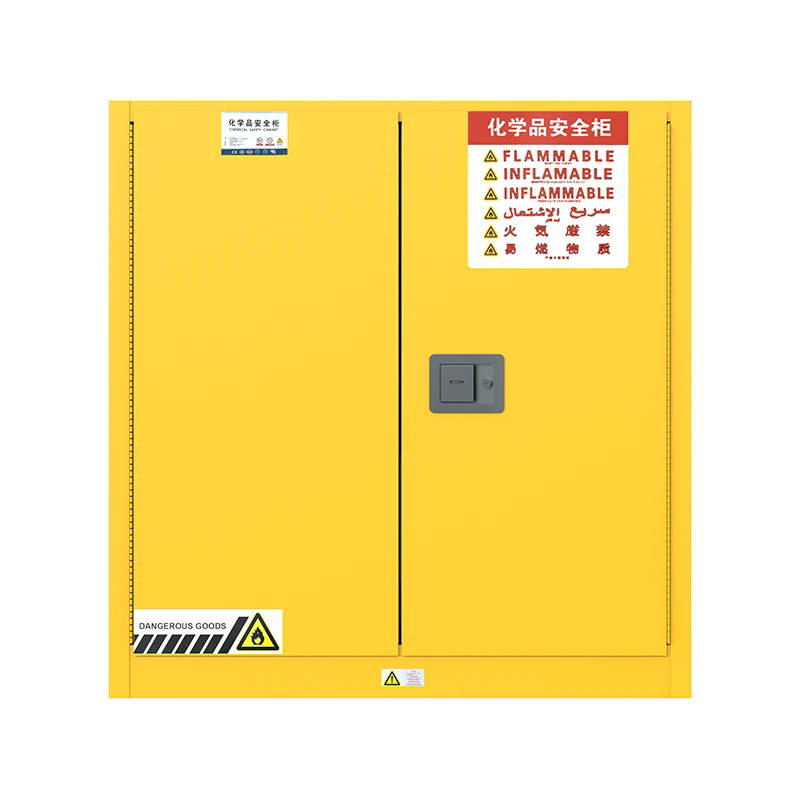
A laboratory safety manager prepares for an annual inspection by the fire marshal and the occupational health authority. The inspector reviews the Chemical Storage Cabinets in the solvent room. The cabinet holding acetone is a double-walled steel unit with a self-closing door and a flame arrestor vent. The cabinet holding hydrochloric acid is a white polypropylene unit with a gasketed door and a fume exhaust connection. The inspector asks why the two cabinets are different. The safety manager explains that the choice depends on the chemical class. Steel is the standard for flammable solvents because it provides fire resistance. Polypropylene is the standard for corrosive acids and bases because it resists chemical attack. This guide explains the differences and how to select the right cabinet for each chemical class.
1. How Does Steel Compare to Polypropylene in Corrosion Resistance?
The primary difference between steel and polypropylene (PP) Chemical Storage Cabinets is corrosion resistance. Steel is a metal that reacts with acids and bases. A carbon steel cabinet will rust if exposed to moisture and will corrode rapidly if exposed to acid vapors. A stainless steel cabinet offers better corrosion resistance, but it is still susceptible to chloride attack and is significantly more expensive. Polypropylene is a non-polar polymer that is chemically inert to most acids, bases, and solvents. It does not rust, and it does not react with the chemicals stored inside. The table below compares the corrosion resistance of the two materials.
| Chemical class | Steel (powder coated) | Stainless steel (304) | Polypropylene (PP) |
| Hydrochloric acid (10%) | Poor (corrodes rapidly) | Moderate (pitting) | Excellent |
| Sulfuric acid (50%) | Poor | Moderate | Excellent |
| Sodium hydroxide (10%) | Moderate (coating dependent) | Good | Excellent |
| Acetone | Good (coating resistant) | Excellent | Good (slight swelling) |
| Ethanol | Good | Excellent | Excellent |
| Formaldehyde | Moderate | Good | Excellent |
In our factory, we manufacture Chemical Storage Cabinets in both steel and polypropylene. We recommend polypropylene for acids, bases, and corrosive salts. We recommend steel for flammable solvents and for general chemical storage where fire resistance is required. Guangsheng Technology Wuxi Co., Ltd. has been manufacturing chemical storage cabinets for over 12 years.
2. How Does Fire Performance Differ Between Steel and PP Cabinets?
Steel cabinets are designed to resist fire. The double-walled construction with an insulating air gap helps to contain a fire inside the cabinet for a specified period, typically 10 to 30 minutes, depending on the standard. This gives personnel time to evacuate and the fire service time to respond. Polypropylene cabinets are not fire-rated. PP is a combustible material, and it will melt and burn if exposed to fire. The table below compares the fire performance of the two materials.
| Property | Steel cabinet | PP cabinet |
| Fire resistance rating | 10 – 30 minutes (EN 14470-1) | None |
| Flash point of material | Non-combustible | ~ 350°C (ignition) |
| Behavior in fire | Contains fire; maintains structural integrity | Melts; contributes fuel to fire |
| Recommended for | Flammable solvents | Corrosives only |
| Typical standard | EN 14470-1, OSHA 29 CFR 1910.106 | None for fire; chemical resistance per DIN 16961 |
Safety manager's note: A PP cabinet should never be used for flammable solvents. If a fire starts inside a PP cabinet, the cabinet will melt, and the burning solvent will spread to the laboratory. This is a critical safety violation. In our factory, we clearly label our PP cabinets as suitable for corrosive chemicals only. We also recommend that the laboratory conduct a chemical inventory review to ensure that each cabinet is used for the correct chemical class.
3. What Are the Ventilation and Compliance Requirements for Each Cabinet Type?
Both steel and PP Chemical Storage Cabinets require ventilation, but the ventilation requirements differ. Steel cabinets for flammable solvents are typically equipped with a flame arrestor vent and may be connected to an exhaust system. The vent allows vapors to escape and prevents pressure buildup. PP cabinets for corrosives are typically equipped with a fume exhaust connection that is connected to a scrubber or an exhaust fan. The exhaust removes corrosive vapors and prevents them from damaging the cabinet or the laboratory. The table below summarizes the ventilation and compliance requirements.
| Requirement | Steel cabinet (flammables) | PP cabinet (corrosives) |
| Vent type | Flame arrestor, 2-inch | Fume exhaust, 4-inch |
| Vent connection | Optional (to exhaust or recirculation) | Recommended (to scrubber or exhaust) |
| Grounding | Required (static electricity) | Not required |
| Door type | Self-closing, fusible link | Gasketed, manual or self-closing |
| Compliance standard | OSHA 29 CFR 1910.106, NFPA 30 | OSHA 29 CFR 1910.106 (corrosives), local codes |
In our factory, we provide Chemical Storage Cabinets with the appropriate vents and connections for each chemical class. Our steel cabinets are equipped with flame arrestor vents and grounding terminals. Our PP cabinets are equipped with fume exhaust connections and gasketed doors. Guangsheng Technology Wuxi Co., Ltd. provides installation guidance and compliance documentation for all of our products.
4. How Should the Cabinet Be Selected and Configured for a Specific Laboratory?
The selection of a chemical storage cabinet should be based on a chemical inventory and a risk assessment. The first step is to list all chemicals and classify them by hazard: flammable, corrosive, oxidizer, toxic, or compressed gas. The second step is to determine the quantity of each chemical that will be stored. The third step is to select the cabinet material and features based on the hazard class and the quantity. The table below provides a selection guide.
| Chemical hazard class | Recommended cabinet material | Key features |
| Flammable solvents | Steel (double-walled) | Self-closing door, flame arrestor, grounding |
| Corrosive acids/bases | Polypropylene | Gasketed door, fume exhaust, spill tray |
| Oxidizers | Steel (powder coated) | Separate compartment, no organic materials |
| Toxic solids | Steel or PP (depending on corrosivity) | Lockable, vented, labeled |
| Compressed gas cylinders | Steel (dedicated gas cabinet) | Chain restraint, vent, gas detection |
In our factory, we provide a free consultation to help laboratories select the right cabinets. We also provide a chemical compatibility chart that lists the recommended cabinet material for over 200 common laboratory chemicals. Guangsheng Technology Wuxi Co., Ltd. has supplied chemical storage cabinets to pharmaceutical companies, universities, and research institutes across Asia.
Frequently Asked Questions About Steel and PP Chemical Storage Cabinets
Summary for Safety Managers and Laboratory Supervisors
The choice between steel and PP Chemical Storage Cabinets depends on the chemical class. Steel cabinets are fire-rated and are suitable for flammable solvents. Polypropylene cabinets are chemically inert and are suitable for corrosive acids and bases. The two materials are not interchangeable. Using a PP cabinet for flammables or a steel cabinet for concentrated corrosives creates a safety hazard. The correct selection requires a chemical inventory, a risk assessment, and a review of the ventilation and compliance requirements. Guangsheng Technology Wuxi Co., Ltd. has been manufacturing chemical storage cabinets for over 12 years and provides full selection and compliance support for our customers.
Guangsheng Technology Wuxi Co., Ltd. manufactures Chemical Storage Cabinets in steel and polypropylene, with flame arrestor vents, fume exhaust connections, and grounding terminals. We provide chemical compatibility charts and inspection checklists for all of our products.
