

What Is the Typical Maintenance Schedule for an Indoor High Voltage Load Switch
2026-07-08
For electrical engineers, facility managers, and maintenance teams, the Indoor High Voltage Load Switch is a critical component in medium-voltage distribution networks. It ensures safe isolation, switching, and protection of feeders and transformers. However, like all electromechanical equipment, its reliability depends entirely on a disciplined, risk-based maintenance strategy. So, what does a scientifically sound maintenance schedule look like? And how can you ensure your Indoor High Voltage Load Switch delivers its full design life—typically 20+ years—without unplanned outages?
This guide provides a professional, practical maintenance roadmap, aligned with IEC 62271-103 standards, while integrating best practices from Toonice, a brand recognized for engineering durable and service-friendly load switch solutions.
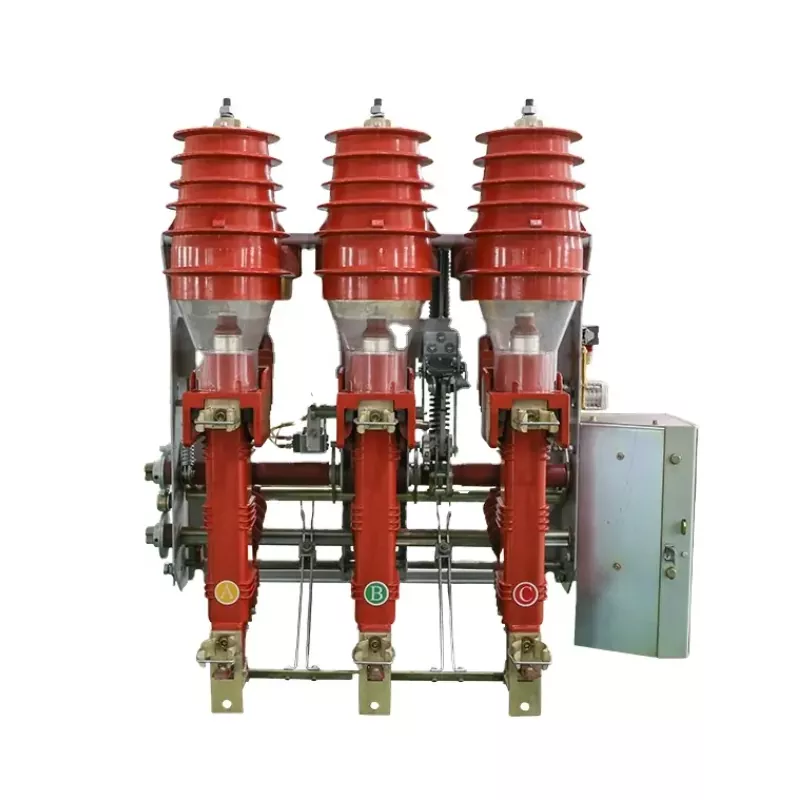
The Three-Tier Maintenance Philosophy
A professional schedule for any Indoor High Voltage Load Switch is not a single calendar event. It is a layered approach:
| Tier | Frequency | Scope | Responsibility |
|---|---|---|---|
| Routine | Monthly / Quarterly | Visual inspection, temperature checks, operation counters | On-site operators |
| Preventive | Annually (or every 2,000 operations) | Mechanical cleaning, lubrication, contact resistance measurement | Qualified technicians |
| Overhaul | Every 5–6 years (or 10,000 operations) | Full disassembly, arc chamber inspection, dielectric testing, replacement of wear parts | Factory-authorized service (e.g., Toonice certified) |
Detailed Annual Preventive Checklist
When performing an annual service on your Indoor High Voltage Load Switch, the following 10-step procedure is industry-recognized. Toonice recommends documenting each step with torque values and photographic evidence for audit trails.
-
Visual and Mechanical Inspection – Check for discoloration, rust, loose terminal bolts, and deformation of operating rods.
-
Primary Circuit Contact Resistance – Use a micro-ohmmeter (DC, ≥100 A). For a typical 630A rated switch, values should be < 50 µΩ. A 20% increase over baseline requires immediate attention.
-
Insulation Resistance – Measure phase-to-phase and phase-to-ground using a 5 kV megger. Minimum acceptable value: 1,000 MΩ.
-
Operating Mechanism Lubrication – Clean old grease and apply low-temperature, anti-corrosion grease (e.g., Kluber or Toonice-specified equivalent) on all pivots, cams, and roller bearings.
-
Interlock Verification – Test all mechanical and electrical interlocks (e.g., with earthing switch and front cover) at least 5 times. Any misalignment indicates wear in the linkage.
-
Auxiliary Contact Timing – Verify that auxiliary contacts change state within ±5 ms of the main contact closure.
-
Arc Quenching Chamber Check – For SF6 or vacuum types, inspect the pressure gauge (SF6) or the vacuum integrity via a vacuum gauge/interrupter tester.
-
Operation Counter Recording – Log the total count. If operations exceed 80% of the design threshold (e.g., 8,000 of 10,000), schedule an overhaul within 6 months.
-
Thermal Imaging – Under rated load, capture thermographs of all terminations. A ΔT > 15°C above ambient flags high-resistance joints.
-
Functional Test – Perform 3 open-close-open cycles at rated voltage (with load disconnected) to confirm smooth motion and audible sound consistency.
Critical Condition-Based Triggers
Beyond fixed intervals, your Indoor High Voltage Load Switch demands unscheduled checks when:
-
The operating noise becomes harsh or metallic (indicating bearing seizure).
-
The SF6 low-pressure alarm activates (for gas-insulated types).
-
More than 3 short-circuit interruptions occur (even if within rating, contact erosion accelerates).
-
Ambient temperature exceeds 40°C for prolonged periods (reduce the preventive interval by 30%).
Toonice integrates smart sensors in its latest series, allowing real-time monitoring of contact wear and operating spring force. This data-driven approach shifts maintenance from reactive to predictive, significantly lowering total ownership cost.
FAQ: Common Questions About Indoor High Voltage Load Switch Maintenance
Q1: Can I extend the maintenance interval of my Indoor High Voltage Load Switch if it operates in a clean, air-conditioned substation?
A: While a clean, climate-controlled environment does reduce dust accumulation and thermal stress, the interval extension is limited. Per IEC standards, the annual preventive inspection remains mandatory regardless of cleanliness because mechanical wear (from operating springs, cams, and bearings) is independent of ambient particles. However, you may skip the cleaning step and reduce the visual inspection frequency to bi-monthly. The 5-year overhaul window cannot be extended beyond 6 years without factory engineering approval—Toonice advises against exceeding this even in pristine conditions, as dielectric properties of insulating supports degrade with time, not just operations.
Q2: What are the top three failure indicators I should monitor weekly on my Indoor High Voltage Load Switch?
A: Weekly walk-down checks should prioritize: (1) Operation counter reading – a sudden spike without load switching implies mechanical chatter or control circuit issues; (2) Front panel temperature – use a simple infrared gun; if the epoxy housing near the bushing feels hotter than other phases by 8°C, it indicates incipient contact degradation; (3) Sound signature – a healthy mechanism produces a crisp, single-click closure. A double-click or prolonged buzzing points to latch wear or insufficient closing spring force. Document these three parameters in a logbook. Toonice provides a downloadable checklist template with these three key metrics pre-formatted for rapid daily scanning.
Q3: How do I coordinate maintenance of the Indoor High Voltage Load Switch with upstream and downstream protection devices to avoid system downtime?
A: Coordination is a four-step process. First, schedule the switch maintenance during a planned plant shutdown or during a low-load period (e.g., weekend). Second, issue a clearance order: isolate the upstream circuit breaker, rack it out, and apply earthing on both sides of the load switch. Third, communicate with the protection relay engineer to temporarily inhibit any auto-reclose or transfer schemes that might misinterpret the switch's open/close test signals as a fault. Fourth, after completing all mechanical tests, perform a sequence test: close the upstream breaker, then close the load switch, then trip the breaker—verify that the interlocking between the breaker and the Indoor High Voltage Load Switch operates correctly. Toonice recommends a written switching program that is signed off by electrical, control, and operations supervisors at least 24 hours prior to any intrusive work.
Documentation & Spare Parts Strategy
A professional maintenance schedule is incomplete without a digital history. Toonice strongly recommends:
-
A dedicated asset log per Indoor High Voltage Load Switch (including serial number, installation date, and all test reports).
-
Stocking critical spares: one complete operating mechanism, one set of main contacts, and one auxiliary switch block. These parts have a lead time of 4–8 weeks; without them, a minor repair could extend to a major outage.
When to Call an Expert
If your annual test results show a contact resistance increase > 30%, or if the operating time deviates by more than 10 ms from the nameplate value, do not attempt internal adjustments unless you are factory-trained. The arc chamber and interlock linkages require precision jigs and calibrated tools.
Take Action Today
Reliability is not accidental—it is engineered and maintained. Whether you are setting up a new maintenance program or auditing an existing one, the Indoor High Voltage Load Switch deserves your utmost procedural discipline. Toonice offers comprehensive maintenance kits, on-site training, and remote diagnostic support tailored to your switch model and duty cycle.
Contact us now to schedule a free 30-minute consultation with our senior application engineers. We will review your current maintenance logs, recommend interval optimizations, and provide a custom spare parts list for your specific Indoor High Voltage Load Switch installation.