
What Makes a Metal Distribution Box Critical for Long-Term Electrical Stability?
2026-09-14
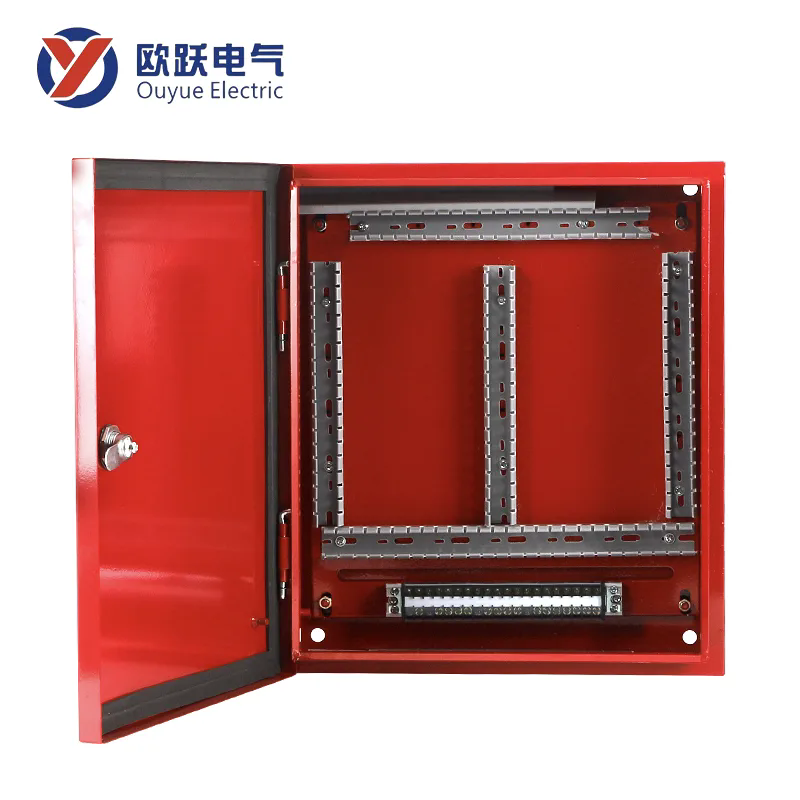
A distribution box is not a passive container. It is an active participant in the electrical system. It manages heat, provides a reference ground, shields sensitive components from electromagnetic interference, and protects the electrical connections from the environment. When a Metal Distribution Box is specified correctly, it contributes to the stability of the entire electrical installation for decades. When it is specified incorrectly, it becomes a source of nuisance tripping, premature component failure, and safety hazards. This guide is written for electrical engineers and facility maintenance managers who need to understand the factors that determine the long-term performance of a Metal Distribution Box.
1. Why Does Heat Dissipation Determine the Life of Components Inside a Metal Distribution Box?
Every electrical component inside a distribution box generates heat. Circuit breakers, contactors, relays, and terminal blocks all have internal resistance that produces I²R losses. The temperature inside the enclosure is determined by the total heat load and the ability of the enclosure to dissipate that heat to the surrounding environment. A Metal Distribution Box has a significant advantage over a plastic enclosure because steel has a thermal conductivity of approximately 50 W/mK, compared to 0.2 W/mK for typical thermoplastics. This means that a metal enclosure can transfer heat through its walls much more effectively. In our factory, we have measured the internal temperature of identical electrical assemblies mounted in metal and plastic enclosures. The metal enclosure ran 8 to 12°C cooler under the same load conditions. This temperature difference directly affects the life of the components. According to the Arrhenius equation, every 10°C reduction in operating temperature doubles the life of electrical insulation.
Practical example: A contactor with a rated life of 100,000 operations at 55°C will have a life of only 50,000 operations at 65°C. In a plastic enclosure running 12°C hotter, the contactor life could be reduced to 30,000 operations. This is why the Metal Distribution Box is not just a housing—it is a thermal management system.
Zhejiang Ouyue Electric Co., Ltd. manufactures Metal Distribution Box units with a range of thermal management options, including louvered vents, filtered fans, and heat exchangers. We also provide thermal calculations for each application to ensure that the internal temperature remains within the component ratings.
2. How Does Grounding Continuity Affect Electrical Stability and Safety?
The Metal Distribution Box serves as the central grounding point for the electrical system. All equipment grounds, circuit breaker grounds, and enclosure grounds must be bonded to the box. If the box is made of metal, the bonding is straightforward: a grounding terminal is bolted to the box, and the box itself provides a low-impedance path to ground. If the box is made of plastic, a separate grounding bar must be installed, and the continuity of the ground path depends on the integrity of the bonding connections. In a metal enclosure, the entire box is part of the ground path, which provides a redundant and highly reliable grounding system. The table below compares the grounding performance of metal and plastic enclosures.
| Grounding parameter | Metal Distribution Box | Plastic enclosure |
| Ground path | Entire enclosure | Separate grounding bar only |
| Ground continuity resistance | < 0.1 ohm (enclosure to terminal) | < 0.1 ohm (terminal to bar) |
| Redundancy | Multiple paths | Single path |
| EMI shielding | Yes (Faraday cage effect) | No |
| Risk of ground fault | Low (enclosure is grounded) | Higher (if bar connection loosens) |
In our factory, we test the grounding continuity of every Metal Distribution Box using a micro-ohmmeter. The resistance between the grounding terminal and any point on the enclosure must be less than 0.1 ohm. This ensures that a fault current will have a low-impedance path to ground, which allows the overcurrent protection device to trip quickly and safely.
3. What Role Does the Metal Distribution Box Play in Electromagnetic Compatibility?
Modern electrical systems contain a mix of power circuits and control circuits. Variable frequency drives, soft starters, and switching power supplies generate high-frequency noise that can interfere with sensitive control signals. A Metal Distribution Box provides electromagnetic shielding through the Faraday cage effect. The conductive enclosure reflects and absorbs electromagnetic radiation, preventing it from escaping the box and interfering with other equipment. It also protects the internal components from external electromagnetic fields. A plastic enclosure provides no such shielding. In our factory, we have tested the radiated emissions from a variable frequency drive mounted in a metal enclosure and in a plastic enclosure. The metal enclosure reduced the radiated emissions by 15 to 20 dB. This is a significant improvement in electromagnetic compatibility.
Field data from a water treatment plant: A pump control panel using a Metal Distribution Box experienced no communication errors on its Modbus network. When the same panel was replaced with a plastic enclosure during a temporary repair, the Modbus network experienced intermittent communication failures. The metal enclosure was reinstalled, and the errors disappeared.
4. How Does Corrosion Resistance Affect the Service Life of a Metal Distribution Box?
Corrosion is the primary enemy of metal enclosures in outdoor and industrial environments. The service life of a Metal Distribution Box depends on the material and the surface treatment. The most common materials are cold-rolled steel with powder coating, stainless steel 304, and stainless steel 316. Cold-rolled steel with a polyester powder coating is suitable for indoor applications and outdoor applications with moderate exposure. Stainless steel 304 is suitable for most outdoor and industrial environments. Stainless steel 316 is recommended for coastal and chemical environments. The table below shows the expected service life for each material in different environments.
| Material / coating | Indoor (controlled) | Outdoor (moderate) | Coastal / chemical |
| Cold-rolled steel + powder coating | 20+ years | 10 – 15 years | 3 – 5 years |
| Stainless steel 304 | 30+ years | 20 – 25 years | 8 – 12 years |
| Stainless steel 316 | 30+ years | 25 – 30 years | 15 – 20 years |
| Aluminum (powder coated) | 20+ years | 15 – 20 years | 5 – 8 years |
Zhejiang Ouyue Electric Co., Ltd. manufactures Metal Distribution Box units in cold-rolled steel with powder coating, stainless steel 304, and stainless steel 316. We also offer a hot-dip galvanized option for underground or highly corrosive applications. Each enclosure is tested for coating thickness and adhesion before shipment.
Frequently Asked Questions About Metal Distribution Boxes
Summary for Electrical Engineers and Maintenance Managers
The Metal Distribution Box is a critical component for long-term electrical stability. It manages heat, provides a reliable ground reference, shields against electromagnetic interference, and protects internal components from the environment. The choice of material and coating determines the service life in different environments. The IP rating determines the protection against dust and water. The grounding continuity determines the safety of the installation. When specifying a Metal Distribution Box, all of these factors should be considered. Zhejiang Ouyue Electric Co., Ltd. has been manufacturing Metal Distribution Box units for over 18 years and supplies to industrial and commercial projects worldwide.
Zhejiang Ouyue Electric Co., Ltd. manufactures Metal Distribution Box units in a range of sizes, materials, and IP ratings. We provide thermal calculations, grounding test reports, and custom modification services for every project.