

Article Summary
Keeping cool during warm weather can be challenging, especially when centralized air conditioning is unavailable, expensive to run, or unnecessary for a small area. A personal air cooler offers a compact alternative designed to improve comfort around an individual or within a limited space. Depending on its design, it may use water evaporation, air circulation, or a combination of cooling and ventilation functions to create a more pleasant environment.
This guide explains how personal air coolers work, where they are most useful, which specifications matter, how to maintain performance, and what buyers should consider before making a purchase. It also outlines the differences between personal air coolers, conventional fans, and portable air conditioners so readers can select a product that matches their climate, room conditions, and budget.
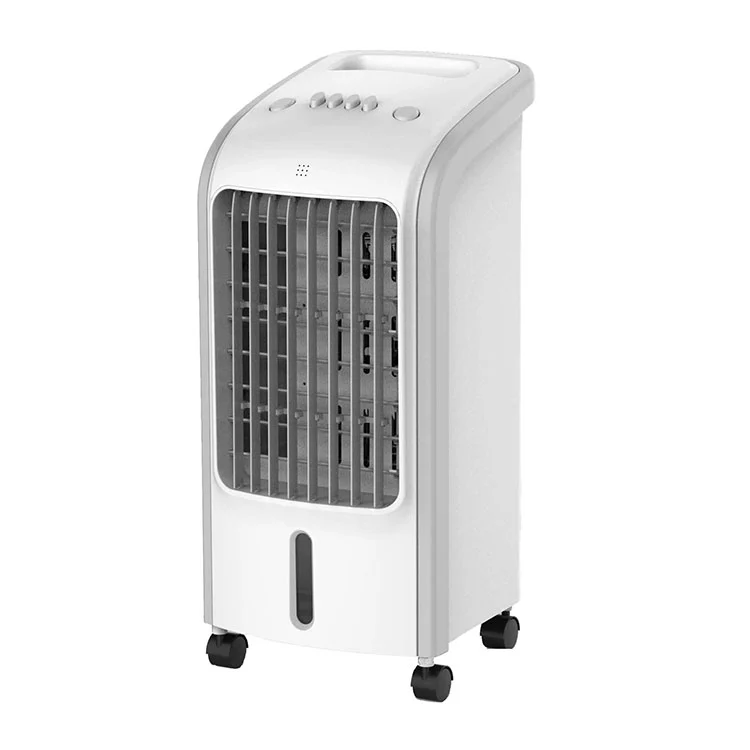
Understanding Personal Air Coolers
A personal air cooler is a compact cooling appliance intended to make a limited area more comfortable. Rather than cooling an entire building, it focuses on the immediate surroundings of a desk, bedside table, reading corner, or other small space. Its size and portability make it attractive to people who want a flexible cooling option without installing a permanent system.
Personal air coolers are available in different designs. Some use a water tank and a wetted cooling medium to support evaporative cooling. Others emphasize airflow and may include features such as adjustable fan speeds, directional vents, timers, or compact controls. Because product designs differ, buyers should verify the actual cooling method and specifications instead of assuming that every product works in the same way.
The most important distinction is between improving personal comfort and lowering the temperature of an entire room. A small cooler can help make nearby airflow feel more refreshing, but its effect on room temperature depends on the technology, room size, humidity, ventilation, and heat entering the space.
How Does a Personal Air Cooler Create a More Comfortable Environment?
The operating principle depends on the product category. Understanding the difference helps buyers set realistic expectations and avoid purchasing an appliance that is unsuitable for their climate.
Evaporative cooling
Many personal air coolers draw air through a damp cooling pad or similar medium. As water evaporates, it absorbs heat from the air. The resulting airflow may feel cooler, particularly in a dry environment. This process also adds moisture to the air, which is why ventilation and local humidity matter.
Air circulation
Some compact appliances function primarily as air circulators or fans. They move air across the skin, helping the body release heat through convection and, when conditions permit, evaporation of perspiration. The air itself may not become significantly colder, but the moving airflow can still improve perceived comfort.
Refrigeration-based cooling
A portable air conditioner uses a refrigeration cycle to remove heat from indoor air and normally needs a way to discharge that heat outside. This is fundamentally different from a small evaporative cooler. A personal air cooler should not be treated as a replacement for a refrigeration-based air conditioner where substantial temperature reduction or humidity control is required.
- Dry climate: Evaporative cooling may offer a noticeable benefit when the air has enough capacity to absorb additional moisture.
- Humid climate: Evaporative performance is usually less effective because the air is already moisture-rich.
- Small, enclosed room: A water-based cooler may raise indoor humidity over time, so suitable ventilation is important.
- Immediate personal comfort: Directing airflow toward the occupied area can be more useful than expecting the entire room to cool evenly.
Key Benefits of a Personal Air Cooler
The appeal of a personal air cooler lies in its flexibility. For users who do not need whole-room air conditioning, a compact appliance can address common comfort problems while occupying relatively little space.
1. Targeted Comfort
A compact unit can direct airflow toward a desk, chair, or bedside area. This is useful when only one person needs extra cooling rather than everyone in a room.
2. Portable Design
Lightweight models can be moved between suitable locations as daily needs change. A user might prefer a desk setup during the day and a bedside setup in the evening.
3. Simple Setup
Many models are designed for straightforward placement and operation. Depending on the model, installation may involve little more than choosing a stable surface and connecting the power supply.
4. Flexible Operation
Adjustable speeds, oscillation, timers, or directional vents can make it easier to tailor airflow to different activities and comfort preferences.
5. Potentially Modest Power Demand
Small appliances may consume less electricity than larger cooling systems, although actual consumption varies by motor, operating mode, and product design. Check the rated wattage before comparing costs.
6. Space-Saving Convenience
A compact footprint can suit dormitories, home offices, studio apartments, and other places where floor space is limited.
These benefits are not identical across all products. Tank capacity, fan performance, construction quality, controls, and the underlying cooling technology determine what a particular model can deliver.
Where Is a Personal Air Cooler Most Useful?
Matching the appliance to its intended location is one of the easiest ways to improve satisfaction. Consider the room layout, proximity to the user, access to a power outlet, and availability of fresh air.
Home office and study desk
Computers, monitors, and other electronics can contribute to localized warmth. A personal cooler positioned safely beside a desk may improve comfort during long working or study sessions. Choose a direction that does not blow loose papers around, and keep water-based appliances away from computers, power strips, and other moisture-sensitive equipment.
Bedroom and relaxation area
A compact unit can provide airflow beside a bed or reading chair. Check the noise level if it will operate while sleeping, and look for controls that are easy to reach in low light. If the product uses water, follow the manufacturer's guidance for nighttime use, cleaning, and tank care.
Dormitories and small apartments
Renters and students may value appliances that are easy to move and do not require permanent installation. Before buying, confirm the available tabletop or floor space, electrical requirements, and whether the room can be ventilated adequately.
Workshops and personal workstations
A personal cooler may provide localized comfort at a stationary work area. However, dusty environments can clog air inlets and cooling media. Select a model suitable for the surroundings, and follow the manufacturer's guidance on placement and cleaning.
Travel and temporary spaces
Some compact models are intended for occasional use in temporary setups. Portability alone does not guarantee suitability for travel: check dimensions, power input, tank design, and any restrictions associated with the intended location.
Personal Air Cooler vs. Fan vs. Portable Air Conditioner
These appliances may all improve comfort, but they do so in different ways. The right choice depends on whether you need moving air, evaporative cooling, or active refrigeration.
| Feature | Personal Air Cooler | Conventional Fan | Portable Air Conditioner |
|---|---|---|---|
| Main function | Often combines airflow with evaporative cooling | Moves air to improve perceived comfort | Uses refrigeration to remove heat from indoor air |
| Water required | Required for water-based evaporative models | Usually not required | Not used as a cooling tank in the same way |
| Humidity impact | Evaporative models add moisture | Usually has little direct effect on humidity | Often removes moisture while cooling |
| Room temperature reduction | Limited and condition-dependent | Does not actively refrigerate the room | Designed to lower indoor air temperature |
| Installation | Usually simple placement and setup | Usually simple placement and setup | Typically needs exhaust routing and suitable installation |
| Best fit | Personal comfort in suitable conditions | Affordable, straightforward airflow | More substantial cooling in an appropriate room |
This table describes typical product categories. Individual models can differ, so check the manufacturer's specifications and instructions before purchase.
How to Choose the Right Personal Air Cooler
Product photos and feature lists can make several models look similar. A more reliable buying decision starts with practical requirements rather than the number of advertised features.
1. Evaluate the intended cooling area
Identify whether the appliance will serve one person at a desk or a larger occupied area. Review any stated coverage guidance, airflow figures, and recommended operating conditions. Do not assume that a compact unit can cool an entire room simply because it has a large water tank.
2. Check the cooling method
Confirm whether the product uses evaporative cooling, conventional airflow, or another technology. This affects performance expectations, maintenance, humidity, and suitability for different climates.
3. Review airflow and adjustment options
Multiple fan speeds, adjustable vents, and oscillation can help users direct airflow where it is most useful. If the unit will sit close to the user, easy-to-adjust controls may matter more than an extensive list of advanced functions.
4. Examine the water tank and refill process
For water-based models, consider tank capacity, opening size, refill convenience, and how easily the tank can be cleaned. A larger tank may reduce refill frequency, but it can also add weight or make the unit bulkier.
5. Consider noise levels
Noise can be especially important in bedrooms, shared offices, libraries, and study spaces. Look for a stated noise rating when available, while remembering that measurement conditions differ between manufacturers. User reviews may help identify recurring concerns about rattling or high-pitched sounds.
6. Confirm dimensions and portability
Measure the intended location before ordering. Consider the unit's weight, handle design, cord length, base stability, and whether it can be moved without spilling water. A compact appearance does not always mean the appliance will fit comfortably on a crowded desk.
7. Inspect safety and electrical information
Check the rated voltage, power consumption, applicable safety certifications, and instructions for use around water. The product should be appropriate for the electrical supply and regulations in the destination market. Keep cords and plugs dry, and never operate an appliance with damaged wiring or a cracked water reservoir.
8. Look at service and warranty support
Warranty terms, spare-part availability, cleaning instructions, and access to customer service can make a meaningful difference over the product's lifespan. Buyers sourcing appliances for a business should also clarify packaging, quality inspection, documentation, and after-sales arrangements before placing a large order.
Energy Use, Noise, and Everyday Comfort
Energy efficiency is best evaluated through actual rated power and expected operating hours, not through general claims that a product is inexpensive to run. A small appliance may use relatively little power, but the precise cost depends on the model, local electricity rate, and daily use.
Estimate electricity consumption
Use the following calculation to estimate energy consumption:
For example, a hypothetical 40-watt appliance running for 8 hours uses 0.32 kWh. Multiply that figure by the electricity price per kWh to estimate the operating cost. This is an illustrative calculation, not a specification for every personal air cooler.
When comparing models, check whether the rated power includes all operating modes and accessories. A water pump, lighting, or other additional function may affect total consumption.
Balance airflow with noise
The highest fan setting may deliver stronger airflow, but it can also produce more noise. Try lower settings when working, reading, or sleeping, and position the appliance so that it does not need to run at maximum speed simply to reach the occupied area.
Manage humidity and ventilation
Evaporative cooling is sensitive to humidity. In a poorly ventilated room, continued operation can increase moisture and reduce the cooling effect. If the room begins to feel damp or stuffy, stop or reduce evaporative operation and improve ventilation according to the product instructions.
Cleaning and Maintenance Tips for Better Performance
Routine maintenance supports dependable airflow, helps control unpleasant odors, and can extend the useful life of the appliance. The exact schedule depends on the product design, water quality, frequency of use, and environmental conditions.
- Switch off and unplug first. Disconnect the appliance from the power supply before cleaning, draining, or inspecting internal components.
- Refresh the water regularly. Do not leave standing water in the tank for extended periods. Follow the manual for draining, refilling, and water-quality recommendations.
- Clean the tank. Use only the cleaning method and products approved by the manufacturer. Avoid harsh chemicals that could damage plastic, seals, or internal parts.
- Inspect the cooling medium. Check evaporative pads or filters for deposits, discoloration, clogging, or deterioration. Clean or replace them as instructed.
- Keep air inlets clear. Dust and lint can reduce airflow. Clean accessible grilles carefully without pushing debris into the motor or electrical compartment.
- Dry before storage. If the appliance will not be used for a while, drain it and allow appropriate parts to dry as directed in the manual.
- Check the power cord. Stop using the appliance if the cord, plug, housing, or reservoir is damaged, and seek qualified service where necessary.
Never immerse the electrical base or motor assembly in water unless the manufacturer explicitly identifies that component as safe for immersion. Do not add fragrances, essential oils, disinfectants, or other substances to the tank unless the instructions specifically permit them.
Common Personal Air Cooler Problems and Practical Solutions
When a personal cooler does not perform as expected, the cause may be the environment, a maintenance issue, or a mismatch between the product and the intended use. The table below provides basic checks for common symptoms.
| Problem | Possible Cause | Recommended Action |
|---|---|---|
| Airflow feels weak | Blocked inlet, dirty filter, or unsuitable speed setting | Switch off the unit, clean accessible components, and review the airflow settings. |
| Cooling feels limited | High humidity, poor ventilation, or unrealistic coverage expectations | Improve ventilation, check operating conditions, and direct airflow toward the occupied area. |
| Unpleasant odor | Stagnant water, dirty tank, or damp cooling media | Unplug the unit, drain and clean it according to the manual, and dry the relevant components. |
| Water leakage | Overfilling, incorrect tank placement, or damaged seals | Stop operation, unplug safely, check the fill limit and tank position, and contact service if leakage continues. |
| Unusual vibration or noise | Uneven placement, loose external parts, or internal wear | Place the unit on a stable surface and inspect only user-serviceable parts. Seek professional repair if needed. |
| Unit will not start | Power supply issue, loose plug, or internal fault | Check the outlet and connection safely. Stop using the product if there is a burning smell, visible damage, or repeated electrical failure. |
If basic checks do not resolve the issue, consult the manufacturer's manual or customer support. Avoid opening sealed electrical compartments or attempting repairs that could expose live components.
A Practical Personal Air Cooler Purchase Checklist
Use this checklist to compare options more consistently, whether you are buying one appliance for home use or evaluating models for retail and distribution.
- Have you identified the main space and number of people the appliance needs to serve?
- Is the cooling technology appropriate for your local temperature, humidity, and ventilation conditions?
- Are the product dimensions suitable for the intended location?
- Are airflow settings, directional vents, and controls easy to use?
- For evaporative models, is the water tank convenient to fill and clean?
- Are rated power, noise information, voltage, and plug requirements clearly documented?
- Can filters, pads, or other maintenance parts be cleaned or replaced as required?
- Are warranty terms, safety documentation, and service arrangements available?
- Does the supplier provide clear product specifications and consistent quality information?
For wholesale buyers, additional considerations may include carton dimensions, shipping protection, labeling, order quantities, production lead times, and market-specific compliance requirements. Confirm these details directly with the supplier rather than relying on assumptions based on product images.
Frequently Asked Questions About Personal Air Coolers
1. What is a personal air cooler designed for?
A personal air cooler is generally designed to improve comfort in a limited area, such as beside a desk, bed, or chair. Its exact capabilities depend on its cooling technology, airflow, and operating conditions.
2. Can a personal air cooler replace an air conditioner?
Not in every situation. Many personal air coolers rely on airflow or evaporation rather than refrigeration. They may provide useful localized comfort, but they are not equivalent to an air conditioner when substantial room-temperature reduction is required.
3. Does a personal air cooler work well in humid weather?
Evaporative cooling generally becomes less effective as humidity rises because less water can evaporate into the surrounding air. In humid conditions, a conventional fan or a suitable air conditioner may be a better match, depending on the user's needs.
4. Does every personal air cooler need water?
No. Water is needed by models that use evaporative cooling, but some compact appliances focus on air circulation. Always check the product description and user manual to confirm the operating method.
5. How often should the water tank be cleaned?
Follow the cleaning frequency specified by the manufacturer. Frequent use, warm conditions, and water quality can affect maintenance needs. Refresh stored water regularly and clean the tank whenever the instructions recommend it or contamination is suspected.
6. Can a personal air cooler run throughout the night?
That depends on the specific model and its instructions. Before overnight use, check the recommended operating conditions, noise level, water management guidance, electrical safety information, and any timer or automatic shutoff functions.
7. How can I estimate the electricity cost?
Multiply the appliance's power rating in kilowatts by the number of operating hours, then multiply the result by your electricity price per kilowatt-hour. Use the actual product rating and your local tariff for a meaningful estimate.
8. What should I look for when buying a personal air cooler online?
Review the cooling method, dimensions, rated power, noise information, tank capacity where applicable, maintenance requirements, warranty, and supplier support. Look for clear specifications rather than relying on broad performance claims.
9. Why does my cooler blow air without making the room feel much colder?
The appliance may be intended for localized comfort rather than whole-room cooling. High humidity, limited ventilation, an obstructed inlet, or a room that is too large for the unit can also reduce the perceived benefit.
10. Is a larger water tank always better?
Not necessarily. A larger tank can reduce refill frequency, but it may increase the unit's size and weight. Consider how often you will use the appliance, how easy the tank is to clean, and whether the overall design suits your available space.
Make Everyday Cooling More Convenient with the Right Choice
A personal air cooler can be a practical addition to a home office, bedroom, dormitory, or other compact space when its capabilities match the environment. The best purchase is not necessarily the model with the most functions or the largest water tank. It is the one that provides suitable airflow, fits the available space, is straightforward to maintain, and performs well under the conditions in which it will be used.
Before choosing a product, consider local humidity, room ventilation, noise tolerance, power requirements, and long-term maintenance. Compare documented specifications and understand whether you need simple air circulation, evaporative cooling, or the stronger temperature-control capabilities of an air conditioner. This practical approach helps prevent disappointment and supports a more informed purchase.
For buyers exploring home cooling appliances, Jianhui offers a starting point for learning more about the company and its product offerings. Visit the Jianhui company profile to learn more about the business. For product specifications, availability, or sourcing discussions, contact the company directly to confirm the details that match your requirements.
Looking for a Suitable Personal Air Cooler for Your Market?
Choosing the right cooling appliance starts with understanding your target users, operating environment, product requirements, and purchasing goals. Whether you are comparing models for household use or exploring potential supply opportunities, clear specifications and reliable communication can make the process easier.
Visit Jianhui to learn more about the company. If you need additional information about available products, technical specifications, or potential cooperation, contact us to discuss your requirements and identify the next steps.
