

What Makes an American Type Substation a Smarter Choice for Modern Power Distribution?
2026-04-27
When I look at how power distribution projects are planned today, I see the same pressure points again and again. Buyers want reliable performance, a smaller footprint, safer operation, easier maintenance, and a design that does not create headaches during installation. That is exactly why solutions like the American Type Substation continue to attract attention across commercial, industrial, and utility applications. As I learned more about the product direction of Lugao Power Co.,Ltd, it became clear to me that the company is focusing on the kind of integrated outdoor distribution equipment that answers real project concerns instead of adding complexity. In practical terms, a well-designed American Type Substation helps simplify field deployment, improve site organization, and support stable power delivery where space, time, and service continuity all matter.
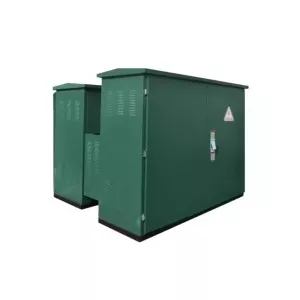
In many projects, I have noticed that decision-makers are not only buying equipment. They are trying to reduce future risk. They are asking whether the unit will fit the site, whether it will be easy to service, whether it can protect internal components from the outdoor environment, and whether it can support long-term operation without constant intervention. A properly engineered American Type Substation responds to those questions by combining transformer, high-voltage control, and low-voltage distribution functions into one coordinated system. That single change can make a major difference in procurement efficiency and installation planning.
Why Do So Many Buyers Struggle With Traditional Outdoor Distribution Layouts?
I often find that conventional distribution arrangements create trouble long before the system is energized. Separate equipment pieces may require more installation work, more coordination between suppliers, more civil preparation, and more room on site. Once those issues start stacking up, costs rise quietly. Delivery schedules become harder to control. Maintenance routes become awkward. Expansion planning becomes less flexible than expected.
That is where the value of an integrated American Type Substation becomes much easier to see. Instead of forcing the project team to manage scattered components across a wider area, the design brings critical functions together in one compact enclosure-oriented solution. For site owners, that often means a cleaner layout and fewer interface problems. For contractors, it can mean a more manageable installation process. For operators, it usually means less confusion when inspection and service work need to be carried out.
- I see space limitation as one of the biggest reasons buyers move toward compact substation solutions.
- I also see labor coordination as a hidden cost that many teams underestimate at the quotation stage.
- From an operational point of view, I believe equipment integration can help reduce avoidable maintenance inefficiencies.
- For projects with strict timelines, I find that reducing on-site assembly complexity is often just as important as equipment price.
How Does an American Type Substation Help Solve Space and Layout Problems?
Space pressure is no longer limited to urban projects. Industrial parks, renewable energy support sites, commercial developments, and infrastructure upgrades all face layout constraints in different ways. I have seen many buyers discover too late that a traditional arrangement takes up more room than expected, especially when safety clearances and maintenance access are added into the calculation.
A compact American Type Substation helps address this issue by placing major distribution functions into a more concentrated structure. That matters because it can reduce the burden on site planning and allow the electrical system to fit into tighter project conditions without sacrificing usability. In my view, this is not simply a matter of saving square meters. It is also a matter of making the overall site easier to organize and easier to maintain over time.
| Project Concern | Common Challenge | How an American Type Substation Helps |
| Limited installation area | Separate equipment takes more room | Integrated design supports a more compact layout |
| Complex civil coordination | Multiple foundations and equipment interfaces | More centralized equipment planning can simplify deployment |
| Difficult maintenance access | Scattered components increase service time | Consolidated arrangement helps improve maintenance efficiency |
| Project schedule pressure | On-site assembly creates delays | Integrated equipment can reduce installation complexity |
What Do Buyers Usually Want Most From Outdoor Power Equipment?
When I think about the conversations buyers have before placing an order, the priorities are usually very consistent. They want durability, safe operation, stable performance, practical maintenance, and confidence that the equipment will match the application. Fancy wording does not win trust in this category. Clear functional value does.
That is one reason the American Type Substation remains relevant. It is not just compact. It is practical. A buyer is not comparing it only against another product category. The buyer is also comparing it against future downtime, future service labor, future replacement risk, and future complaints from end users. In that broader comparison, product design choices matter a lot.
- I want outdoor equipment to protect critical internal components from demanding site conditions.
- I want an equipment layout that makes inspection more direct rather than more complicated.
- I want a solution that can support safe daily operation for the people responsible for it.
- I want the equipment to make sense not only on paper, but also during real installation and real service work.
Which Product Advantages Matter Most When Choosing an American Type Substation?
From my perspective, the most persuasive advantages are the ones that improve the full life cycle of the project rather than only the initial sale. A strong American Type Substation can bring value at the procurement stage, at the installation stage, and during long-term operation.
| Advantage | Why It Matters to Buyers | Practical Result |
| Integrated structure | Fewer separated systems to coordinate | Better project efficiency and cleaner site planning |
| Outdoor-oriented design | Equipment must perform in changing environments | More reliable service in demanding field conditions |
| Compact footprint | Land use and layout flexibility affect project cost | Easier fit for commercial and industrial applications |
| Maintenance accessibility | Service teams need practical access to components | Reduced inspection difficulty and better upkeep |
| System coordination | Power reception and distribution must work together smoothly | Improved operational consistency |
I also think buyers appreciate products that reduce ambiguity. When the equipment concept is clear, the application range is clear, and the operational purpose is clear, the procurement process becomes easier. That clarity is one of the reasons many project teams prefer an American Type Substation for distribution scenarios where efficiency and practicality need to move together.
How Can I Tell Whether This Type of Substation Fits My Project?
I would start by asking a few direct questions. Is my installation area limited? Do I want a more integrated outdoor distribution approach? Am I trying to reduce the amount of on-site coordination between separate electrical units? Do I need a solution that supports organized maintenance and stable service over time?
If the answer to several of those questions is yes, then an American Type Substation is usually worth serious consideration. I would especially look at it for projects such as residential developments, commercial buildings, industrial facilities, utility upgrades, public infrastructure, and locations where compact outdoor power distribution is preferred.
- I would evaluate the required voltage and capacity range first.
- I would review the local environment and installation conditions next.
- I would confirm maintenance expectations before final selection.
- I would compare long-term usability, not just first-purchase cost.
- I would choose a supplier that understands practical application needs, not only manufacturing output.
Why Does Supplier Understanding Matter As Much As Product Design?
Even a strong product can become a difficult purchase if the supplier does not understand how the equipment will actually be used. I pay close attention to whether a manufacturer speaks in a way that reflects real project concerns. That includes installation logic, site constraints, maintenance practicality, and the need for dependable product communication.
In that respect, Lugao Power Co.,Ltd enters the conversation naturally because buyers looking into distribution equipment are not only searching for a catalog item. They are usually searching for a partner that can support a workable electrical solution. A supplier focused on integrated substation products should be able to explain where the equipment fits, why the structure matters, and how the product helps solve day-to-day distribution problems. That practical alignment gives buyers more confidence when reviewing an American Type Substation for an active project pipeline.
What Mistakes Should I Avoid Before Buying an American Type Substation?
I would avoid treating all compact substations as interchangeable. That assumption can lead to poor matching between equipment and application. I would also avoid focusing only on headline pricing while ignoring site fit, service convenience, and long-term maintenance impact. In my experience, those overlooked details often become the real cost drivers later.
- I would not choose solely on appearance or basic specification labels.
- I would not ignore maintenance access and service workflow.
- I would not underestimate the value of integrated design in tight installations.
- I would not skip discussions about actual use conditions and project expectations.
A thoughtful purchase process should consider both electrical performance needs and operating reality. That is where the right American Type Substation stands out. It should not only meet project requirements on paper. It should also make ownership easier after commissioning.
Is the Best Choice the One That Reduces Risk Over the Whole Project Life Cycle?
I believe the answer is yes. The strongest equipment decision is rarely the one that looks cheapest at first glance. It is the one that reduces friction from design review to installation, from operation to maintenance, and from present demand to future service expectations. That is why I see continued value in the American Type Substation as a practical answer for modern outdoor distribution needs.
When I assess product value through a buyer’s lens, I keep coming back to the same conclusion. A good solution should save space, simplify coordination, support safe operation, and stay manageable throughout its working life. That is exactly the kind of advantage project teams are looking for when power reliability and site efficiency both matter.
If you are comparing options and want a more practical way to improve your distribution layout, this is the right time to take a closer look at American Type Substation solutions from Lugao Power Co.,Ltd. If you want to discuss your voltage level, capacity needs, installation environment, or project application, contact us today and send your inquiry. A well-matched solution starts with a clear conversation, and your next project deserves equipment that works as hard as your team does.