

Working on high-voltage electrical equipment requires more than switching off the power supply. Residual electrical energy, accidental re-energization, and induced voltages can create serious hazards even when a circuit appears to be isolated. An earthing switch helps address these risks by connecting designated electrical conductors to earth under specified operating conditions.
This guide explains how an earthing switch works, where it is used, which technical factors matter during selection, and how proper installation and maintenance support dependable electrical protection. It also outlines common purchasing mistakes so engineers, maintenance teams, and equipment buyers can make better-informed decisions.
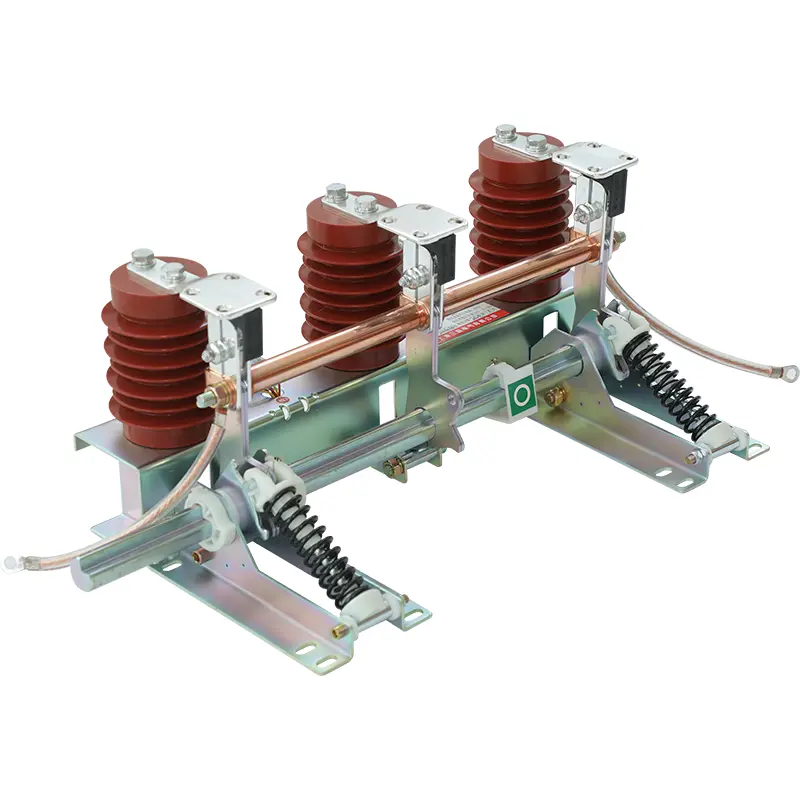
What Is an Earthing Switch?
An earthing switch, also called a grounding switch in some markets, is a mechanical switching device designed to connect an electrical circuit or conductor to earth. It is commonly incorporated into medium-voltage and high-voltage switchgear, substations, and other power distribution systems.
Its primary purpose is to establish a defined earth connection when equipment has been isolated and the applicable safety procedures permit grounding. This helps manage certain electrical hazards associated with maintenance, including induced voltages, residual charge, and the consequences of an unintended energization event within the device's rated capabilities.
An earthing switch is not a substitute for every other protective measure. Personnel must still follow the approved isolation procedure, verify the absence of voltage with suitable equipment, apply grounding and bonding arrangements as required, and comply with site-specific safety rules.
How Is an Earthing Switch Different from Other Switching Devices?
| Device | Main Function | Important Distinction |
|---|---|---|
| Circuit breaker | Switches load current and interrupts fault current within its rated capability. | Designed for circuit control and interruption, not simply for establishing an earth connection. |
| Disconnector | Provides isolation between electrical circuit sections under specified conditions. | Usually does not serve as a fault-current interruption device. |
| Earthing switch | Connects designated conductors to earth for grounding and maintenance safety. | Its permitted switching and short-circuit-making capabilities depend on the product rating. |
| Portable grounding equipment | Provides temporary grounding and bonding using approved portable components. | Applied according to the work procedure and system design rather than functioning as a permanently installed switchgear device. |
These devices may be used together in a coordinated safety arrangement. Their functions are complementary, and the required sequence depends on the equipment design, operating instructions, and applicable electrical safety procedures.
Why Is an Earthing Switch Important?
Electrical maintenance often involves equipment that cannot be made safe merely by opening a circuit breaker. A disconnected conductor may still carry induced voltage, retain stored charge, or become energized because of an operating error or an unexpected supply condition. An appropriately rated and correctly operated earthing switch provides an important part of the grounding arrangement used to control these hazards.
1. Helps Protect Maintenance Personnel
When the approved isolation and grounding procedure is followed, the earthing switch establishes a deliberate connection to earth. This reduces certain risks associated with floating conductors and unexpected voltage conditions. The actual level of protection depends on the grounding design, the electrical system, and correct operation.
2. Supports a Defined Maintenance State
A properly designed switchgear assembly can use mechanical and electrical interlocks to prevent incompatible operations. For example, the arrangement may restrict earthing-switch operation until a related disconnector reaches the required position. Such interlocks help reduce the likelihood of operating mistakes, although they do not replace verification and safe work practices.
3. Improves Switchgear Operating Discipline
Clear position indication and an established operating sequence make it easier for authorized operators to understand the state of equipment. When combined with documented procedures, appropriate labeling, and suitable lockout arrangements, an earthing switch supports more consistent maintenance preparation.
4. Helps Manage Certain Fault Conditions
Some earthing switches are designed with a specified short-circuit-making capability. This means they can close onto a circuit under defined fault conditions without exceeding their tested rating. Not every earthing switch has this capability, so buyers must verify the applicable technical documentation rather than assume that all models can safely make a connection onto an energized fault.
How Does an Earthing Switch Work?
An earthing switch uses conductive contacts, a mechanical operating mechanism, and an earth connection to establish a low-impedance path between the designated conductor and the grounding system. Depending on the switchgear design, operation may be manual or motor-assisted, and position indication may be mechanical, electrical, or both.
A Typical Operating Sequence
- Isolate the circuit: The relevant circuit breaker, disconnector, and other equipment are operated according to the approved switching procedure.
- Prevent unexpected operation: Apply the required lockout, tagging, interlocking, or access-control measures.
- Verify the absence of voltage: Use an approved voltage detector suitable for the system and follow the required verification procedure.
- Establish the earth connection: Operate the earthing switch only when the required conditions have been confirmed.
- Confirm the final state: Check position indication and any additional verification required by the site procedure before starting work.
The sequence above is a general explanation, not a universal switching instruction. Actual steps must follow the manufacturer's operating manual, the system's interlocking logic, and the responsible authority's approved procedure. Certain systems require additional measures to discharge stored energy or address induced voltage.
What Happens During a Fault?
If a conductor is accidentally energized while grounded, a fault current may flow through the earthing arrangement. The switch, earth conductor, busbar, connections, and grounding system must be suitable for the prospective current and its duration. The protective system should operate as designed to clear the fault.
For this reason, a product's rated short-time withstand current and duration are essential considerations. A switch with an unsuitable rating can suffer severe thermal or mechanical damage if exposed to a fault beyond its design limits.
Which Types of Earthing Switches Are Available?
Earthing switches are available in different configurations to suit switchgear construction, voltage level, installation environment, and operating requirements. The correct type is determined by the system design rather than by appearance alone.
Indoor Earthing Switches
Indoor models are commonly used in metal-enclosed switchgear and indoor substations. Their insulation system, dimensions, contact arrangement, and mounting interface must match the switchgear assembly. Compact construction is often important where panel space is limited.
Outdoor Earthing Switches
Outdoor equipment must accommodate environmental exposure, including temperature changes, humidity, pollution, and other site-specific conditions. Insulation distances, corrosion resistance, mechanical robustness, and the condition of exposed operating components require particular attention.
Manual and Motor-Operated Designs
Manual operating mechanisms may be suitable for installations where local operation is practical and permitted. Motor-operated mechanisms can support remote or automated switching arrangements when integrated into a suitable control system. Electrical control does not eliminate the need for interlocks, position confirmation, and authorized operating procedures.
Earthing Switches with Short-Circuit-Making Capability
Some models are specifically designed and tested to close onto a fault under defined conditions. These products are selected where the system design and applicable standards require that capability. Buyers should confirm the declared making-current rating and relevant test information rather than infer performance from the product category.
Where Are Earthing Switches Used?
Earthing switches play an important role in electrical installations where safe access to isolated conductors is required. Their specific location and configuration depend on the electrical architecture and the equipment manufacturer's design.
- Electrical substations: Used in suitable switchgear and circuit arrangements to ground designated conductors during approved maintenance operations.
- Medium-voltage distribution networks: Incorporated into distribution switchgear serving industrial facilities, commercial buildings, and utility networks.
- Power generation facilities: Used in applicable switchgear assemblies associated with generators, auxiliary systems, and power distribution equipment.
- Renewable energy installations: May be integrated into collector substations and other medium- or high-voltage equipment used in wind and solar power projects.
- Industrial manufacturing plants: Support maintenance planning for motors, transformers, cables, and other equipment connected through compatible switchgear.
- Infrastructure and transport systems: Applied in suitable electrical distribution systems where controlled isolation and grounding are required.
In each application, the switch must be compatible with the voltage class, system grounding arrangement, fault level, operating frequency, enclosure design, and required safety procedures. A model appropriate for one installation may not be suitable for another, even when the nominal voltage appears similar.
What Should Buyers Check Before Selecting an Earthing Switch?
Choosing an earthing switch based on a single specification can lead to compatibility problems, unexpected project costs, and commissioning delays. A structured technical review helps purchasers, electrical engineers, and OEM teams identify the requirements that matter before placing an order.
Key Technical Parameters
| Parameter | What to Verify | Why It Matters |
|---|---|---|
| Rated voltage | The rated voltage and compatibility with the switchgear insulation design. | Prevents selection of a device unsuitable for the system's electrical stress. |
| Rated frequency | Whether the product is intended for the system's operating frequency. | Supports compliance with the equipment's specified operating conditions. |
| Short-time withstand current | Declared current and corresponding duration. | Indicates the fault-current thermal and mechanical withstand capability under specified conditions. |
| Short-circuit-making current | Whether making capability is required and explicitly rated. | Confirms whether the switch is suitable for the specified closing-on-fault duty. |
| Insulation level | Power-frequency withstand, impulse withstand, and applicable insulation requirements. | Helps ensure suitability for the installation's insulation coordination. |
| Mechanical endurance | Operating-cycle rating and mechanism durability. | Helps assess suitability for the expected frequency of operation. |
| Installation dimensions | Mounting points, shaft arrangement, contact geometry, clearances, and interface dimensions. | Reduces retrofit difficulty and switchgear integration problems. |
| Interlocking and indication | Mechanical interlocks, auxiliary contacts, position indicators, and control interfaces. | Supports the intended operating logic and system monitoring. |
| Environmental conditions | Indoor or outdoor use, temperature range, humidity, pollution, and corrosion exposure. | Helps maintain performance under actual site conditions. |
| Standards and documentation | Applicable standards, drawings, test reports, manuals, and conformity documentation. | Provides evidence for technical review, acceptance, and maintenance planning. |
Questions to Ask a Supplier
- Is the proposed model designed for the exact switchgear type and rated voltage?
- Can the supplier provide dimensional drawings and a clearly defined mounting interface?
- What short-time withstand current and duration are declared for the product?
- Does the application require short-circuit-making capability, and is that capability documented?
- Are the required mechanical or electrical interlocks available?
- What inspection, lubrication, adjustment, and replacement procedures does the manufacturer specify?
- Are spare parts, technical support, and product documentation available for the expected service life?
How Should an Earthing Switch Be Installed and Maintained?
Correct installation and planned maintenance help preserve the mechanical integrity and electrical performance of an earthing switch. Work must be carried out by qualified personnel under the applicable safety rules, with the equipment placed in the required safe condition.
Before Installation
- Review the approved drawings, product manual, ratings, and switchgear interface requirements.
- Inspect the device for shipping damage, contamination, corrosion, or missing components.
- Confirm mounting dimensions, operating-shaft alignment, phase spacing, and specified clearances.
- Verify that the grounding connection and associated conductors are designed for the expected electrical duty.
- Check that the operating mechanism and interlocks correspond to the approved switchgear design.
During Commissioning
Commissioning should follow the manufacturer's documented procedure. Depending on the design and applicable requirements, authorized personnel may need to verify contact alignment, operating torque, mechanical travel, position indication, auxiliary contacts, and interlocking functions. Electrical tests should be selected according to the product documentation and the relevant commissioning plan.
Do not modify the mechanism, bypass an interlock, or apply an improvised operating force to overcome resistance. Unexpected stiffness, incomplete contact engagement, or inconsistent position indication should be investigated before the equipment is returned to service.
Routine Maintenance Checklist
| Inspection Item | What to Look For | Recommended Approach |
|---|---|---|
| Contacts | Wear, contamination, discoloration, corrosion, or damage. | Inspect and assess against the manufacturer's acceptance criteria. |
| Operating mechanism | Abnormal friction, loose components, or incomplete movement. | Check adjustment and lubrication as specified by the manufacturer. |
| Grounding connections | Loose hardware, corrosion, damaged conductors, or deteriorated bonding points. | Verify connection integrity using the approved maintenance procedure. |
| Interlocks | Failure to prevent an incompatible operation. | Test using the approved functional test procedure. |
| Position indication | Mismatch between the indicated and actual mechanical position. | Investigate the cause before authorizing normal operation. |
| Enclosure and insulation | Cracks, moisture, dust accumulation, or damaged insulating parts. | Clean, inspect, and replace parts only as permitted by the manufacturer. |
Inspection intervals should reflect the manufacturer's recommendations, operating frequency, environmental exposure, fault history, and the facility's maintenance program. Equipment exposed to severe pollution, moisture, or corrosive conditions may require a different inspection strategy from equipment in a clean indoor environment.
What Common Mistakes Should Be Avoided?
Many selection and maintenance problems are preventable when technical requirements are reviewed early and operating procedures are clearly defined. The following mistakes deserve particular attention.
Choosing by Voltage Rating Alone
Rated voltage is essential, but it does not establish suitability by itself. Current withstand capability, insulation level, making duty, mechanical interface, and interlocking requirements must also match the application.
Assuming Every Model Can Close onto a Fault
Short-circuit-making capability is a specific product characteristic, not a universal feature of every earthing switch. Confirm the rating and supporting documentation when this duty is required by the system design.
Ignoring Mechanical Compatibility
A switch may have suitable electrical ratings but still fail to fit the existing panel or connect correctly to the operating mechanism. Review approved drawings and interfaces before purchasing replacement equipment.
Overlooking Interlocks and Position Indication
Interlocks and indicators are integral to the intended operating arrangement. An incorrectly adjusted mechanism or misleading indication can undermine safe switching procedures. These functions should be included in commissioning and maintenance checks.
Using Unapproved Modifications
Drilling, cutting, bending contacts, bypassing interlocks, or changing the mechanism without authorization can affect clearances, withstand performance, and mechanical reliability. Any proposed modification should be evaluated and approved by the responsible engineering authority and manufacturer where required.
Neglecting Documentation and Training
Incomplete drawings, missing manuals, and unclear operating responsibilities make maintenance more difficult. Keep current technical records accessible and ensure personnel are trained and authorized for the equipment they operate.
Frequently Asked Questions About Earthing Switches
1. What is the main purpose of an earthing switch?
An earthing switch connects designated electrical conductors to earth under defined operating conditions. It supports grounding arrangements used during maintenance and helps manage hazards associated with residual charge, induced voltage, and unexpected energization when used within a properly designed safety procedure.
2. What is the difference between an earthing switch and a disconnector?
A disconnector provides circuit isolation under its specified operating conditions, while an earthing switch establishes a connection between designated conductors and earth. They perform different functions and may be used together in a coordinated switchgear arrangement.
3. Can an earthing switch interrupt load current?
Ordinary earthing switches are not intended to replace circuit breakers for normal load-current interruption. Their permitted switching duties depend on the specific design and rating. Always follow the product documentation and approved switching procedure.
4. Can every earthing switch close onto a short circuit?
No. Only a model with the appropriate declared short-circuit-making capability should be selected for that duty. Verify the rating, applicable standard, and relevant test documentation before use.
5. Which specifications matter most when selecting an earthing switch?
Important specifications include rated voltage, rated frequency, insulation level, short-time withstand current and duration, short-circuit-making capability where required, mechanical endurance, mounting dimensions, interlocking arrangements, and environmental suitability.
6. Does operating an earthing switch mean the equipment is automatically safe to touch?
No. Safe access requires the complete approved isolation and grounding procedure, including verification of the absence of voltage and any additional precautions required by the electrical system and site rules. An earthing switch is one part of the protection arrangement, not a substitute for the entire procedure.
7. How often should an earthing switch be inspected?
Inspection frequency should follow the manufacturer's instructions and the site's maintenance program. Operating frequency, environmental conditions, fault events, and observed equipment condition may affect the required interval.
8. Can an earthing switch be retrofitted into existing switchgear?
A retrofit may be possible if the replacement device is compatible with the switchgear's electrical ratings, insulation design, mounting dimensions, operating mechanism, and interlocking arrangement. Engineering review and appropriate approval are necessary before modifying existing equipment.
9. What documents should be requested from a manufacturer?
Depending on the project, request a technical datasheet, dimensional drawings, installation and operating manuals, maintenance instructions, applicable conformity documentation, and relevant type-test or routine-test records. Confirm which documents are available for the exact model being supplied.
10. Why is manufacturer support important when purchasing an earthing switch?
Reliable technical support helps buyers confirm product compatibility, understand rated performance, review installation interfaces, obtain maintenance guidance, and identify suitable spare parts. These details can reduce procurement uncertainty and help avoid preventable commissioning delays.
How Can the Right Earthing Switch Support Long-Term Electrical Safety?
An earthing switch is a critical component in many medium-voltage and high-voltage electrical installations. Its value depends on selecting the correct design, confirming its electrical and mechanical ratings, integrating it with suitable switchgear and interlocks, and maintaining it according to documented procedures.
For engineers and purchasing teams, the most effective approach is to evaluate the complete application rather than rely on a single specification. Voltage class, fault-current withstand, making capability, insulation requirements, mounting dimensions, environmental conditions, and supporting documentation all contribute to a dependable selection.
Equally important is the human side of electrical safety. Clear operating procedures, qualified personnel, appropriate isolation, voltage verification, and a well-maintained grounding arrangement remain essential throughout the equipment's service life. A suitable earthing switch supports these measures as part of a coordinated electrical safety system.
Looking for a Reliable Earthing Switch Solution?
Choosing the right switchgear components starts with understanding your project's technical requirements. SanGao provides electrical equipment solutions for customers seeking dependable products and application-focused support. When evaluating an earthing switch, confirm the required ratings, installation interface, operating arrangement, and supporting technical documents before finalizing your specification.
Visit the SanGao official website to learn more about the company and its electrical equipment offerings. If you need assistance with product specifications, switchgear compatibility, or project requirements, contact us to discuss your application and identify a suitable solution.
Contact SanGaoTechnical note: Product ratings, operating limits, applicable standards, and procedures vary by model and installation. Always consult the manufacturer's documentation and the responsible electrical engineering authority before selecting, installing, testing, or operating electrical equipment.
