

What Makes an L7 Miniature Circuit Breaker a Smart Choice for Modern Electrical Protection?
2026-08-24
When electrical systems operate continuously, reliable circuit protection is essential for preventing overloads, short circuits, equipment damage, and unexpected downtime. An L7 Miniature Circuit Breaker offers a compact and practical solution for low-voltage distribution and protection applications. Designed to interrupt abnormal current conditions quickly, it can help improve system safety while making installation and maintenance more convenient. For projects with special installation requirements, Holy Flame Group also highlights customized solutions, including support for boat and marine vessel applications, where space, vibration, environmental conditions, and circuit configuration can vary significantly.
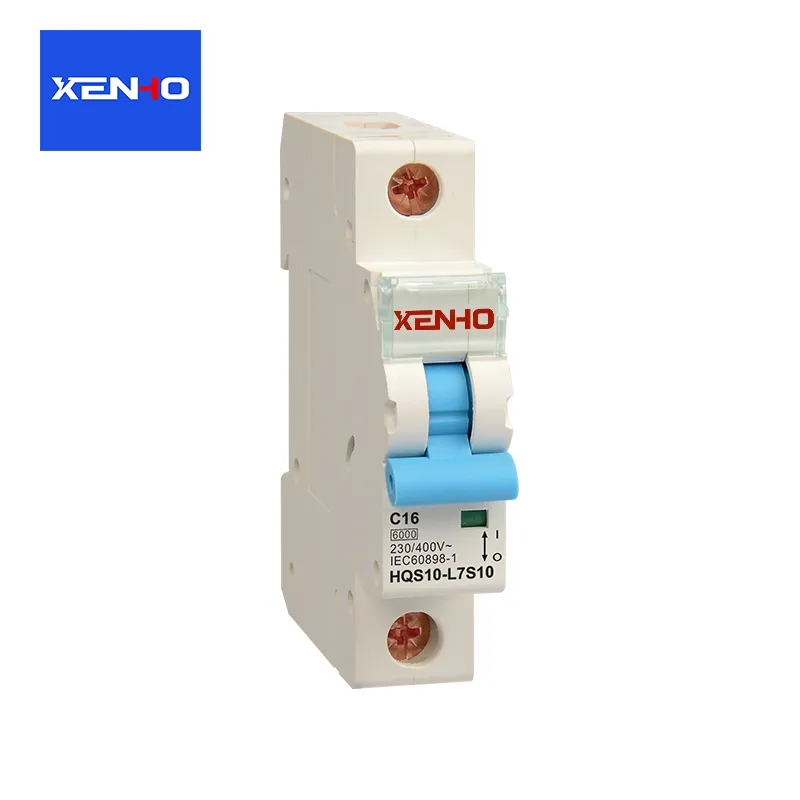
What Is an L7 Miniature Circuit Breaker?
An L7 Miniature Circuit Breaker, commonly known as an L7 MCB, is a modular protective device designed to automatically disconnect a circuit when excessive current or a short circuit occurs.
Depending on the specific model and application, L7-type breakers can be available in different pole configurations, rated currents, trip characteristics, and AC or DC versions. Many L7 products on the market are designed around IEC/EN 60898-1 requirements, while actual ratings and certifications should always be verified according to the selected model.
Its main functions include:
-
Overload protection
-
Short-circuit protection
-
Circuit isolation
-
Equipment protection
-
Convenient manual switching
-
Fast interruption of abnormal current
The compact modular structure makes the L7 Miniature Circuit Breaker particularly useful where electrical protection needs to be installed in a limited space.
Why Is an L7 Miniature Circuit Breaker Important?
Electrical faults can develop rapidly. Excessive current may cause wiring to overheat, while a short circuit can create a very high fault current within a short period.
A properly selected L7 Miniature Circuit Breaker provides a controlled method of disconnecting the affected circuit. This helps reduce the possibility of equipment damage and improves the overall safety of the electrical distribution system.
For marine and mobile applications, protection becomes even more important. Boats can experience vibration, humidity, limited installation space, and fluctuating electrical loads. Therefore, the breaker should not only provide reliable electrical protection but also match the actual vessel's electrical architecture.
How Does an L7 Miniature Circuit Breaker Improve Protection?
An L7 Miniature Circuit Breaker generally combines thermal and electromagnetic protection principles.
Under an overload condition, the thermal mechanism responds to sustained excessive current. During a short circuit, the electromagnetic mechanism can operate rapidly to disconnect the fault.
This combination provides two important protection effects:
-
Longer-duration overload protection – helps prevent excessive heating caused by sustained overcurrent.
-
Rapid short-circuit protection – disconnects severe fault currents quickly to limit potential damage.
The result is a more controlled electrical system in which abnormal conditions can be isolated without unnecessarily shutting down unrelated circuits.
L7 Miniature Circuit Breaker vs. Conventional Protection Solutions
| Feature | L7 Miniature Circuit Breaker | Conventional Fuse |
|---|---|---|
| Reset after operation | Yes, after inspection | Usually requires replacement |
| Manual switching | Available | Generally limited |
| Installation | Modular and convenient | Depends on fuse holder |
| Maintenance | Easy reset and replacement | Requires spare fuses |
| Circuit isolation | Convenient | Model-dependent |
| Space efficiency | High | Varies |
For applications requiring frequent maintenance or quick circuit restoration, an MCB can provide practical advantages over replaceable fuse protection.
Why Is Customization Valuable for Boat Applications?
One of the strongest advantages offered by Holy Flame Group is support for boat-type customization.
A marine electrical system is rarely identical to a standard building distribution system. Different vessels may have different power sources, battery systems, control panels, navigation equipment, lighting circuits, pumps, communication systems, and auxiliary equipment.
Therefore, simply choosing a standard breaker may not always provide the best solution.
Holy Flame Group can focus on customization according to the specific requirements of the vessel project, helping customers address factors such as:
-
Boat or vessel electrical configuration
-
Required pole arrangement
-
Rated current requirements
-
AC or DC circuit applications
-
Installation-space limitations
-
Panel and mounting requirements
-
Circuit identification
-
Environmental operating conditions
-
OEM branding and project requirements
This boat customization capability can be especially valuable for shipbuilders, marine electrical integrators, boat manufacturers, distributors, and engineering contractors.
What Can Be Customized for Marine Projects?
| Customization Area | Possible Project Requirement |
|---|---|
| Pole configuration | 1P, 2P, 3P or other suitable configurations |
| Current rating | Selected according to circuit load |
| Circuit type | AC or DC, depending on product specification |
| Installation | Adaptation to the customer's panel arrangement |
| Appearance | OEM branding and product identification |
| Application | Lighting, auxiliary equipment, control circuits, etc. |
| Vessel type | Different boat and marine electrical layouts |
Actual specifications should be confirmed through technical evaluation before production, especially for marine environments.
What Results Can Users Expect?
The practical value of an L7 Miniature Circuit Breaker is not simply its ability to interrupt current. The overall objective is to create a safer, more manageable, and more reliable electrical system.
With the right specification, users can benefit from:
Improved Safety: Abnormal current can be interrupted before it causes more serious circuit problems.
Convenient Maintenance: The modular design allows technicians to identify and manage individual circuits more efficiently.
Space Efficiency: Its compact form is suitable for distribution panels where installation space is limited.
System Reliability: Proper circuit separation helps prevent a fault in one branch from unnecessarily affecting the entire system.
Project Flexibility: Customized specifications can make the product more suitable for specialized equipment and vessel projects.
How Should Buyers Select the Right L7 Miniature Circuit Breaker?
Selecting an L7 Miniature Circuit Breaker should begin with the electrical system rather than simply the product price.
Consider these factors:
-
Rated current – Select according to the actual circuit load and applicable design requirements.
-
Rated voltage – Ensure the breaker matches the system voltage.
-
AC or DC application – Do not assume an AC breaker is suitable for DC circuits. DC applications require appropriate interruption capability.
-
Breaking capacity – The breaker should have a suitable short-circuit breaking rating for the installation.
-
Number of poles – Choose according to the circuit architecture.
-
Trip characteristics – Select an appropriate characteristic for the connected load.
-
Installation conditions – Consider panel dimensions, temperature, vibration, humidity, and accessibility.
-
Certification requirements – Verify the standards and certifications required in the target market.
-
Customization requirements – For boats and special equipment, confirm whether OEM or project-specific customization is available.
Where Can an L7 Miniature Circuit Breaker Be Used?
L7 Miniature Circuit Breakers can be used across a wide range of low-voltage applications, depending on the exact product specification.
Typical applications include:
-
Residential distribution panels
-
Commercial electrical systems
-
Industrial control panels
-
Lighting circuits
-
Small electrical equipment
-
Solar and DC systems
-
Battery-related applications
-
Communication equipment
-
Marine electrical panels
-
Boats and other vessels
For marine applications, product selection should consider the complete electrical system and the environmental requirements of the vessel.
Why Choose Holy Flame Group?
For buyers seeking more than a standard off-the-shelf breaker, Holy Flame Group combines product supply with project-oriented customization.
The company's focus on customized L7 Miniature Circuit Breaker solutions is particularly valuable for customers developing specialized electrical panels or marine systems. Instead of forcing every project into the same standard configuration, customization allows the breaker solution to better correspond with the customer's electrical design.
Most importantly, support for boat customization gives Holy Flame Group an additional advantage for marine customers. Whether the project involves a compact recreational boat, commercial vessel, workboat, or specialized marine equipment, the electrical protection solution can be discussed according to the vessel's circuit configuration and installation requirements.
This project-based approach can help customers improve product compatibility, simplify procurement, and develop a more suitable electrical protection solution.
Final Thoughts
A reliable L7 Miniature Circuit Breaker is an important component of modern electrical protection. Its compact structure, overload and short-circuit protection functions, convenient operation, and flexible configurations make it suitable for many low-voltage applications.
For specialized projects, however, the real value lies in selecting a breaker that matches the application rather than simply choosing a standard model. This is especially true for boats, where electrical layouts, available space, environmental conditions, and circuit requirements can differ from conventional installations.
With boat-type customization support, Holy Flame Group provides a more flexible option for customers looking for tailored marine electrical protection solutions.
If you are looking for a reliable L7 Miniature Circuit Breaker, need a customized solution for a boat, or have specific requirements for current rating, pole configuration, AC/DC application, or installation, contact us today. Holy Flame Group is ready to discuss your project requirements and help you develop a practical, professional, and application-focused circuit protection solution.
