
What Protection Standards Apply to Oil Immersed Transformer for Extreme Weather Installations?
2026-09-02
When a transformer fails in extreme weather, the outage is rarely short. Unlike a typical distribution fault, an Oil Immersed Transformer exposed to typhoons, desert heat, or arctic cold faces stresses that go far beyond standard design parameters. The standards that apply to these installations are not optional checkboxes—they are engineering requirements that determine whether the transformer will survive the first storm or fail within months. This guide is written for electrical engineers who need to specify transformers for extreme climate projects and verify that the protection measures are adequate.
1. How Do You Classify Extreme Weather Conditions for Transformer Selection?
The first step in selecting an Oil Immersed Transformer for extreme weather is to define the specific threats. These threats vary by region and project location. For a desert installation, the primary concern is high ambient temperature and dust ingress. For a coastal installation, it is typhoon winds, salt spray, and flooding. For a high altitude installation, it is reduced cooling efficiency due to lower air density. The table below maps common weather extremes to the specific transformer protection measures that are required.
Climate zone categories used in our factory for transformer design
• Zone A (Temperate): -25°C to +40°C, standard IEC design
• Zone B (Tropical): +25°C to +55°C, requires enhanced cooling and insulation
• Zone C (Desert): +50°C with dust, requires IP65 enclosure and higher oil level
• Zone D (Coastal): Typhoon wind + salt spray, requires corrosion resistant coating
• Zone E (Arctic): -50°C, requires special oil viscosity and heating elements
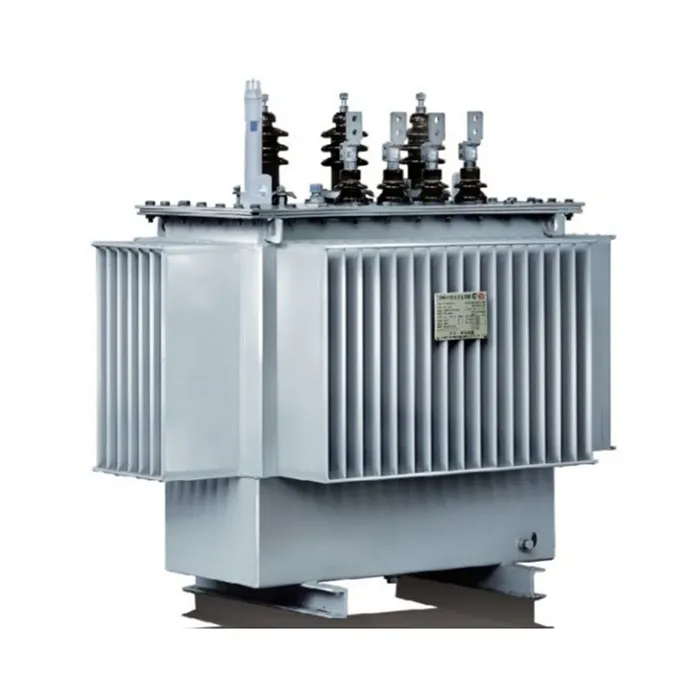
At Lugao Power Co.,Ltd., we classify our Oil Immersed Transformer designs according to these climate zones. Each design variant includes specific protection measures. For example, a transformer destined for a desert site in the Middle East is fitted with a silicone breather that prevents dust ingress, a larger radiator to compensate for reduced heat dissipation, and a higher grade of insulating paper that resists thermal degradation. In our factory, we conduct type tests for each climate zone variant to verify that the protection measures are effective.
2. Which International Standards Address Extreme Weather Protection?
There are two primary international standards that define extreme weather requirements for Oil Immersed Transformers: IEC 60076 and IEEE C57. IEC 60076 covers the general requirements for power transformers, but it includes specific clauses for temperature rise, short circuit withstand, and environmental conditions. IEEE C57 is the North American equivalent and includes more detailed requirements for seismic qualification and flood resistance. The table below compares the key provisions of these standards as they relate to extreme weather.
| Protection requirement | IEC 60076 reference | IEEE C57 reference | Typical extreme weather provision |
| Temperature rise limits | Clause 8.1 | Section 5.3 | Oil temperature rise limited to 55K for tropical applications |
| Oil filling and preservation | Clause 10.3 | Section 6.2 | Oil preservation systems must handle temperature cycling |
| Seismic withstand | IEC 60076-10 (seismic qualification) | IEEE 693 | Anchor bolts and tank design for 0.5g horizontal acceleration |
| Corrosion protection | ISO 12944 | NACE SP0178 | External coating system for C5 corrosion environment |
| Flood submersion | Not specifically addressed | IEEE C57.12.00 (flood immunity) | Gasketed enclosures and elevated mounting |
The choice between IEC and IEEE standards often depends on project location. For projects in the Middle East, South Asia, and Africa, the IEC standard is typically referenced. For projects in North America, IEEE standards are mandatory. Our factory produces Oil Immersed Transformer units that can be designed to either standard. We maintain separate design rules and test protocols for each standard. This ensures that the transformer will pass the required type tests and site acceptance tests.
3. What Are the Critical Protection Features for Each Weather Threat?
Each weather threat requires a specific protection feature. The table below lists the most common extreme weather threats and the corresponding protection measures that are typically specified in Oil Immersed Transformer installations.
| Weather threat | Protection feature | Test requirement | Common specification error |
| High ambient temperature (>45°C) | Larger radiator, forced cooling, low loss design | Temperature rise test at 50°C ambient | Using standard cooling rating for 40°C ambient |
| High wind (typhoon, cyclone) | Reinforced tank, low profile design, hurricane clips | Wind load calculation per local code | Ignoring dynamic wind pressure on radiators |
| Salt spray (coastal) | Epoxy coated tank, stainless steel hardware, silicon seals | Salt spray test per ASTM B117 | Using standard paint without salt resistance |
| Flood / submersion | Elevated mounting, IP67 cable gland, oil sump | Flood submersion test (2m for 72 hours) | Not specifying cable entry protection |
| Low temperature (< -25°C) | Special oil with low pour point, tank heaters | Low temperature start up test at -40°C | Using standard oil that solidifies at -20°C |
One of the most common specification errors is the assumption that a transformer designed for a temperate climate will perform adequately in a tropical climate. This is not true. The cooling system, the insulation materials, and the protection devices must all be upgraded. In our factory, we have seen transformers that failed within 18 months of installation in a desert site because the cooling system was undersized. The solution was to specify a larger radiator and add forced cooling fans. Lugao provides a climate adaptation checklist that helps engineers avoid these errors.
4. How Do You Verify Compliance Through Factory and Site Testing?
Compliance is not achieved by specifying the right standard alone. It must be verified through testing. There are two stages of testing: factory type tests and site acceptance tests. Factory type tests are conducted on a representative transformer to verify that the design meets the standard. Site acceptance tests are conducted on the specific transformer that will be installed, to verify that it meets the performance requirements in the actual installation environment. The table below shows the typical test sequence for an Oil Immersed Transformer that will be installed in an extreme weather location.
Factory tests for a transformer destined for a coastal installation include the salt spray test and the seismic test. For a transformer destined for a desert installation, the factory tests include the high temperature rise test and the dust ingress test. In our factory, we maintain separate test areas for each climate zone, so we can simulate the actual installation conditions. This ensures that the Oil Immersed Transformer will perform as expected in the field.
At Lugao Power Co.,Ltd., we have tested transformers for projects in the Middle East, Southeast Asia, and the high Arctic. Each project required specific test protocols. For example, a transformer for a Saudi Arabian installation required a 48 hour high temperature soak at 55°C, followed by a full load temperature rise test. The transformer passed the test with an oil temperature rise of 52K, which was within the 55K limit specified in the contract. Site acceptance tests are equally important. The site test should include a brief load test, an insulation resistance test, and a visual inspection of the protection devices. We recommend that a third party witness the site tests to ensure compliance.
Frequently Asked Questions About Transformer Protection Standards
Summary for Electrical Engineers and Project Managers
Specifying an Oil Immersed Transformer for extreme weather conditions requires a systematic approach: classify the weather threats, identify the applicable standards, select the appropriate protection features, and verify compliance through testing. The standards are not rigid checklists; they are guides that must be adapted to the specific conditions of the site. The key to a successful installation is to avoid the common errors of under specification and inadequate testing. Lugao Power Co.,Ltd. supplies Oil Immersed Transformer products that are designed and tested for extreme weather conditions. We provide the technical documentation and test reports that engineers need to verify compliance.