
What Standards Should a 36kV Indoor High Voltage Circuit Breaker Comply With
2026-10-30
Selecting the right switching device for medium-voltage systems begins with understanding the technical benchmarks that govern performance and safety. A 36kV Indoor High Voltage Circuit Breaker must satisfy a range of international and regional standards to ensure reliable fault clearing, operator protection, and long service life. At Anqiang Power, every unit is designed and tested against these requirements so that utilities, industrial plants, and substation operators can specify with confidence.
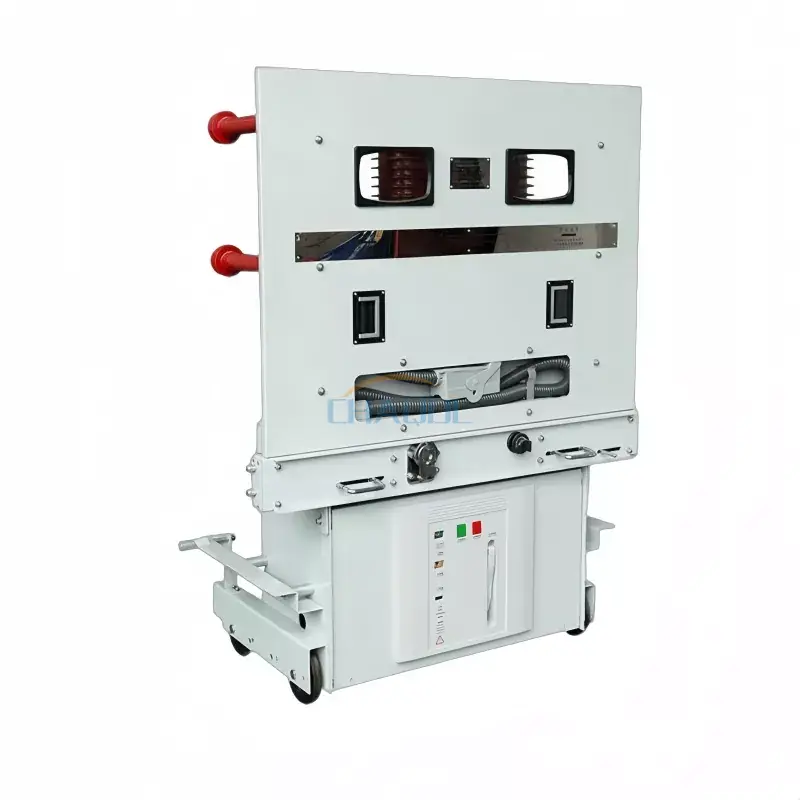
Core Standards Governing a 36kV Indoor High Voltage Circuit Breaker
The most widely referenced framework comes from the International Electrotechnical Commission. IEC 62271-100 defines the general requirements for high-voltage alternating-current circuit breakers, including rated voltage, rated short-circuit breaking current, and mechanical endurance. IEC 62271-1 provides common specifications for high-voltage switchgear and controlgear, covering insulation coordination, temperature rise limits, and enclosure requirements. Together these two standards form the backbone of type testing for any 36kV Indoor High Voltage Circuit Breaker.
| Standard | Scope | What It Verifies |
|---|---|---|
| IEC 62271-100 | AC circuit breakers above 1 kV | Breaking capacity, making capacity, mechanical life |
| IEC 62271-1 | Common switchgear specifications | Insulation levels, temperature rise, IP ratings |
| IEC 62271-200 | AC metal-enclosed switchgear | Enclosure integrity, internal arc classification |
| IEC 60044-1 / IEC 61869 | Current transformers | Measurement accuracy for protection circuits |
| IEEE C37.06 | AC high-voltage breakers (North America) | Preferred ratings and related capabilities |
| GB/T 11022 | Chinese national switchgear standard | Equivalent requirements for domestic projects |
Key Performance Requirements to Verify
Compliance is not a single certificate but a set of verified capabilities. For a 36kV Indoor High Voltage Circuit Breaker, the following performance parameters deserve close attention:
-
Rated short-circuit breaking current — typically 25 kA to 31.5 kA for this voltage class, confirmed through type tests.
-
Rated short-time withstand current — a three-second or four-second thermal test validates conductor and contact robustness.
-
Insulation coordination — power-frequency withstand and lightning-impulse withstand voltages must match the 36 kV system level.
-
Mechanical endurance — class M1 or M2 classification under IEC 62271-100 indicates 2,000 to 10,000 operating cycles.
-
Internal arc classification — IAC testing under IEC 62271-200 confirms that enclosure design protects personnel in the event of an arc fault.
-
Environmental testing — humidity, condensation, and corrosion resistance are assessed for indoor service conditions.
How Anqiang Power Approaches Compliance
Anqiang Power builds compliance into the design stage rather than treating it as a final inspection. Each 36kV Indoor High Voltage Circuit Breaker undergoes routine tests on every unit and type tests on representative samples. The engineering team maintains test reports traceable to accredited laboratories, and documentation packages are prepared for project submittals. This approach supports consultants and EPC contractors who need verifiable evidence rather than general claims.
Frequently Asked Questions
Q: Which standard is most important for a 36kV Indoor High Voltage Circuit Breaker?
A: IEC 62271-100 is the primary reference because it defines breaking capacity, making capacity, and mechanical endurance. It should always be read alongside IEC 62271-1 for insulation and temperature-rise requirements, since the two standards complement each other and together form the complete type-test basis for this voltage class.
Q: Does a 36kV Indoor High Voltage Circuit Breaker need internal arc testing?
A: Internal arc testing under IEC 62271-200 is strongly recommended for metal-enclosed designs, because it demonstrates that the enclosure directs hot gases and debris away from operating personnel. Many project specifications now mandate an IAC classification, and Anqiang Power can supply test evidence for qualifying configurations.
Q: How often should routine tests be repeated after installation?
A: Routine factory tests are performed on every unit before delivery, while periodic field checks such as contact resistance measurement, insulation resistance testing, and mechanical operation verification are typically scheduled at one to three year intervals depending on duty cycle and site conditions.
Contact Us
To discuss standard compliance, test documentation, or specification support for your next substation project, contact Anqiang Power today. Our technical team will help you match the right 36kV Indoor High Voltage Circuit Breaker to your project requirements and provide the certification package you need.