

When Should You Use GCS Low Voltage Switchgear in Industrial Applications
2026-09-24
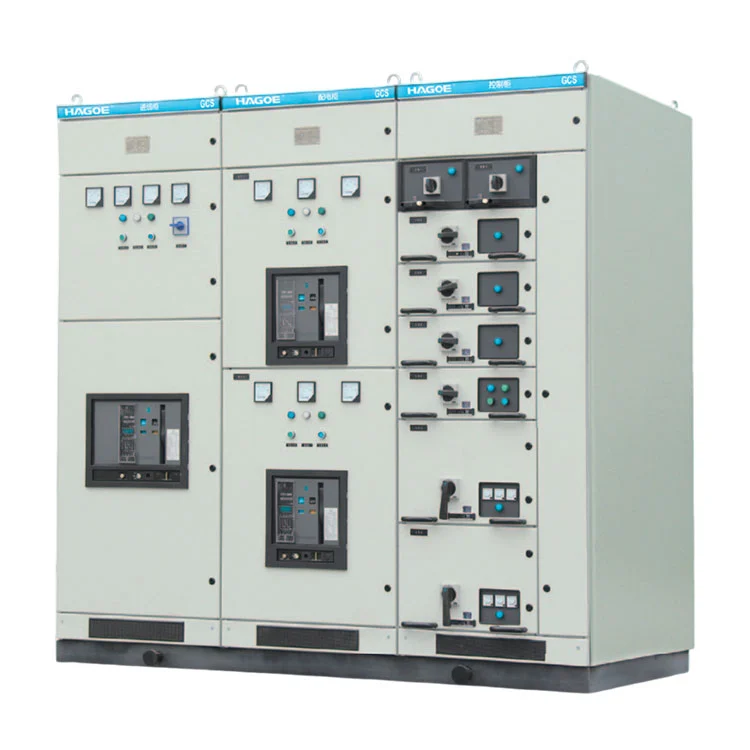
Selecting the right power distribution equipment directly affects operational safety, energy efficiency, and long-term maintenance costs. GCS Low Voltage Switchgear from HAGOE is engineered for industrial facilities that demand reliable, modular, and highly adaptable low voltage power distribution. Understanding the specific scenarios where this equipment delivers the greatest value helps engineers, plant managers, and project consultants make informed decisions before specification and procurement.
Key Indicators That GCS Low Voltage Switchgear Is the Right Choice
HAGOE recommends GCS Low Voltage Switchgear when a project involves one or more of the following conditions:
-
High-density motor loads: Manufacturing lines, pumping stations, and compressor rooms with numerous motor starters require compact feeder arrangements.
-
Frequent process changes: Facilities that reconfigure production lines benefit from the modular drawer design of GCS Low Voltage Switchgear.
-
Continuous operation requirements: Industries such as chemicals, cement, and steel cannot tolerate extended downtime for maintenance.
-
Space-constrained electrical rooms: The vertical, compartmentalized structure reduces floor space compared with traditional fixed-mounted assemblies.
-
Future capacity expansion: Projects planned in phases need switchgear that accepts additional functional units without full replacement.
Application Scenarios and Suitability Matrix
| Industrial Application | Typical Load Type | Suitability of GCS Low Voltage Switchgear | Reason |
|---|---|---|---|
| Automotive assembly | Motor control centers | High | Modular drawers simplify line reconfiguration |
| Water treatment plants | Pumps and blowers | High | Corrosion-resistant options and easy maintenance |
| Cement production | Large motors, crushers | High | High short-circuit withstand capacity |
| Data centers | UPS distribution | Medium to High | Requires careful thermal management planning |
| Mining operations | Conveyors, hoists | High | Robust structure for harsh environments |
| Food processing | Mixed motor and heating loads | Medium | Washdown and hygiene considerations apply |
Technical Advantages in Industrial Environments
HAGOE designs GCS Low Voltage Switchgear around several engineering principles that matter in heavy industry:
-
Drawer-type functional units allow rapid replacement of a faulty circuit without de-energizing the entire busbar system.
-
Segregated compartments for busbars, cables, and functional units limit fault propagation and improve personnel safety.
-
Standardized interfaces reduce spare parts inventory and shorten commissioning time.
-
Flexible busbar ratings support systems from several hundred to several thousand amperes.
-
Compliance with IEC 61439 ensures verified performance under defined operating conditions.
When GCS Low Voltage Switchgear May Not Be Ideal
Not every project requires this configuration. Fixed-type switchgear or cabinet-style distribution boards may be more economical when:
-
Loads are static and unlikely to change for the equipment's service life.
-
Available short-circuit current is relatively low.
-
The electrical room has ample space and maintenance access is unrestricted.
-
Project budget prioritizes initial cost over lifecycle flexibility.
GCS Low Voltage Switchgear FAQ
What does GCS stand for in low voltage switchgear?
GCS refers to a modular low voltage withdrawable switchgear design widely used in industrial power distribution, characterized by drawer-type functional units and a compartmentalized structure that supports safe maintenance and flexible circuit configuration.
What is the maximum current rating of GCS Low Voltage Switchgear?
GCS Low Voltage Switchgear typically supports main busbar ratings up to several thousand amperes, with individual functional units rated according to motor or feeder requirements; exact values depend on the specific HAGOE configuration and project specifications.
How often should GCS Low Voltage Switchgear be inspected?
A practical inspection interval is every six to twelve months, covering drawer contact conditions, busbar connections, insulation resistance, and thermal imaging; facilities with dusty or humid environments should shorten this interval and follow HAGOE maintenance guidelines.
Why Industrial Projects Choose HAGOE
HAGOE combines engineering consultation, customizable configurations, and documented type-test performance for GCS Low Voltage Switchgear. Each project benefits from clear single-line diagrams, verified thermal calculations, and responsive after-sales support. For plants planning expansion or modernization, this reduces engineering risk and total cost of ownership.
Contact Us
To evaluate whether GCS Low Voltage Switchgear fits your industrial application, contact HAGOE today for a technical consultation, layout proposal, and competitive quotation tailored to your project requirements.