

Which Compact Substation Is Right for Your Power Distribution Project?
2026-11-24
A Compact Substation is a prefabricated electrical distribution unit that integrates medium-voltage switchgear, a distribution transformer, and low-voltage switchgear into a coordinated assembly. It is designed to transform electrical energy from medium voltage to a lower voltage suitable for end users. Compared with conventional site-built arrangements, compact substations can reduce installation space, simplify transportation and assembly, and provide a more organized distribution solution. Selecting the right unit requires careful consideration of transformer capacity, voltage levels, protection systems, enclosure design, cooling, environmental conditions, applicable standards, and future load requirements.
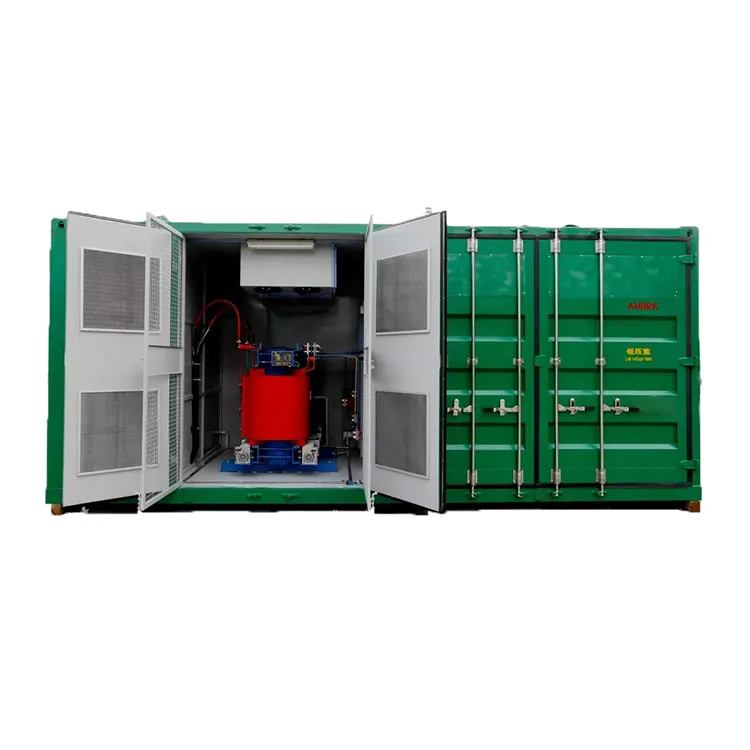
1. What Is a Compact Substation?
A Compact Substation is a prefabricated electrical substation that combines medium-voltage switchgear, a power distribution transformer, and low-voltage distribution equipment into one integrated assembly or coordinated enclosure.
Its primary function is to receive electrical energy at a medium-voltage level, transform it into a lower voltage, and distribute it to downstream electrical loads. Depending on the project requirements, the substation can be configured for different voltage levels, transformer capacities, protection arrangements, and installation environments.
Traditional substations may involve separately installed electrical rooms, switchgear cabinets, transformers, and distribution panels. These components often require additional construction work, cable routing, and coordination between different equipment suppliers.
A compact substation brings the major distribution components together in a factory-assembled arrangement. This approach helps standardize equipment integration and can reduce the amount of on-site assembly required.
Compact Substation vs. Conventional Substation
| Comparison Item | Compact Substation | Conventional Substation |
|---|---|---|
| Equipment arrangement | Integrated prefabricated assembly | Components often installed separately |
| Installation space | Designed for relatively compact layouts | May require a larger site area |
| On-site construction | Can reduce assembly and installation work | May involve more extensive site coordination |
| Transportation | Can be transported as complete or modular sections | Equipment is often transported separately |
| Customization | Configured according to project specifications | Often involves more site-specific engineering |
| Typical applications | Urban distribution, industrial parks, commercial facilities | Large substations and complex grid installations |
The most suitable solution depends on electrical capacity, site conditions, operational requirements, local regulations, and the overall distribution network design. A compact substation is not automatically a replacement for every conventional substation.
2. How Does a Compact Substation Work?
A compact substation operates by receiving medium-voltage electrical power, controlling and protecting the incoming supply, transforming voltage through a distribution transformer, and delivering electricity through a low-voltage distribution system.
Although equipment configurations vary, the basic energy flow follows three main stages.
2.1 Medium-Voltage Power Input
Electrical power enters the compact substation through the medium-voltage switchgear. This section provides the necessary switching, isolation, and protection functions according to the selected electrical configuration.
Depending on the network design, the incoming arrangement may use a ring main unit, load break switches, circuit breakers, or other suitable switching equipment.
Protective devices help detect abnormal electrical conditions and isolate the affected circuit when the relevant protection functions operate. The exact protection scheme must be coordinated with the upstream network and downstream equipment.
2.2 Voltage Transformation
After passing through the medium-voltage section, electrical energy is supplied to the distribution transformer. The transformer changes the voltage from the incoming medium-voltage level to the required low-voltage level through electromagnetic induction.
Transformer capacity, rated voltage, impedance, cooling method, insulation system, and connection arrangement are selected according to the electrical load and project design.
For example, a facility may require a transformer configured to supply a three-phase low-voltage distribution system. The actual primary and secondary voltage values must be confirmed against the local grid and equipment requirements.
2.3 Low-Voltage Power Distribution
The transformed power enters the low-voltage switchgear, where it is distributed to different outgoing circuits. This section may include circuit breakers, busbars, metering devices, protective equipment, and cable connections.
Each outgoing feeder supplies a designated load, such as production machinery, building services, lighting systems, or other electrical equipment.
Receives incoming electrical power and provides switching, isolation, and protection functions.
Reduces the incoming voltage to a level suitable for the connected distribution network.
Controls and distributes the transformed power to downstream electrical circuits.
Protects the equipment and supports ventilation, access, monitoring, and safe operation.
These three electrical stages work together to provide a coordinated power distribution solution. Their configuration should be determined through the project's electrical design rather than selected independently.
3. What Are the Main Components of a Compact Substation?
The performance and reliability of a compact substation depend on the design and coordination of its internal electrical equipment and external enclosure. Understanding the main components helps buyers compare technical proposals more effectively.
3.1 Medium-Voltage Switchgear
The medium-voltage switchgear controls the incoming electrical supply and provides switching and protection functions. Depending on the project, it may contain load break switches, circuit breakers, disconnecting devices, earthing switches, current transformers, voltage transformers, and protective relays.
Important selection factors include rated voltage, rated current, short-circuit withstand capability, insulation level, switching configuration, and the required protection scheme.
3.2 Distribution Transformer
The transformer is the central voltage conversion component. It may use an oil-immersed or dry-type design depending on the installation environment, fire safety requirements, maintenance preferences, and project specifications.
Key technical parameters include:
- Rated capacity in kVA or MVA.
- Primary and secondary rated voltage.
- Rated frequency and phase arrangement.
- Vector group and impedance voltage.
- Insulation and cooling method.
- Temperature-rise limits and applicable efficiency requirements.
3.3 Low-Voltage Switchgear
The low-voltage section distributes electrical energy to outgoing circuits and helps protect connected equipment. It may include main circuit breakers, feeder breakers, busbar systems, metering equipment, and auxiliary control components.
Buyers should confirm the number of outgoing feeders, rated current, short-circuit withstand capacity, protection coordination, and available space for future expansion.
3.4 Enclosure and Structural Frame
The enclosure provides the physical structure for the integrated equipment. It may be designed with separate compartments for medium-voltage switchgear, the transformer, and low-voltage switchgear.
Enclosure design affects ventilation, access, equipment protection, cable entry, transportation, and maintenance convenience. Materials and surface treatments should be selected according to the intended environment.
3.5 Protection, Monitoring, and Auxiliary Equipment
Additional systems may include temperature monitoring, transformer protection, surge protection, interlocking arrangements, lighting, auxiliary power supplies, and remote monitoring interfaces.
For projects requiring centralized supervision, suitable communication and monitoring functions can be incorporated into the design. Compatibility with the customer's automation or supervisory control system should be confirmed during the engineering stage.
4. Key Advantages of Compact Substations
Compact substations are increasingly considered for projects where installation space, construction schedules, equipment integration, and operational organization are important. Their advantages depend on the design and the requirements of the application.
4.1 Space-Efficient Design
One of the most important advantages is the integration of major distribution equipment within a coordinated structure. This can reduce the space needed for separate electrical equipment installations.
For urban developments, commercial facilities, and industrial sites with limited available land, a compact layout can make site planning easier.
4.2 Reduced On-Site Assembly
Factory assembly and testing can reduce the amount of equipment integration work required at the project site. This may help simplify installation planning and reduce the coordination burden between different equipment suppliers.
However, foundations, cable connections, grounding, commissioning, and site acceptance activities are still necessary.
4.3 Integrated Equipment Coordination
When medium-voltage switchgear, transformers, and low-voltage equipment are designed as one system, their interfaces can be coordinated before delivery.
This helps address common project issues involving incompatible connections, insufficient installation clearances, and mismatched equipment arrangements.
4.4 Flexible Project Configuration
Compact substations can be configured according to transformer capacity, voltage requirements, incoming supply arrangements, outgoing feeder quantities, and enclosure conditions.
This flexibility allows equipment suppliers to develop solutions for different industrial, commercial, and infrastructure projects.
4.5 Simplified Transportation and Project Planning
Depending on the design and transport dimensions, equipment can be delivered as a complete unit or divided into modular sections. Factory preparation may help make delivery and installation activities more predictable.
4.6 Organized Operation and Maintenance
Separate equipment compartments and designated access arrangements can improve the organization of routine inspections and maintenance activities. Clear equipment labeling and documentation also help operators identify individual systems more efficiently.
5. Where Are Compact Substations Commonly Used?
Compact substations can support a wide range of power distribution projects. Their suitability depends on the required capacity, voltage level, installation conditions, and local electrical regulations.
5.1 Industrial Plants and Manufacturing Facilities
Factories require stable electrical supplies for production machinery, motors, compressors, processing lines, and auxiliary systems. A compact substation can provide a coordinated power distribution point within an industrial facility.
For manufacturing projects, buyers should consider motor starting currents, load variations, power quality, future production expansion, and the consequences of equipment downtime.
5.2 Commercial Buildings and Business Parks
Shopping centers, office buildings, hotels, and business parks need reliable electrical distribution for lighting, HVAC systems, elevators, and other building services.
A properly configured compact substation can help organize power distribution while making efficient use of the available installation area.
5.3 Residential Communities and Urban Developments
Residential developments require distribution equipment that can supply multiple buildings and household loads. Compact substations can be considered where land availability, architectural coordination, and local utility requirements influence the equipment layout.
5.4 Renewable Energy Projects
Solar power plants and other renewable energy installations may require transformers and switching equipment to connect generated electricity to the collection or distribution network.
Compact substation configurations can be used in suitable applications, but the electrical design must account for generation characteristics, grid connection requirements, protection coordination, and power conversion equipment interfaces.
5.5 Infrastructure and Public Utilities
Transportation facilities, water treatment plants, logistics centers, and public infrastructure projects depend on reliable electrical distribution. Compact substations can provide localized power transformation and distribution where their technical ratings meet the project requirements.
| Application | Primary Electrical Requirements | Important Design Considerations |
|---|---|---|
| Industrial facilities | Machinery and production loads | Load profile, motor starting, expansion |
| Commercial buildings | Building service distribution | Available space, accessibility, load diversity |
| Residential developments | Multiple downstream distribution circuits | Utility requirements, safety, noise |
| Solar projects | Generation and grid connection | Voltage coordination, protection, monitoring |
| Infrastructure projects | Continuous power for essential services | Reliability, environmental conditions, maintenance |
6. How to Choose the Right Compact Substation
Selecting a compact substation requires a systematic assessment of the electrical load, distribution network, installation site, safety requirements, and future operating needs. Purchasing based only on rated capacity or initial price may result in an unsuitable configuration.
6.1 Determine the Required Transformer Capacity
Start by evaluating the total connected load and the expected maximum demand. Consider load diversity, power factor, motor starting conditions, load fluctuations, and planned expansion.
The transformer should be selected with an appropriate capacity margin based on the project load assessment and applicable design practices. Excessive oversizing may increase initial investment and no-load losses, while undersizing may cause overloading and operational problems.
For projects with large motors, variable-speed drives, nonlinear loads, or fluctuating renewable generation, a more detailed load analysis may be necessary.
6.2 Confirm Primary and Secondary Voltage
The incoming medium-voltage rating must match the supply network. The transformer's secondary voltage must correspond to the downstream distribution system and connected equipment.
Also verify rated frequency, phase configuration, insulation levels, and transformer vector group. These details influence electrical compatibility and system operation.
6.3 Select the Appropriate Transformer Type
Oil-immersed and dry-type transformers offer different characteristics.
| Factor | Oil-Immersed Transformer | Dry-Type Transformer |
|---|---|---|
| Insulation and cooling | Uses insulating liquid for insulation and heat transfer | Uses solid insulation and air-based or forced-air cooling |
| Typical installation | Outdoor and appropriately designed transformer compartments | Indoor and other suitable installations |
| Fire considerations | Requires assessment of liquid-related fire and environmental risks | Avoids insulating oil, but still requires fire risk assessment |
| Maintenance | May require insulating liquid testing and related inspections | Requires inspection of insulation, cooling, and connections |
| Selection priority | Capacity, cooling, liquid containment, site conditions | Ventilation, insulation class, temperature, installation conditions |
Neither type is universally better. The correct option depends on the project environment, safety assessment, technical specifications, maintenance capabilities, and applicable regulations.
6.4 Evaluate Medium-Voltage Switchgear Configuration
Confirm the incoming and outgoing circuit arrangements, switching devices, rated current, short-circuit ratings, protection relays, and interlocking requirements.
Projects connected to ring distribution networks may require a different switchgear arrangement from those using a radial supply. The final configuration should match the utility's network design and protection philosophy.
6.5 Check Low-Voltage Distribution Requirements
Review the main busbar rating, outgoing feeder quantity, circuit breaker types, protection functions, and metering requirements.
For projects with multiple load groups, ensure that the low-voltage section provides sufficient outgoing circuits and practical space for future modifications where required.
6.6 Consider the Installation Environment
Environmental conditions directly influence enclosure design and equipment selection. Important factors include:
- Ambient temperature and temperature variations.
- Humidity, condensation, and rainfall exposure.
- Dust, sand, and airborne contaminants.
- Corrosive atmospheres and coastal conditions.
- Altitude and its effect on insulation and cooling.
- Wind, snow, seismic activity, and other site-specific loads.
- Noise restrictions and nearby occupied areas.
6.7 Review Safety and Applicable Standards
Electrical safety requirements must be considered from the beginning of the project. Confirm applicable standards, enclosure protection, electrical clearances, grounding arrangements, internal arc considerations where required, and access restrictions.
Depending on the product design and market, relevant technical references may include IEC 62271-202 for high-voltage/low-voltage prefabricated substations, IEC 62271-200 for metal-enclosed switchgear, and IEC 60076 for power transformers. The applicable editions, product scope, and local requirements must be confirmed for each project.
6.8 Plan for Future Expansion
Electrical demand may increase as production lines, buildings, or infrastructure facilities expand. Buyers should discuss future load growth, spare feeder positions, modular expansion possibilities, and replacement access before finalizing the design.
7. Technical Factors That Affect Compact Substation Performance
Beyond the main electrical ratings, several engineering details determine whether a compact substation can operate reliably throughout its service life.
7.1 Thermal Management and Ventilation
Transformers and electrical equipment generate heat during operation. If heat cannot be dissipated effectively, internal temperatures may rise and affect insulation life and equipment performance.
Ventilation openings, airflow paths, cooling accessories, and compartment arrangements should be designed according to the heat generated by the installed equipment and the expected ambient temperature.
7.2 Short-Circuit Withstand Capability
Electrical equipment must be capable of withstanding the thermal and mechanical effects associated with specified fault conditions for the required duration.
Switchgear ratings, busbar design, transformer impedance, protective device selection, and upstream network fault levels must be coordinated through the project electrical study.
7.3 Protection Coordination
Protection devices should operate in a coordinated manner so that faults can be isolated without unnecessarily interrupting unaffected parts of the distribution system.
The design may involve transformer protection, overcurrent protection, earth-fault protection, and low-voltage circuit protection according to the network configuration.
7.4 Grounding and Electrical Safety
A properly designed grounding system helps control touch and step voltages and provides an appropriate path for fault current. The enclosure, transformer tank where applicable, switchgear structure, and designated metallic parts must be connected according to the approved grounding design.
7.5 Enclosure Protection and Corrosion Resistance
Enclosure protection should match the installation environment. Outdoor installations may require suitable ingress protection, weather-resistant construction, corrosion protection, and secure access arrangements.
In coastal or chemically aggressive environments, additional material and coating considerations may be necessary.
7.6 Noise and Electromagnetic Compatibility
Transformer noise can become an important issue near residential buildings, offices, and other noise-sensitive areas. Equipment placement, transformer selection, vibration control, and enclosure design should be considered together.
Where monitoring and communication equipment are installed, electromagnetic compatibility and appropriate cable routing should also be addressed.
8. Installation and Commissioning Considerations
Correct installation is essential to achieving the intended performance of a compact substation. Even factory-assembled equipment requires proper site preparation, electrical connections, inspection, and commissioning.
8.1 Prepare the Installation Site
Before delivery, verify the foundation dimensions, load-bearing capacity, drainage, access routes, cable trenches, and required clearances. The foundation must be designed to support the complete equipment weight under the specified operating and environmental conditions.
8.2 Plan Transportation and Lifting
Confirm the overall dimensions, weight, lifting points, center of gravity, and transportation restrictions. Where the substation is delivered in separate sections, ensure that the assembly sequence and connection interfaces are clearly documented.
8.3 Verify Electrical Connections
Check incoming medium-voltage cables, transformer connections, low-voltage outgoing cables, grounding conductors, and auxiliary wiring against the approved drawings.
Connection torque, cable termination methods, insulation clearances, and phase identification should follow the equipment manufacturer's instructions.
8.4 Complete Pre-Commissioning Inspections
Before energization, qualified personnel should verify that the equipment has been installed correctly and that the required inspection and testing activities have been completed.
- Inspect the enclosure, compartments, and mechanical assembly.
- Check electrical connections and grounding continuity.
- Verify protection settings and interlocking functions.
- Perform the specified insulation and electrical tests.
- Confirm transformer condition and accessory operation.
- Review equipment labels, drawings, and safety instructions.
- Confirm that access restrictions and safety measures are in place.
8.5 Follow a Controlled Energization Procedure
Energization should follow an approved commissioning plan prepared by qualified electrical professionals. The process should include communication with relevant utility or site authorities, verification of protection settings, and controlled monitoring of the equipment after power is applied.
Never energize a compact substation before the required inspections, testing, and safety checks have been completed.
9. Operation and Maintenance Best Practices
Regular maintenance helps identify developing problems before they lead to equipment failure or unexpected power interruptions. A maintenance program should be based on the equipment manufacturer's instructions, operating conditions, and applicable electrical safety requirements.
9.1 Routine Visual Inspection
- Check the enclosure for corrosion, damage, and water ingress.
- Inspect doors, locks, seals, and ventilation openings.
- Look for unusual sounds, odors, or visible overheating.
- Check equipment labels and warning signs.
- Review monitoring indications and alarm records.
9.2 Transformer Maintenance
Maintenance requirements depend on whether the unit uses an oil-immersed or dry-type transformer.
For oil-immersed transformers, inspections may include oil level, leakage, insulating liquid condition, bushings, and temperature indicators. For dry-type transformers, attention may focus on insulation surfaces, cooling passages, winding condition, ventilation, and signs of overheating.
9.3 Switchgear Inspection
Switchgear maintenance may include inspection of operating mechanisms, electrical connections, insulation components, interlocks, protection devices, and switching performance. Maintenance intervals should follow the manufacturer's recommendations and the relevant safety procedures.
9.4 Review Operating Records
Keeping records of load levels, temperatures, alarms, inspections, and maintenance activities helps identify trends. These records can support maintenance planning and provide useful information when diagnosing recurring problems.
9.5 Typical Maintenance Checklist
| Inspection Item | What to Check | Purpose |
|---|---|---|
| Enclosure | Corrosion, seals, doors, and water ingress | Maintain environmental protection |
| Transformer | Temperature, cooling, leakage, and abnormal noise | Identify developing equipment problems |
| Switchgear | Operating mechanisms, interlocks, and insulation | Maintain switching and protection functions |
| Connections | Signs of overheating and loose connections | Reduce electrical connection risks |
| Protection system | Relay settings, alarms, and trip functions | Verify protection coordination |
| Grounding system | Connections and grounding continuity | Maintain electrical safety |
10. Common Compact Substation Purchasing Mistakes to Avoid
Choosing a compact substation is a major technical and commercial decision. The following mistakes can create problems during installation, commissioning, and long-term operation.
Mistake 1: Selecting Equipment Based Only on Price
A low initial quotation does not necessarily represent the best overall value. Buyers should compare equipment specifications, protection functions, manufacturing quality, testing scope, documentation, warranty conditions, and expected maintenance requirements.
Mistake 2: Ignoring the Actual Load Profile
Choosing transformer capacity based only on the total connected load may lead to an unsuitable design. Demand patterns, power factor, motor starting, harmonics, and future expansion should also be evaluated.
Mistake 3: Overlooking Site Conditions
Temperature, humidity, dust, altitude, corrosion, and ventilation can significantly affect equipment performance. A standard enclosure may not be appropriate for every installation environment.
Mistake 4: Failing to Confirm Switchgear Ratings
Rated voltage and current are not the only important parameters. Buyers should also verify short-circuit withstand capability, insulation level, switching ratings, and protection requirements.
Mistake 5: Not Reviewing Equipment Layout Drawings
Insufficient access space, incompatible cable entry positions, and difficult maintenance arrangements can create costly site modifications. Review general arrangement drawings and interface details before manufacturing approval.
Mistake 6: Neglecting Testing and Documentation
Clarify the required factory tests, inspection records, technical datasheets, wiring diagrams, operation manuals, and commissioning documents before placing the order.
Mistake 7: Ignoring Long-Term Service Requirements
Spare parts availability, maintenance support, technical communication, and future expansion options are important considerations for projects that require long-term electrical reliability.
11. Frequently Asked Questions About Compact Substations
Q1: What is the main purpose of a Compact Substation?
A Compact Substation receives medium-voltage electrical power, transforms it to a lower voltage, and distributes it to downstream loads. It integrates major distribution equipment into a coordinated, space-efficient assembly.
Q2: What are the three main sections of a compact substation?
The three main sections are medium-voltage switchgear, the distribution transformer, and low-voltage switchgear. These sections perform incoming power control, voltage transformation, and outgoing power distribution.
Q3: What is the difference between a compact substation and a transformer?
A transformer is an electrical device that changes voltage through electromagnetic induction. A compact substation is a complete distribution assembly that includes a transformer together with medium-voltage and low-voltage equipment, an enclosure, and associated protection systems.
Q4: Can a compact substation be installed outdoors?
Yes. Many compact substations are designed for outdoor applications. However, the enclosure, ingress protection, ventilation, corrosion resistance, drainage, and environmental ratings must match the installation conditions.
Q5: Which transformer type is better for a compact substation?
Oil-immersed and dry-type transformers can both be used in suitable compact substation designs. The choice depends on fire safety requirements, installation environment, cooling conditions, maintenance arrangements, and project specifications.
Q6: How do I calculate the required transformer capacity?
Start with the expected maximum demand, load diversity, power factor, motor starting conditions, and planned expansion. A qualified electrical engineer should complete the load assessment and select an appropriate transformer rating with consideration for operating conditions.
Q7: What standards apply to compact substations?
Relevant standards may include IEC 62271-202 for high-voltage/low-voltage prefabricated substations, along with applicable switchgear and transformer standards such as IEC 62271-200 and IEC 60076. The required standards depend on the product scope, project location, and local regulatory requirements.
Q8: Can a compact substation be customized?
Configuration can often be adapted to project requirements. Possible design considerations include transformer capacity, voltage ratings, switchgear arrangement, protection devices, outgoing feeder quantity, enclosure dimensions, cable entry, and monitoring functions. Customization options must be confirmed with the manufacturer.
Q9: How much installation space does a compact substation require?
Required space depends on transformer capacity, equipment layout, enclosure dimensions, cable connections, ventilation, access clearances, and local safety regulations. Request a general arrangement drawing from the manufacturer before preparing the foundation.
Q10: How long does a compact substation last?
Service life depends on component quality, operating conditions, loading, environmental exposure, maintenance, and replacement of parts when necessary. Follow the manufacturer's maintenance recommendations and applicable inspection requirements to support long-term performance.
Q11: What documents should buyers request before ordering?
Typical documents include technical datasheets, general arrangement drawings, single-line diagrams, equipment specifications, relevant test reports, protection details, installation instructions, and operation and maintenance manuals. Additional documents may be required by the project owner or local utility.
Q12: What information is needed to request a compact substation quotation?
Provide the required transformer capacity, primary and secondary voltage, frequency, transformer type, medium-voltage switchgear arrangement, low-voltage feeder requirements, installation environment, applicable standards, project location, and expected quantity. Electrical drawings and load information can help the supplier prepare a more accurate proposal.
12. Why Choose SYHF (Jiangsu) Electric Co., Ltd.?
Choosing a compact substation supplier involves more than comparing equipment prices. Project owners and electrical contractors need to evaluate technical compatibility, equipment integration, manufacturing requirements, documentation, and communication throughout the purchasing process.
SYHF (Jiangsu) Electric Co., Ltd. is the brand featured in this article for customers seeking compact substation solutions for power distribution projects.
When discussing a new project, buyers should provide clear information about the electrical network, expected load, installation environment, and operating requirements. These details help establish the technical basis for selecting a suitable substation configuration.
Before confirming an order, it is important to review the proposed equipment arrangement and technical specifications, including:
- Transformer capacity and primary/secondary voltage ratings.
- Medium-voltage switchgear type and protection configuration.
- Low-voltage distribution arrangement and feeder quantity.
- Enclosure dimensions, materials, and environmental protection.
- Cooling, ventilation, grounding, and safety provisions.
- Applicable standards, testing requirements, and technical documents.
- Transportation, installation, commissioning, and after-sales requirements.
A well-planned compact substation can help improve site utilization, simplify equipment integration, and provide a coordinated power distribution solution. Working with a supplier that understands project specifications is an important step toward achieving these goals.
Looking for a Reliable Compact Substation Solution?
Every power distribution project has its own electrical requirements, installation conditions, and operating priorities. Finding the right equipment starts with understanding these details.
SYHF (Jiangsu) Electric Co., Ltd. welcomes inquiries from electrical contractors, engineering companies, industrial equipment buyers, distributors, and project developers.
Contact us today to discuss your compact substation requirements, request technical information, and explore a suitable configuration for your project.
Contact Us for a QuotationTechnical note: Product configurations, rated values, protection arrangements, and available options vary by model. Final equipment selection and installation must follow the approved project design, manufacturer's documentation, applicable standards, and local electrical regulations.