

Which Gin Pole Solves Heavy Lifting Problems When Cranes Cannot Reach?
2026-05-11
When I look at tower erection, power line construction, telecom mast installation, or remote-site lifting work, I usually notice the same problem first: the job is not always too heavy, but it is often too awkward for ordinary equipment. That is why I pay attention to practical lifting tools from experienced power construction equipment suppliers such as Ningbo Marshine Power Technology Co., Ltd., especially when the project requires a controlled, portable, and site-friendly Gin Pole. For contractors, utility crews, and procurement teams, the real question is not simply whether a lifting pole can raise a load. The real question is whether it can make field work safer, faster, and easier to manage when cranes are too expensive, too large, or simply unavailable.
A Gin Pole is often used in jobs where vertical lifting and positioning must be handled with precision. I see it as a practical solution for teams that need to erect towers, raise poles, install structural sections, or support heavy components in limited working spaces. Instead of relying on large machinery for every lifting task, a well-designed Gin Pole gives crews a more flexible way to manage loads in utility, telecom, and construction environments.
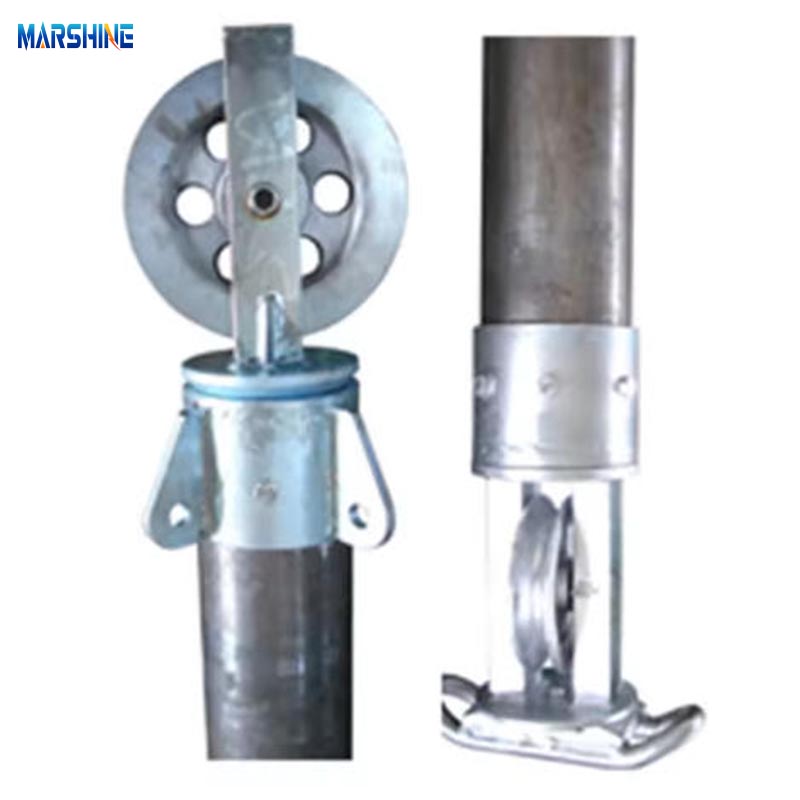
What makes a Gin Pole useful for difficult job sites?
I prefer equipment that solves real field problems rather than looking impressive only on paper. On many job sites, access is the first challenge. Roads may be narrow, terrain may be uneven, and the work area may not allow a large crane to operate safely. In those situations, a Gin Pole becomes valuable because it can be transported, assembled, and positioned with less site preparation.
For power transmission and telecom projects, lifting work is rarely done in perfect conditions. Crews may need to handle tower sections, masts, poles, or other heavy parts in areas where speed and stability matter at the same time. I would not choose a lifting tool only because it has a high rated capacity. I would also check whether it helps reduce manual handling, improves load control, and fits the actual working environment.
- It can support vertical lifting where large cranes are hard to deploy.
- It helps crews position tower or pole sections with better control.
- It can reduce unnecessary labor during erection and maintenance work.
- It is suitable for many outdoor utility and infrastructure projects.
- It can be matched with different lifting methods depending on the job requirement.
Which project problems can a Gin Pole help me solve?
If I am selecting equipment for a field crew, I first think about the problems that slow the team down. A Gin Pole can be especially useful when the project requires controlled lifting in a compact space. In power line construction, it may be used for transmission tower erection or pole assembly. In telecom work, it may help with mast or tower installation. In construction and industrial settings, it may assist with lifting long or heavy structural components where direct crane access is limited.
The value comes from matching the lifting tool to the actual job instead of forcing the job to fit oversized machinery. A portable lifting pole can make sense when the team needs a balance of strength, mobility, and practical setup. I also like that this type of equipment can support phased installation work, where parts are lifted and positioned step by step rather than moved all at once.
| Project Situation | Common Pain Point | How a Gin Pole Helps |
|---|---|---|
| Power transmission tower erection | Remote locations and limited access for large cranes | Supports controlled vertical lifting and staged installation |
| Telecom mast installation | Need for accurate positioning in compact working areas | Helps lift and align tower or mast sections more efficiently |
| Utility pole construction | Heavy components must be raised safely on outdoor sites | Provides a practical lifting method for pole erection work |
| Industrial maintenance | Existing structures may restrict equipment movement | Allows lifting support in tighter or more complex environments |
| Remote construction projects | Transport cost and setup time are difficult to control | Offers a portable alternative for selected lifting tasks |
What should I check before choosing a Gin Pole?
I never recommend choosing a Gin Pole only by looking at one product name. The better approach is to compare the lifting requirement, site conditions, pole structure, winch compatibility, and expected working frequency. A lightweight aluminum alloy option may be useful when portability matters, while a steel structure may be better for demanding lifting conditions. An A-shape design may offer stability for certain jobs, while an internal suspension type may be selected for tower erection work with specific structural needs.
Before placing an order, I would check the working load, lifting height, assembly method, and the type of winch or pulling system that will be used. I would also ask whether the equipment can be customized for the project. In real procurement work, small details often decide whether the equipment performs smoothly after delivery.
- Load capacity should match the actual lifting weight with a proper safety margin.
- Working height should fit the tower, pole, or structure being installed.
- Material selection should reflect the balance between strength and portability.
- Assembly design should be practical for the crew size and job location.
- Winch compatibility should match the operation method used on site.
- Transport requirements should be considered for remote or difficult terrain.
Is a Gin Pole better than a crane for every lifting job?
I would not say that a Gin Pole replaces a crane in every situation. That would sound neat, but it would not be honest. A crane is still the right tool for many large, open, and high-capacity lifting jobs. The advantage of a Gin Pole appears when the job site is restricted, the lifting task is vertical and staged, or the project budget cannot justify bringing heavy machinery to every location.
For example, if a crew needs to work across multiple rural sites, a compact lifting solution can help reduce transport pressure. If the terrain makes crane access difficult, a properly selected lifting pole may become the more practical option. If the work involves tower sections or utility poles that need careful positioning, the controlled lifting process can improve efficiency and reduce unnecessary handling.
That is why I see this equipment as part of a smarter field operation plan. It is not about choosing the biggest machine. It is about choosing the tool that makes the job safer, more manageable, and more cost-effective.
Which product features matter most to buyers?
From a buyer’s perspective, the best Gin Pole should make daily work easier, not more complicated. Field crews care about safe operation, easy assembly, dependable structure, and stable lifting performance. Procurement managers care about cost, service life, supplier reliability, and whether the equipment can match different project needs.
I would pay attention to modular construction because it can help with transport and setup. I would also look closely at the connection points, frame strength, base stability, and compatibility with manual, hydraulic, or electric lifting systems. A product that looks strong but takes too long to assemble may slow the crew down. A product that is light but not stable enough may create risk. The right choice sits between these extremes.
| Feature | Why It Matters | Buyer Benefit |
|---|---|---|
| Portable structure | Helps crews move equipment between sites | Lower transport pressure and faster field response |
| Stable frame design | Supports safer lifting and better load control | Improved confidence during tower or pole erection |
| Adjustable configuration | Fits different lifting heights and project conditions | More flexible use across multiple jobs |
| Durable material | Withstands outdoor and industrial working environments | Longer service life and better return on investment |
| Winch system compatibility | Allows different operation methods depending on site needs | Easier integration with existing lifting equipment |
How does a Gin Pole improve safety and efficiency?
Safety is not only about avoiding accidents. It is also about creating a working process that crews can repeat with confidence. A well-selected Gin Pole helps reduce uncontrolled lifting, excessive manual force, and rushed positioning. When the load path is clearer and the lifting method is easier to manage, workers can focus on alignment, communication, and final installation quality.
Efficiency also improves because the team does not need to wait for large equipment in every situation. A portable lifting system can help crews complete smaller or more restricted lifting tasks with less delay. That matters on projects where several poles, tower sections, or structural parts must be handled across different points on the same route.
I also value equipment that supports predictable planning. When the lifting method is clear, project managers can better estimate labor, setup time, transport needs, and daily progress. That is a serious advantage for contractors who need to control both cost and schedule.
Do I need a customized Gin Pole for my project?
In many cases, customization is worth discussing. Standard equipment may work well for common lifting tasks, but project conditions can vary a lot. A contractor working on transmission towers may need a different design from a telecom crew installing lighter mast sections. A remote utility project may place more importance on portability, while a heavy industrial job may require stronger structural support.
If I were preparing an inquiry, I would share the lifting weight, working height, project environment, preferred material, available crew size, and whether the site has access to external power. This information helps the supplier recommend a more suitable Gin Pole instead of guessing from a general product list.
- Share the maximum lifting load and typical lifting load.
- Explain whether the job is for power, telecom, construction, or industrial use.
- Confirm whether the site is open, narrow, mountainous, or remote.
- State whether manual, hydraulic, or electric lifting is preferred.
- Ask about packaging, transport dimensions, spare parts, and after-sales support.
Why would I consider Ningbo Marshine Power Technology Co., Ltd. for Gin Pole sourcing?
When I compare suppliers for utility and power construction tools, I look for product range, practical field experience, and the ability to support different project requirements. Ningbo Marshine Power Technology Co., Ltd. offers lifting and cable construction equipment for power, telecom, and infrastructure work, which makes the company relevant for buyers who need more than a single isolated tool.
For a Gin Pole, I would want a supplier that understands how the equipment is used in tower erection, pole installation, and outdoor construction environments. The product should not be treated as a simple metal frame. It should be considered as part of a full lifting process that involves load control, site safety, setup efficiency, and long-term durability.
That is the practical reason I would include Marshine in a sourcing comparison. The company’s product direction aligns with the needs of contractors, utility service teams, and industrial buyers who want field-ready equipment rather than decorative catalog items.
What should I include when I send a Gin Pole inquiry?
A clear inquiry saves time for both sides. Instead of asking only for a price, I would send enough details for the supplier to understand the job. This helps avoid the common problem of receiving a quotation that looks attractive but does not fully match the project. A good supplier can respond more accurately when the buyer explains the lifting condition in plain language.
| Inquiry Detail | What I Would Provide | Why It Helps |
|---|---|---|
| Application | Tower erection, pole installation, telecom mast work, or construction lifting | Helps identify the right equipment structure |
| Load requirement | Maximum lifting weight and regular working load | Supports safer capacity selection |
| Working height | Expected lifting height and structure size | Helps match the correct pole configuration |
| Site condition | Remote area, narrow space, soft ground, mountain site, or urban project | Improves recommendations for material and assembly design |
| Operation preference | Manual winch, hydraulic system, electric system, or other lifting method | Ensures better compatibility with the crew’s workflow |
How can I make the right Gin Pole purchase decision?
I would make the decision by looking beyond the first quotation. Price matters, but the lowest price is not always the lowest project cost. If the equipment is difficult to assemble, unsuitable for the site, or not strong enough for repeated use, the buyer may pay more later through delays, repairs, or safety risks.
A better purchase decision should consider the full working life of the Gin Pole. I would compare the material, structure, rated capacity, portability, supplier experience, customization options, and communication quality. I would also ask whether the supplier can provide product guidance based on the actual project rather than only sending a standard model list.
For contractors and project buyers, the ideal equipment should help crews lift with more control, move between sites with less trouble, and complete installation tasks with greater confidence. That is the kind of practical value I expect from a reliable Gin Pole.
Are you ready to choose a Gin Pole for your next project?
If your team is planning tower erection, pole installation, telecom mast construction, or field lifting work in a restricted site, now is a good time to review whether a Gin Pole can make the job easier and safer. Share your lifting load, working height, site condition, and operation requirements with Ningbo Marshine Power Technology Co., Ltd., and ask for a suitable recommendation based on your real project needs. For product details, pricing, customization options, or technical communication, please leave an inquiry or contact us today.