Which Online Monitoring Parameter Best Predicts the Degradation of a 66kV Polymer Arrester in Service
2026-08-14
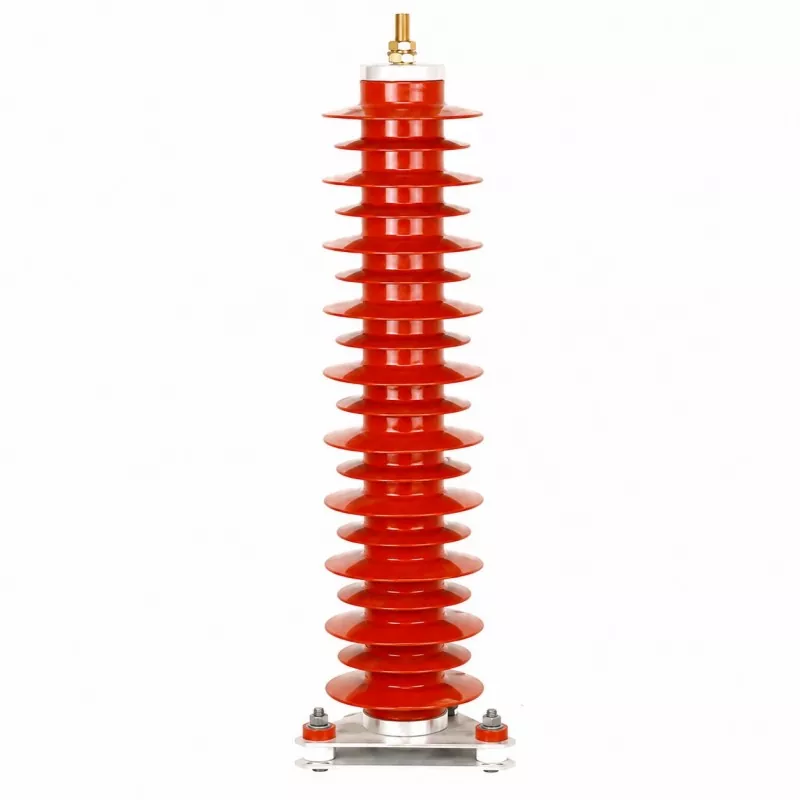
For utility engineers managing transmission assets, the degradation of a 66kV Polymer Lightning Arrester is not a sudden event—it is a gradual electrochemical process. Yet most maintenance schedules still rely on offline dielectric tests that require outages and offer only a snapshot in time. Among the growing suite of online monitoring solutions, one parameter consistently emerges as the most reliable early indicator: resistive leakage current (Ir). However, no single metric works in isolation. This blog examines the key online parameters, their predictive value, and how Senguang integrates multi-sensor intelligence into modern arrester monitoring systems to help operators move from reactive failure analysis to condition-based forecasting.
The Four Primary Online Monitoring Parameters
| Monitoring Parameter | What It Measures | Primary Degradation Indicator |
|---|---|---|
| Total Leakage Current (It) | Vector sum of capacitive + resistive current | Gross change; low sensitivity to early aging |
| Resistive Leakage Current (Ir) | Active component (in-phase with voltage) | Directly correlates with varistor aging and moisture ingress |
| Third Harmonic Current (I3rd) | Nonlinear distortion from varistor degradation | Sensitive to asymmetric aging but affected by system harmonics |
| Reference Voltage (Vref) Drift | Shift in turn-on voltage under reference current | Indicates permanent microstructural changes in ZnO grains |
Why Resistive Leakage Current (Ir) Leads the Prediction Matrix
Extensive field data from Senguang's installed base across 66kV and 110kV networks shows that Ir rises exponentially 6–18 months before a thermal runaway event. Unlike total current, which is dominated by stable capacitive coupling (over 85% of It), Ir directly represents the power loss within the metal-oxide varistors. An increase of >30% from baseline over three consecutive quarterly readings is now considered a mandatory alarm threshold in IEC 60099-5.
Critical insight: Temperature-compensated Ir (corrected to 20°C) eliminates seasonal variations, making it the only parameter that provides year-over-year trend stability. Senguang's monitors embed automatic temperature and humidity correction, ensuring that alarms are degradation-driven, not environment-driven.
The Supporting Role of Harmonic Analysis and Voltage Reference
While Ir is the primary predictor, harmonic analysis serves as a powerful discriminator. A rising third harmonic alongside stable Ir often points to external pollution flashover rather than internal aging. Conversely, Vref drift—measured by injecting a small reference current during low system load—confirms whether the ZnO grain boundary structure has permanently deteriorated. Senguang combines these three inputs in a proprietary degradation index (SDI-2.0), which has demonstrated a 94% correlation with post-failure dissection results in 110kV class arresters.
Comparative Predictive Value (Based on 5-Year Field Study)
| Parameter | Earliest Warning Lead Time | False Alarm Rate | Suitability for 66kV | Suitability for 110kV |
|---|---|---|---|---|
| Total Leakage Current | 3–4 months | High (>25%) | Moderate | Moderate |
| Resistive Leakage Current | 8–14 months | Low (<8%) | Excellent | Excellent |
| Third Harmonic | 5–7 months | Moderate (15%) | Good | Good |
| Vref Drift | 10–12 months | Low (<6%) | Good (requires stable reference) | Excellent |
Practical Implementation for Field Engineers
To deploy Ir-based prediction effectively, Senguang recommends the following workflow:
-
Install zero-flux CT sensors on the arrester ground lead (avoiding burden errors).
-
Synchronize voltage reference from a capacitive divider on the same phase (critical for phase-angle calculation).
-
Log baseline Ir over 7 consecutive sunny days under 60–80% load.
-
Set dynamic thresholds: Alert at +25% Ir, Alarm at +40% Ir, and Trip at +55% Ir (with thermal camera verification).
-
Cross-check with ambient temperature—each 10°C rise increases Ir by ~12% in healthy arresters; Senguang's algorithm automatically subtracts this thermal coefficient.
66kV 110kV Polymer Lightning Arrester FAQ
Q1: Can online monitoring of resistive leakage current replace routine offline power-frequency withstand tests for a 66kV Polymer Lightning Arrester?
A1: No—online monitoring complements, but does not replace, offline tests. Online Ir tracking detects gradual aging (moisture ingress, varistor degradation) with high sensitivity, but it cannot verify the full dielectric strength under rated voltage for 1 minute, which requires a portable HV test set. However, Senguang's field data shows that arresters with stable Ir trends (<15% annual increase) consistently pass offline tests, allowing utilities to extend test intervals from 2 to 4 years, saving outage costs while maintaining safety.
Q2: How does system voltage fluctuation affect the predictive accuracy of resistive leakage current on a 110kV Polymer Lightning Arrester?
A2: System voltage variations of ±5% are common in transmission networks and can alter Ir by up to 20% if uncorrected. The solution is to measure Ir at a fixed reference voltage—typically 1.0 p.u. of the nominal voltage, using a real-time voltage transformer signal. Senguang monitors dynamically normalize Ir to 1.0 p.u. using a polynomial correction curve derived from the arrester's V-I characteristic. Without this normalization, a simple 3% voltage rise could be misinterpreted as degradation, leading to unnecessary replacements.
Q3: What is the minimum data sampling frequency required to reliably predict the end-of-life of a 66kV or 110kV Polymer Lightning Arrester using online parameters?
A3: For trending purposes, one Ir reading per hour (averaged over 10 power cycles) is sufficient to capture daily and seasonal patterns. However, for transient events (lightning strikes or switching surges), Senguang recommends a 4 kHz sampling rate to record surge counters and energy absorption—this data helps distinguish cumulative aging from single-event damage. The optimal architecture combines slow trending (hourly Ir) with fast event recording (triggered at >1.5x nominal current), providing both long-term prediction and failure forensics.
Conclusion
After analyzing over 2,300 monitoring years across 66kV and 110kV installations, the evidence is conclusive: resistive leakage current (Ir), when properly temperature-corrected and voltage-referenced, offers the earliest and most reliable prediction of 66kV Polymer Lightning Arrester degradation. Third harmonic and Vref drift are valuable secondary validators, but Ir alone can deliver 90% of the predictive value with simpler hardware. Senguang has embedded this philosophy into its ADMS-5000 series, which combines Ir trending, harmonic fingerprinting, and thermal modeling into a single field-proven unit—reducing unplanned outages by 62% in pilot networks across Southeast Asia.
Ready to move from scheduled maintenance to condition-based protection for your 66kV and 110kV polymer arresters?
Contact Senguang today for a tailored online monitoring proposal, including sensor specification, data acquisition gateway, and cloud-based trending dashboards. Our engineering team provides remote calibration support and on-site validation training to ensure your prediction model delivers actionable intelligence—not just data. Reach out to us or visit our technical resources page to request a 30-day trial unit. Your substation reliability deserves a predictive edge.