

Which Underground cable Installation Tools actually save time and prevent cable damage?
2025-11-26
I plan underground runs with a simple rule—every minute saved must come from safer handling. On mixed soil and tight bends, I’ve grown picky about build quality, ergonomics, and how parts travel between sites. Over the years, I’ve leaned on partners who obsess over field details, and brands like Lingkai keep showing up in my notes for that reason. When I evaluate Underground cable Installation Tools, I look for fewer lifts, less friction, cleaner pulls, and components that lock in fast even when gloves are muddy.
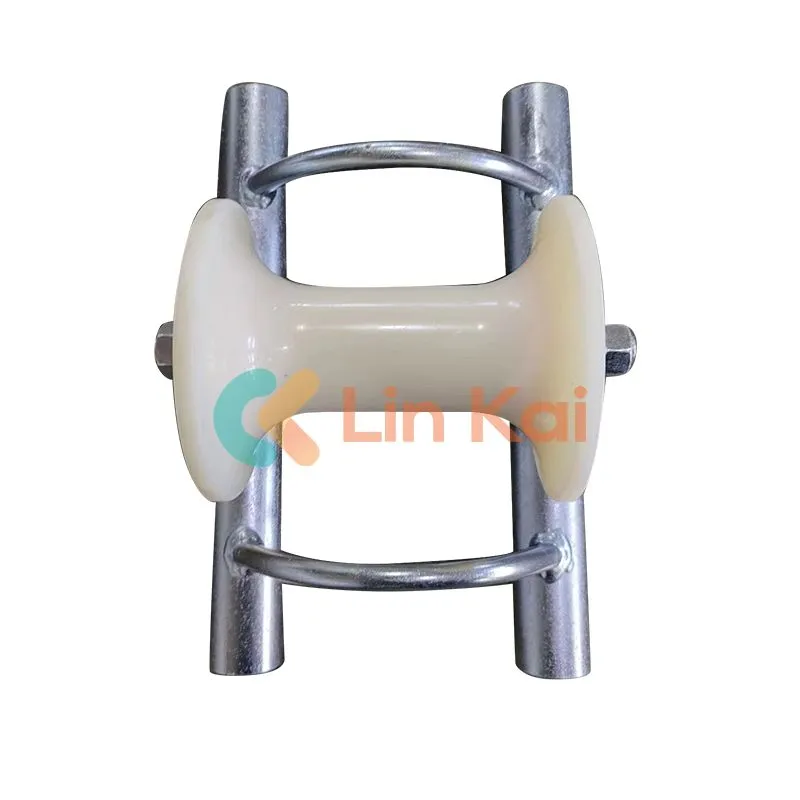
What makes Underground cable Installation Tools reliable on live sites?
- Repeatable handling:rollers that track straight, jacks that stay level, grips that seat without chewing jackets.
- Low-friction routing:corner rollers sized to bend radius, sheaves that actually spin under load, lubricants that don’t turn ducts into sludge.
- Right-sized pulling power:winches with readable line pull, calibrated gauges, and quick anchor options.
- Mobility:modular frames, foldable stands, stackable bins—less fatigue moving from truck to trench.
- Serviceability:standard bearings, replaceable pins, parts that swap on-site.
Which tool set covers 80 percent of my day-to-day work?
- Cable drum jacks and shafts:stable lifts that keep reels centered, reducing side-drag and jacket scuffs.
- Straight and corner rollers:wide tread, sealed bearings, frames that pin together for clean routes.
- Pulling winch or capstan:steady line speed, clear load readout, quick brake response.
- Cable socks and grips:braid that bites evenly without kinking armor or deforming XLPE.
- Duct rods with leaders:push through silted or mildly obstructed conduits without splitting tips.
- Neutral pH lubricant:consistent film, easy cleanup, duct-friendly.
This core kit keeps my Underground cable Installation Tools compact while covering most trench, duct, and vault scenarios.
How do these tools compare in the field when I balance speed, safety, and cost?
| Tool | Primary job | Typical capacity | Risk it reduces | On-site tip |
|---|---|---|---|---|
| Drum jacks + spindle | Lift and center cable reels | Up to 5–10 t reels (model dependent) | Side-drag, uneven payout | Shim on soft ground to keep spindle perfectly level |
| Straight rollers | Support runs in trenches/duct mouths | 1–3 t distributed | Jacket abrasion on soil/edges | Space rollers so the cable never touches grade between units |
| Corner/quad rollers | Turn cable around bends | 1–2 t per corner | Over-bending, crush at edges | Match roller diameter to the cable’s minimum bend radius |
| Pulling winch / capstan | Provide controlled line pull | 5–50 kN line pull | Sudden snatch loads, jacket stretch | Use a dynamometer or load cell for live tension feedback |
| Grips / socks | Attach pulling line to cable | By cable OD and finish | End slippage, jacket damage | Tape finish edges and stagger grip length for armor vs. jacket |
| Duct rodder with leader | Thread line through ducts | 4–14 mm rod cores | Rod kinks, stuck fish | Warm the rod in the sun; curve memory improves feed |
| Cable lubricant | Cut friction in ducts | Neutral pH, polymer/gel | Excess pull tension, heat | Apply in stages at entry and intermediate points, not just the mouth |
How do I size a pulling setup so the cable stays within limits?
- Check bend radius:use the manufacturer’s static and dynamic values; adapt corner roller diameter to the larger number.
- Estimate maximum pull:sum duct friction and corner factors; never exceed the cable’s rated tensile limit or jacket sidewall pressure.
- Choose the winch:pick a unit with at least 25% headroom over your estimate and readable tension feedback.
- Confirm anchoring:earth anchors or vehicle tie-downs must exceed the winch limit, not just the expected pull.
When my Underground cable Installation Tools match the cable spec sheet, I spend less time nursing scuffs and more time closing the trench.
Where do crews usually lose time and how do I fix those leaks?
- Reel alignment:if payout isn’t square to rollers, jacket rubs; I always sight down the path before the first pull.
- Under-spaced rollers:gaps invite sag into gravel; I add units until the cable never touches edges.
- Dry pulls:lubricant only at the entry dries out; I stage small re-applications through the run.
- Guesswork tension:I treat “feel” as a backup; a load cell keeps pulls honest.
Dialing these basics in makes my Underground cable Installation Tools feel like a system, not a pile of parts.
What does a lean two-person kit look like when I need fast setup?
- Compact drum jacks with pinned spindle and safety collars
- Eight straight rollers, two corner rollers, one bell-mouth guide
- Portable capstan with foot pedal and inline dynamometer
- Two sizes of grips, electrical tape, heat-shrink for edges
- 10 mm duct rodder with flexible leader and swivel
- Neutral pH gel lubricant, squeeze applicators, rags, mats
- Ground plates, shims, stakes, and a short leveling bar
This compact spread keeps my Underground cable Installation Tools ready for short urban pulls and longer duct runs without extra trips.
Why do I keep returning to Lingkai when I spec field-ready details?
I care about lifecycle more than showroom polish. Hardware that packs tight, locks positively, and survives mud and rinses is what I buy twice—and that’s where Lingkai has earned space in my truck. Smooth bearings, stable frames, and spares that arrive quickly matter more to me than flashy names. When my Underground cable Installation Tools behave the same on Monday morning and Friday night, schedules hold and crews go home on time.
How can we map your next job and choose the right kit together?
If you’re lining up a pull and want a practical shortlist of Underground cable Installation Tools matched to your route, cable spec, and soil conditions, tell me your reel size, bend count, duct type, and the tightest radius on the plan. I’ll translate that into a clean, safe setup that respects the cable’s limits and your team’s time. Contact us now for sizing advice, availability, and a fast quote. If you already have a parts list, send it over and we’ll double-check fit before you roll.