

Why 11kV Oil Immersed Transformer Is the Backbone of Rural Electrification Projects?
2026-09-15
1. Why Is 11kV the Preferred Voltage Level for Rural Distribution?
The 11kV voltage level is a practical compromise between transmission efficiency and construction cost. At 11kV, the line losses are significantly lower than at 400V, which means that power can be delivered over distances of 10 to 30 kilometers without excessive voltage drop. At the same time, the insulation requirements and the clearance distances for 11kV lines are much lower than for 33kV or 66kV lines. This reduces the cost of poles, crossarms, and insulators. In our factory, we have supplied Oil Immersed Transformer units for rural electrification projects in more than 20 countries, and the 11kV class is consistently the most requested.
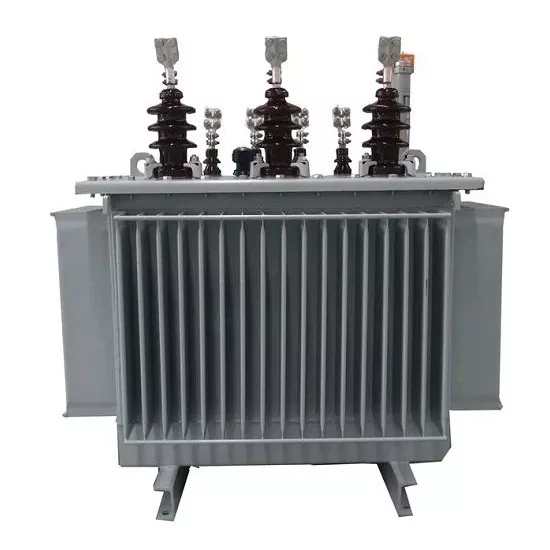
The table below shows the typical distribution of transformer voltage classes in rural projects.
| Voltage class | Typical application | Max distribution distance | Relative cost per km of line |
| 11kV | Rural distribution, village networks | 10 – 30 km | 1.0x (baseline) |
| 33kV | Sub-transmission, larger rural areas | 30 – 60 km | 1.8x |
| 66kV | Transmission to remote regions | 60 – 100 km | 3.5x |
| 400V | Low-voltage distribution within village | < 1 km | N/A (LV lines) |
The 11kV class offers the best balance of cost and performance for the majority of rural electrification projects. It is high enough to minimize line losses but low enough to keep construction costs within the budget constraints of rural development programs.
2. What Are the Advantages of Oil Immersed Transformers Over Dry-Type Transformers in Rural Projects?
In rural electrification, the Oil Immersed Transformer has several practical advantages over dry-type alternatives. The first is cost. An oil immersed transformer of the same capacity is typically 30 to 50 percent less expensive than a dry-type transformer. The second is overload capability. Oil immersed transformers can tolerate short-term overloads of 150 to 200 percent without damage, which is important in rural networks where load growth is uncertain and seasonal peaks are common. The third is environmental protection. The sealed tank protects the core and windings from dust, moisture, and insects, which are prevalent in rural areas. The fourth is ease of maintenance. The oil can be tested and replaced if necessary, and the transformer can be repaired in the field by a trained technician. Dry-type transformers require a clean, dry environment and are more difficult to repair in remote locations.
Overload capability: A standard 11kV Oil Immersed Transformer can operate at 120 percent of rated load continuously and at 150 percent for short periods. This allows the transformer to handle the initial load of a newly electrified village and to accommodate future load growth without immediate replacement.
Lugao Power Co.,Ltd. manufactures Oil Immersed Transformer units specifically for rural electrification applications. Our transformers are designed with a sealed tank that prevents oil leakage and contamination, and with a high-temperature insulation system that allows the transformer to operate reliably in ambient temperatures up to 50°C.
3. What Technical Parameters Should Be Specified for Rural Electrification Transformers?
When specifying an Oil Immersed Transformer for a rural project, there are several parameters that require particular attention. The rated capacity should be selected based on the expected initial load plus a growth margin of 30 to 50 percent. The impedance voltage should be low enough to maintain voltage regulation but high enough to limit fault currents. The tap changer should have a range of ±5 percent in 2.5 percent steps to compensate for voltage variations in the rural network. The cooling system should be designed for the ambient temperature and altitude of the installation site. The table below shows the typical specifications for our rural electrification transformers.
| Parameter | Typical range | Considerations for rural projects |
| Rated capacity | 25 kVA to 500 kVA | Size for 30-50% future growth |
| Primary voltage | 11 kV (or 10.5 kV, 12 kV) | Match to local grid standard |
| Secondary voltage | 400/230 V (or 415/240 V) | Match to local LV standard |
| Impedance voltage | 4% to 5% | Balance regulation and fault limiting |
| Tap changer | Off-circuit, ±5% in 2.5% steps | Manual adjustment for seasonal voltage variation |
| Cooling | ONAN (oil natural air natural) | No fans or pumps to fail |
| Ambient temperature | Up to 50°C | Tropical and desert conditions |
Our factory tests every Oil Immersed Transformer for impedance, no-load loss, load loss, and dielectric strength before shipment. We also provide a routine test report and a type test report if required by the project specification.
4. How Do You Manage Installation and Maintenance Logistics in Remote Areas?
The logistics of installing and maintaining transformers in remote areas are often more challenging than the technical specifications. The transformer must be transported over unpaved roads, sometimes on trucks that are not designed for heavy loads. It must be lifted into position, either by crane or by manual rigging. It must be connected to the 11kV line and the low-voltage network, and it must be commissioned and tested. All of this requires planning and preparation. In our factory, we provide a pre-installation checklist that covers the site conditions, the foundation requirements, the lifting points, and the connection details. We also provide a commissioning procedure that can be performed by a local technician with basic training. For maintenance, we recommend an annual inspection of the oil level, the silica gel breather, and the bushings. The oil should be tested every 2 to 3 years for dielectric strength and moisture content. These simple procedures can be performed by a local crew with a maintenance kit that we supply.
Logistics tip: For remote projects, we recommend specifying a transformer with a sealed tank and a low-profile radiator. This reduces the risk of oil leakage during transport and simplifies the installation. We also recommend supplying a spare transformer for every 10 units in the project, so that a replacement is available if one fails.
Frequently Asked Questions About 11kV Oil Immersed Transformers for Rural Electrification
Summary for Rural Electrification Project Engineers
The 11kV Oil Immersed Transformer is the backbone of rural electrification because it offers the best combination of cost, reliability, overload capability, and maintainability for remote distribution networks. When specifying these transformers, consider the future load growth, the ambient conditions, and the logistics of installation and maintenance. A well-specified transformer will provide decades of reliable service. Lugao Power Co.,Ltd. has been manufacturing Oil Immersed Transformer units for rural electrification for over 18 years and has supplied projects in Asia, Africa, and Latin America.
Lugao Power Co.,Ltd. manufactures 11kV Oil Immersed Transformer units in capacities from 25 kVA to 500 kVA. We provide full test reports, installation instructions, and maintenance kits for rural electrification projects.