
Why Are Dry Type Transformers Suitable for Sensitive Ecological Zones?
2026-10-08
1. What Is the Environmental Risk of Oil-Immersed Transformers in Sensitive Zones?
Oil-immersed transformers use mineral oil for insulation and cooling. Mineral oil is a hazardous substance. If it leaks into the environment, it can contaminate soil and groundwater. In a sensitive ecological zone, the consequences are severe. A spill in a wetland can kill aquatic plants and animals. A spill in a drinking water catchment can require costly remediation.
The table below shows the environmental risk of oil-immersed transformers compared to dry type transformers.
| Risk factor | Oil-immersed transformer | Dry type transformer |
| Oil volume (typical for 1 MVA) | 800 – 1,200 liters | 0 liters |
| Leak risk | Moderate (seals, gaskets, tank) | None |
| Spill containment required | Yes (bund wall, oil pit) | No |
| Groundwater monitoring required | Yes (in many jurisdictions) | No |
| Fire risk | Moderate to high (flash point 140°C) | Low (materials are self-extinguishing) |
| Remediation cost if leak occurs | $50,000 – $500,000+ | $0 |
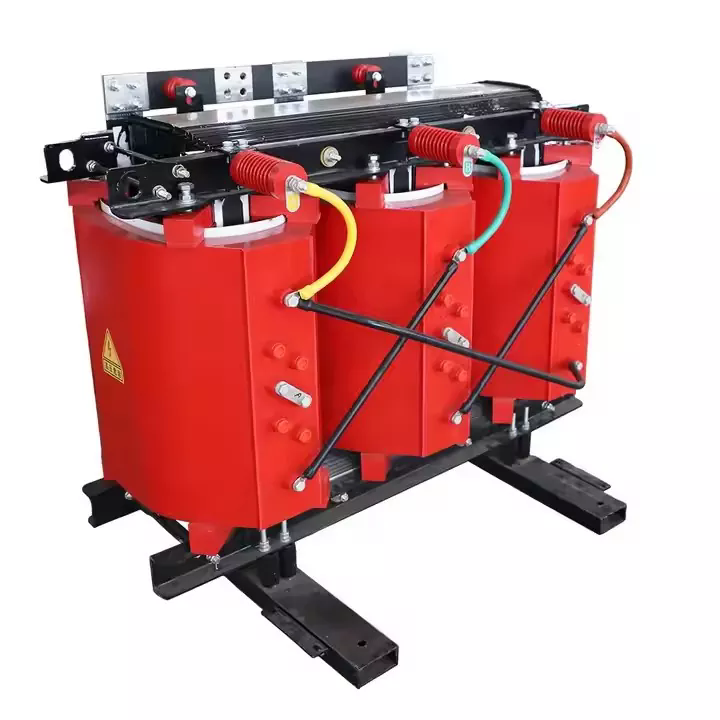
The regulatory burden is the second issue. In many countries, oil-immersed transformers installed in water protection zones require a secondary containment system, a leak detection system, and a groundwater monitoring plan. These systems add capital cost and ongoing maintenance cost. A Dry Type Transformer does not require these measures because it contains no oil. Lugao Power Co.,Ltd manufactures dry type transformers that are specifically designed for environmentally sensitive installations.
2. How Does Fire Safety Affect Site Selection in Ecological Zones?
Fire safety is a critical factor in ecological zones because a fire can spread rapidly and destroy habitats. Oil-immersed transformers have a flash point of approximately 140°C. If the transformer is involved in a fault, the oil can ignite, and the fire can spread to the surrounding vegetation. Dry type transformers use insulation materials that are self-extinguishing. The insulation does not ignite easily, and if it does, the fire does not spread. The table below compares the fire safety characteristics of the two transformer types.
| Fire safety parameter | Oil-immersed transformer | Dry type transformer |
| Flash point of insulation | 140°C (mineral oil) | > 300°C (epoxy resin) |
| Fire propagation | Yes (pool fire possible) | No (self-extinguishing) |
| Required separation distance | 7.5 – 15 meters from buildings | 1 – 3 meters from buildings |
| Fire suppression system | Often required | Not required |
| Suitability for high fire risk areas | Poor | Excellent |
The reduced separation distance is a significant advantage in ecological zones where land is limited. A dry type transformer can be installed closer to the load center, which reduces cable length and electrical losses. In our factory, we manufacture dry type transformers with epoxy resin insulation that is classified as F1 (fire resistant) according to IEC standards.
3. How Does Noise Affect Wildlife in Protected Areas?
Noise is an often-overlooked environmental impact. Oil-immersed transformers produce noise from the cooling fans, the oil pump, and the core. The noise level is typically 55 to 65 decibels at a distance of 1 meter. In a quiet ecological zone, this noise can disturb wildlife, especially birds and mammals that are sensitive to low-frequency sound. Dry type transformers produce less noise because they do not have oil pumps or fans in most designs. The noise level is typically 45 to 55 decibels. The table below compares the noise levels of different transformer types.
| Transformer type | Noise level at 1 meter | Primary noise source | Suitability for quiet zones |
| Oil-immersed with fans | 60 – 65 dB | Fans, oil pump, core | Poor |
| Oil-immersed without fans | 55 – 60 dB | Core | Moderate |
| Dry type (cast resin) | 45 – 55 dB | Core | Good |
| Dry type (VPI) | 50 – 58 dB | Core, windings | Moderate |
In our factory, we use high-quality grain-oriented silicon steel for the core and precision clamping to minimize noise. We also offer a low-noise design with a noise level below 45 decibels for the most sensitive areas. Lugao Power Co.,Ltd provides noise test reports for all of our dry type transformers.
4. What Are the Regulatory and Permitting Advantages of Dry Type Transformers?
The permitting process for a transformer in an ecological zone involves multiple agencies and multiple reviews. The environmental impact assessment, the fire safety review, and the water protection review are all part of the process. A Dry Type Transformer simplifies each of these reviews. The environmental impact assessment is simpler because there is no oil spill risk. The fire safety review is simpler because the fire risk is lower. The water protection review is simpler because there is no oil to contaminate the water. The table below shows the permitting timeline for the two transformer types.
| Permitting step | Oil-immersed transformer | Dry type transformer |
| Environmental impact assessment | 6 – 12 months | 3 – 6 months |
| Fire safety review | 3 – 6 months | 1 – 3 months |
| Water protection review | 3 – 9 months | Not required in most cases |
| Total permitting time | 12 – 27 months | 4 – 9 months |
Project experience: In our factory, we have supplied dry type transformers to a bird sanctuary in Southeast Asia and a national park in South America. In both cases, the permitting time was reduced by more than 50 percent compared to the oil-immersed alternative. The project developers cited the elimination of oil spill risk as the primary reason for the faster approval.
Frequently Asked Questions About Dry Type Transformers for Ecological Zones
Summary for Project Developers and Environmental Engineers
Dry Type Transformers are suitable for sensitive ecological zones because they eliminate the risk of oil leakage, reduce the fire risk, produce less noise, and simplify the permitting process. The higher purchase price is offset by the lower installation cost and the faster project approval. For projects in water protection zones, national parks, wetlands, and other protected areas, the dry type transformer is the preferred choice. Lugao Power Co.,Ltd has been manufacturing Dry Type Transformer units for over 15 years and supplies to environmentally sensitive projects worldwide.
Lugao Power Co.,Ltd manufactures cast resin and VPI Dry Type Transformer units in capacities from 30 kVA to 10 MVA. We provide environmental compliance documentation and noise test reports for all of our products.