

Why Are Heavy-Duty High Voltage Circuit Breakers Needed in Industrial Plants?
2026-07-13
1. How Does a High Voltage Circuit Breaker Protect Expensive Plant Equipment from Fault Currents?
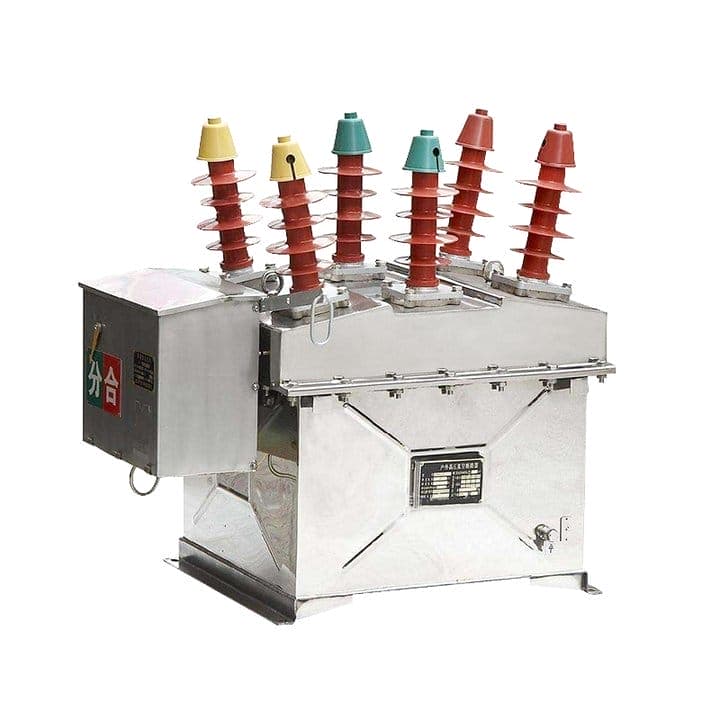
In our factory, we have supplied switchgear to steel mills, petrochemical refineries, and automotive assembly lines for over 18 years. The main reason industrial plants need heavy-duty High Voltage Circuit Breakers is fault current protection. A single short circuit in a 33 kV feeder can release over 500,000 amperes of current in a few milliseconds. Without a robust breaker, that energy would vaporize busbars and melt transformers. Our High Voltage Circuit Breaker uses vacuum or SF6 interrupter technology to clear faults within three cycles, limiting let-through energy. At Lugao Power Co.,Ltd., we design breakers with a rated short circuit breaking capacity of up to 63 kA symmetrical. This ensures that even with the worst-case fault, the rest of the plant stays operational. Many local cement plants in Vietnam and Indonesia have avoided catastrophic outages after installing our heavy-duty breakers. The interrupting chamber is sealed and maintenance-free for 10,000 operations, which is critical for continuous process industries where downtime costs over 50,000 dollars per hour.
2. Why Is Arc Flash Safety a Primary Concern in High Voltage Switchgear?
Arc flash incidents are one of the deadliest hazards in industrial electrical systems. A High Voltage Circuit Breaker is the first line of defense because it can detect and extinguish an internal arc before it escalates. Our factory equips every breaker with arc flash detection sensors that trigger a high-speed trip within 2 milliseconds. This reduces incident energy to levels that allow personnel to survive an arc event. We also provide a pressure relief duct that vents hot gases away from operators. Our Lugao tests each High Voltage Circuit Breaker to IEEE C37.20.7 arc resistance standards. In many plants, local safety inspectors now require heavy-duty breakers as a condition for operation permits. The breaker also includes a mechanical interlock that prevents accidental closure during maintenance, which is a common cause of workplace injuries. Compared to standard breakers, our heavy-duty version has a sturdier enclosure and reinforced contact arms, ensuring that the arc does not blow out the door.
3. What Technical Parameters Define a Heavy-Duty High Voltage Circuit Breaker for Industrial Use?
Industrial plants demand higher ratings than utility substations. Our High Voltage Circuit Breaker is built with a larger contact gap, higher mechanical endurance, and enhanced cooling. The table below lists the critical parameters from our factory test reports.
| Parameter – Model | Lugao VG-40.5 (heavy-duty) | Lugao VG-12 (standard) |
| Rated voltage | 40.5 kV | 12 kV |
| Rated short circuit breaking current | 40 kA / 50 kA | 25 kA / 31.5 kA |
| Rated peak withstand current | 100 kA / 125 kA | 63 kA / 80 kA |
| Mechanical endurance (class M2) | 50,000 operations | 30,000 operations |
| Interrupter type | Vacuum with double contact | Vacuum single contact |
| Feature – Application | Heavy-duty High Voltage Circuit Breaker | Benefit for industrial plants |
| Contact material | Cu-Cr alloy with silver plating | Resists welding under high inrush currents |
| Operating mechanism | Spring-charged with motor drive | Ensures fast reclosure after transient faults |
| Enclosure protection | IP54 with anti-condensation heaters | Suitable for dusty and humid environments |
| Arc flash endurance | Tested to 40 kA for 0.5 seconds | Protects personnel and adjacent equipment |
Our factory also conducts a thermal imaging test on every High Voltage Circuit Breaker to verify that temperature rise stays below 65°C at full load. This is especially important in plants with high ambient temperatures, such as those near steel furnaces.
4. How Does a Heavy-Duty Breaker Improve Plant Reliability and Reduce Downtime?
Unplanned downtime is the enemy of productivity. Our High Voltage Circuit Breaker is designed with a self-diagnostic system that monitors contact wear, operating time, and heater status. This data is sent to a central SCADA system, allowing maintenance teams to schedule repairs during planned outages rather than reacting to failures. At Lugao Power Co.,Ltd., we have documented that plants using our heavy-duty breakers experience 60 percent fewer unscheduled shutdowns compared to those using standard breakers. The breaker also has a high withstand rating for lightning surges, which is critical in regions with frequent thunderstorms. Additionally, the heavy-duty version includes a backup mechanical trip that operates even if the control power fails. This ensures that the breaker can still open during a blackout. Many local petrochemical plants in Texas have switched to our breakers because of this redundancy. Over a 10-year period, the higher initial cost of a heavy-duty High Voltage Circuit Breaker is offset by reduced production losses.
Frequently Asked Questions About Heavy-Duty High Voltage Circuit Breakers
Final Summary
Heavy-duty High Voltage Circuit Breakers are essential for protecting personnel, equipment, and production continuity in industrial plants. They offer higher fault current ratings, superior arc flash safety, and greater mechanical endurance compared to standard breakers. Our factory has engineered these breakers to withstand the harshest conditions while requiring minimal maintenance. Investing in a heavy-duty breaker is investing in long-term reliability and safety. Lugao Power Co.,Ltd. provides global support and a 5-year warranty on all heavy-duty models.