
Why Are Hot Surface Ceramic Igniters Essential for Reliable Heating Systems?
2026-09-24
As modern heating and combustion equipment becomes more compact, efficient, and automated, the ignition component plays an increasingly important role in system performance. Hot Surface Ceramic Igniters convert electrical energy into intense heat, creating a hot surface capable of igniting gas, biomass, pellets, or other fuels without relying on a continuous pilot flame. Ceramic igniters are widely used in gas heating systems, boilers, ovens, dryers, pellet equipment, and industrial burners because of their high-temperature capability and rapid heating characteristics.
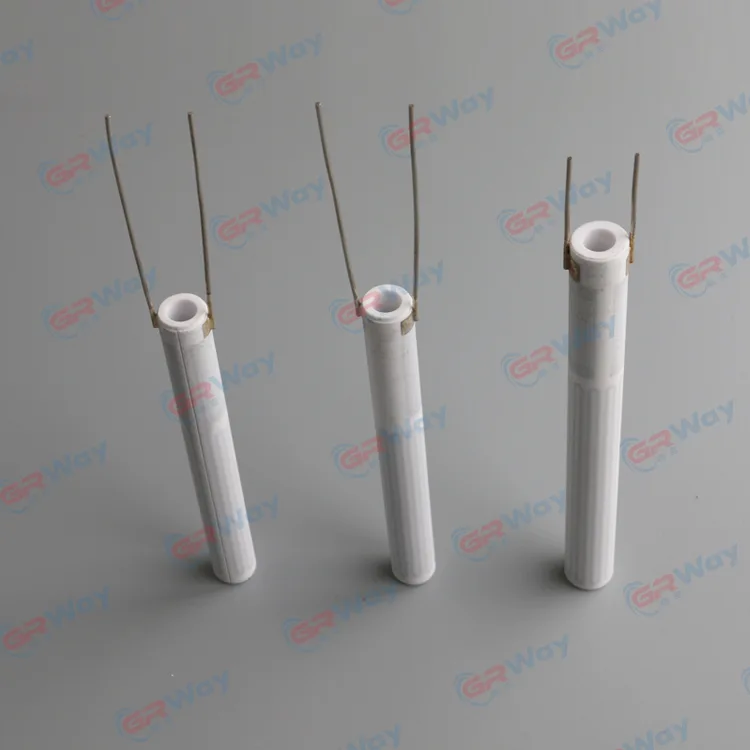
How Do Hot Surface Ceramic Igniters Work?
The working principle is straightforward. When electrical power passes through the internal heating element, electrical resistance generates heat. The ceramic body transfers this heat to the ignition surface, which rapidly reaches a temperature high enough to ignite the surrounding fuel or fuel-air mixture.
Unlike spark ignition, which creates an electrical discharge, hot-surface ignition relies on a heated ceramic surface. This design can provide stable ignition without the electromagnetic interference associated with spark electrodes.
Typical operating performance depends on the material, geometry, voltage, power, and equipment design. Some advanced silicon nitride igniters can reach approximately 1,000°C within several seconds, while certain ceramic igniters can operate at temperatures above 1,200°C.
What Makes Ceramic Igniters Important?
The ignition stage may only last a few seconds, but it directly affects whether a heating system starts smoothly. An unsuitable igniter can result in slow ignition, repeated startup attempts, excessive energy consumption, or premature component failure.
High-quality ceramic materials offer several useful characteristics:
- High-temperature resistance: Suitable for demanding combustion environments.
- Rapid heating: Helps shorten the time required to establish ignition.
- Thermal shock resistance: Supports repeated heating and cooling cycles.
- Electrical insulation: Ceramic materials can electrically isolate the heating element.
- Corrosion and oxidation resistance: Helps maintain performance in combustion environments.
- Compact design: Allows integration into increasingly compact heating equipment.
These characteristics make ceramic igniters particularly valuable where reliable start-up and repeated ignition cycles are required.
Which Applications Use Hot Surface Ceramic Igniters?
Hot Surface Ceramic Igniters are not limited to one type of equipment. Their applications cover both household and industrial heating.
| Application | Main Ignition Requirement | Ceramic Igniter Benefit |
|---|---|---|
| Gas boilers | Fast and stable burner ignition | Rapid high-temperature heating |
| Gas furnaces | Reliable repeated startup | Thermal and mechanical durability |
| Water heaters | Compact ignition structure | High-temperature performance |
| Pellet stoves | Ignition of solid fuel | Efficient hot-surface heating |
| Industrial burners | Stable ignition in demanding environments | High-temperature resistance |
| Ovens and dryers | Consistent ignition | Reliable heat generation |
| Hydrogen equipment | Controlled ignition/preheating | High-temperature capability |
Ceramic igniters are also being applied to newer fuel and energy systems, including hydrogen combustion and fuel-cell-related equipment, where temperature control and reliable ignition are important.
Hot Surface Ceramic Igniters vs. Traditional Spark Ignition
Different ignition technologies serve different equipment requirements. A spark igniter produces a high-voltage electrical spark, while a ceramic hot-surface igniter produces heat directly through electrical resistance.
The distinction can be summarized simply:
Spark ignition: electrical discharge → spark → fuel ignition
Hot-surface ignition: electrical resistance → ceramic surface heats → fuel ignition
Hot-surface technology can be particularly attractive when a system requires a stable heated surface, compact integration, and reduced electromagnetic interference. However, the correct choice depends on the equipment structure, fuel, voltage, ignition temperature, operating cycle, and control system.
How Can the Right Ceramic Igniter Improve Equipment Performance?
The igniter is a relatively small component, but its performance can influence the overall user experience. A well-matched design can help equipment achieve:
- Faster startup – Rapid heating can reduce ignition waiting time.
- More consistent ignition – Stable thermal output supports dependable burner startup.
- Lower maintenance pressure – Durable ceramic materials can withstand repeated thermal cycling.
- Compact equipment design – Small ignition components can be integrated into space-limited systems.
- Better system adaptability – Customized dimensions, voltage, heating characteristics, and mounting structures can accommodate different equipment designs.
It is important to remember that an igniter should not simply be selected according to temperature alone. Electrical specifications, heating speed, dimensions, fuel type, installation position, and operating conditions all need to be considered.
Why Choose Xiamen Green Way Electronic Technology Co., Ltd.?
For equipment manufacturers and industrial buyers, customized ignition components can be more practical than forcing a standard component into an existing system. Xiamen Green Way Electronic Technology Co., Ltd. focuses on electronic and ceramic-related components and can provide solutions according to specific application requirements.
For OEM and industrial projects, factors such as product dimensions, electrical parameters, heating performance, mounting structure, and application environment should be evaluated together. This approach helps buyers select an igniter that is better matched to the complete heating system rather than treating the ignition component as an isolated part.
Whether the application involves a gas burner, heating appliance, biomass equipment, or specialized thermal system, the right ceramic ignition solution can contribute to reliable startup and long-term operating stability.
What Should Buyers Consider Before Ordering?
Before purchasing Hot Surface Ceramic Igniters, buyers should confirm several basic requirements:
- Required voltage and power
- Target ignition temperature
- Heating-up time
- Igniter dimensions and shape
- Mounting method
- Fuel or combustion medium
- Working environment
- Frequency of ignition cycles
- Expected service life
- OEM customization requirements
These details allow manufacturers to evaluate whether a standard design is appropriate or whether a customized igniter would provide a better fit.
Conclusion
Hot Surface Ceramic Igniters are small but critical components in modern heating and combustion systems. Their ability to generate high-temperature heat quickly, provide electrical insulation, and withstand demanding thermal conditions makes them suitable for gas heating, boilers, water heaters, biomass systems, industrial burners, and emerging energy applications.
For buyers looking for reliable ignition components, the key is not simply choosing the hottest or fastest igniter, but selecting a ceramic solution that matches the complete equipment design. Xiamen Green Way Electronic Technology Co., Ltd. can work with OEM customers to develop ignition solutions around their specific application and technical requirements. If you are looking for customized Hot Surface Ceramic Igniters for your heating or combustion equipment, contact us to discuss your application and requirements.