

Why Are More Utility Buyers Replacing Conventional Switchgear with Medium Voltage 33KV/36KV SF6 Gas Insulated RMU Panel Compact Distribution Switchgear?
2026-04-24
When I speak with utility engineers, EPC contractors, and industrial project owners, I rarely hear them complain about a lack of switchgear choices. What I hear instead is frustration about finding equipment that actually fits the site, survives the environment, and keeps maintenance under control after commissioning. That is exactly why solutions from LUGAO POWER CO.,LTD. started to stand out to me. Their Medium Voltage 33KV/36KV SF6 Gas Insulated RMU Panel Compact Distribution Switchgear fits a very specific need in modern distribution networks where space is tight, reliability matters, and every shutdown has a real cost attached to it.
I do not look at this kind of product as just another cabinet in a quotation sheet. I look at it as a risk-control decision. In a 33kV or 36kV distribution project, the wrong enclosure design, the wrong insulation structure, or the wrong switching arrangement can create trouble long after the purchase order is closed. That is why I prefer to evaluate the full operating picture rather than the nameplate alone.
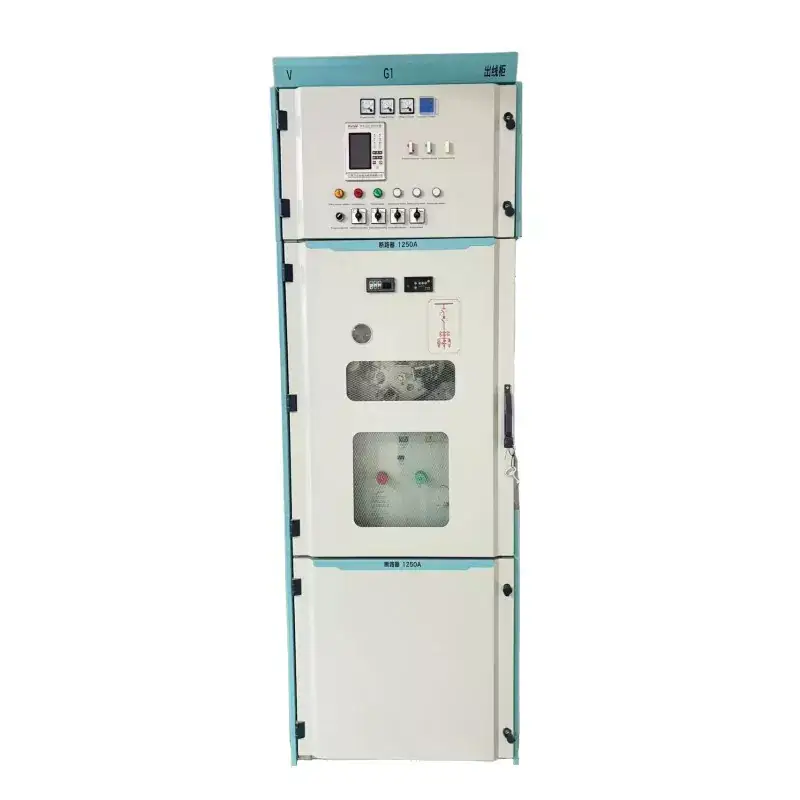
What Usually Goes Wrong When a 33kV Distribution Project Looks Simple on Paper?
In my experience, buyers run into the same practical issues again and again. The project may begin with a simple requirement for medium-voltage distribution, but the real site conditions make the decision much harder than it first appears.
- I often see indoor rooms that are smaller than expected, which makes conventional air-insulated layouts difficult to install.
- I regularly find sites exposed to condensation, dust, salt spray, or unstable ambient conditions that can shorten the service life of unprotected components.
- I meet owners who want dependable protection and control, but they do not want a design that creates a heavy maintenance burden.
- I also see projects where future downtime is more expensive than the initial equipment price difference, especially in transport, commercial, and utility applications.
That is where Medium Voltage 33KV/36KV SF6 Gas Insulated RMU Panel Compact Distribution Switchgear becomes relevant. It addresses the real operating environment instead of assuming that every installation takes place in a clean, spacious, low-risk electrical room.
Why Does Compact Gas-Insulated Design Make More Sense in Space-Limited Networks?
When floor area is limited, I pay close attention to equipment geometry because footprint affects everything from civil layout to cable routing and future access. A compact RMU design helps me solve more than one problem at the same time. I can reduce occupied space, simplify room planning, and keep the medium-voltage section organized without forcing the project into a larger building envelope.
That matters even more in urban substations, commercial centers, transportation infrastructure, and tunnel projects. In those environments, I do not have the luxury of designing around a bulky switchgear arrangement. I need equipment that respects the physical limits of the site while still meeting performance expectations.
| Project concern | What I usually need from the equipment | Why a compact gas-insulated RMU helps |
| Limited switch room area | Smaller footprint without sacrificing function | Compact construction helps free up valuable floor space |
| Harsh environmental exposure | Better protection for live parts | Sealed insulated structure reduces exposure to outside conditions |
| Long-term operating risk | Stable switching and dependable insulation | Enclosed high-voltage parts support more controlled operation |
| Mixed project requirements | Flexible configuration choices | Different switching arrangements support different applications |
How Does a Fully Sealed Structure Change Everyday Reliability?
I pay attention to enclosure design because it has a direct effect on how the switchgear behaves over time. A fully sealed stainless steel enclosure is not just a packaging choice. It changes the relationship between the live medium-voltage section and the outside environment. Once the high-voltage components are isolated inside a sealed gas-insulated structure, the cabinet is much less exposed to the site conditions that usually cause trouble in the field.
That is one of the reasons I view Medium Voltage 33KV/36KV SF6 Gas Insulated RMU Panel Compact Distribution Switchgear as a practical option for demanding distribution work. It is not only about compactness. It is also about shielding the active parts from moisture, airborne contamination, salt spray, and wind-driven dust that can affect conventional arrangements.
- I value sealed insulation because it helps reduce the impact of condensation in enclosed rooms and underground spaces.
- I see strong benefit in stainless steel construction when projects face humid, coastal, or polluted conditions.
- I appreciate the fact that high-voltage components are isolated from the external environment rather than being continuously exposed to it.
- I also like that the configuration can support load switches or vacuum circuit breakers depending on the application strategy.
Which Technical Checks Do I Review Before I Approve a 33kV RMU?
I never approve a medium-voltage panel based on a product name alone. I go through the ratings and ask whether the technical envelope matches the actual network duty. For this type of equipment, I start with voltage class, current range, frequency, insulation withstand level, switching capability, and the expected operating life of the mechanism. Those details tell me whether the equipment is suitable for a real distribution system rather than just a catalog line item.
When I review Medium Voltage 33KV/36KV SF6 Gas Insulated RMU Panel Compact Distribution Switchgear, I look for a balance between electrical capacity and installation practicality. A product may look compact, but if the ratings do not align with the network, the compact size becomes irrelevant. The right design has to satisfy both constraints at once.
| Technical point I check | Why it matters to me | Published range or feature |
| Rated voltage | It must match the distribution network class | Up to 36kV |
| Rated current | It affects feeder loading and switching suitability | 630A to 1250A |
| Rated frequency | It must match regional system requirements | 50Hz or 60Hz |
| Withstand capability | It indicates insulation strength under fault and surge conditions | Specified power-frequency and impulse withstand levels for the voltage class |
| Short-circuit performance | It shows how the unit handles abnormal system events | Configuration-dependent values for switching and withstand duty |
| Mechanism life | It affects long-term service planning | 3000 operations |
| Protection level | It should fit actual site demands | Customizable |
Why Do Monitoring Protection and Control Matter More Than Buyers First Expect?
Many buyers begin by focusing on switching alone, but I think that is too narrow. In an actual distribution project, the value of the RMU grows when the equipment supports monitoring, protection, and control in a practical way. Good switching hardware is important, but the operating team also needs visibility and dependable response when the network changes or faults occur.
If I am buying for a commercial facility, a rail application, or a compact utility installation, I do not want equipment that forces the site team to accept unnecessary blind spots. I want a package that fits modern operational expectations, and that is one reason I keep coming back to solutions such as Medium Voltage 33KV/36KV SF6 Gas Insulated RMU Panel Compact Distribution Switchgear when I compare options for real-world deployment.
Which Sites Benefit Most from This Kind of RMU Arrangement?
I would not pretend that one switchgear design solves every network problem, because it does not. Still, I can clearly see where this type of panel has strong practical value. It makes sense when the project combines medium-voltage duty with limited installation space, difficult surroundings, or a high requirement for operational continuity.
- I would seriously consider it for commercial centers where electrical rooms are compact and uptime matters.
- I find it suitable for railway and transportation projects where equipment reliability and footprint both carry weight.
- I would also review it for tunnels and enclosed infrastructure where condensation and environmental stress are real concerns.
- I see value in challenging outdoor-adjacent or contaminated environments where a sealed internal structure offers extra protection.
What Makes the Real Cost Lower Even When the Initial Price Is Not the Only Number I Watch?
When I compare switchgear options, I never stop at the ex-works price. The actual cost of ownership includes installation efficiency, required room area, maintenance exposure, operating interruptions, and the effort needed to manage the environment around the equipment. A unit that is cheaper on paper can become expensive very quickly if it demands more space, more intervention, or more risk tolerance than the project can afford.
That is why I treat Medium Voltage 33KV/36KV SF6 Gas Insulated RMU Panel Compact Distribution Switchgear as a cost-control option rather than just a product category. If the design helps me reduce footprint pressure, protect live parts, simplify site integration, and support dependable switching, then the total project economics often look better over time.
- I can often save indirect project cost when the compact design reduces civil or room planning pressure.
- I can limit exposure to environmental trouble when the live parts are sealed from the outside atmosphere.
- I can make a more disciplined decision when the supplier provides clear technical parameters and certification support.
- I can reduce future headaches when the configuration is matched to the real application from the start.
What Should I Ask a Supplier Before I Send the Purchase Order?
Before I commit, I ask questions that go beyond catalog language. I want to understand how the supplier supports the actual project rather than how polished the product page looks.
- Can the supplier recommend the right switching configuration for the network and protection scheme?
- Can the enclosure and protection arrangement be matched to the site environment?
- Can the technical data, test process, and certification record be shared clearly?
- Can the dimensions and cable arrangement fit the room I already have?
- Can delivery timing and project support be aligned with the construction schedule?
Those questions help me separate a basic quote from a workable project solution. In medium-voltage distribution, that difference matters more than many buyers expect at the beginning.
Is This the Right Moment to Upgrade the Way You Choose RMU Switchgear?
If you are planning a 33kV or 36kV distribution project and you need equipment that is compact, sealed, and designed for practical operation, this is the point where a deeper technical discussion starts to pay off. I would not wait until room constraints, environmental exposure, or coordination issues show up during installation. It makes far more sense to review those concerns early and choose a panel that already addresses them.
If you want to compare configurations, confirm ratings, or discuss whether this solution fits your application, please contact us and leave your inquiry today. A clear technical conversation now can save you time, cost, and avoidable project risk later.