

Why Do Oil-Immersed Transformers Suit Outdoor Substations?
2026-09-29
An outdoor substation is not a controlled environment. The Electrical Transformer must withstand direct sunlight, rain, dust, temperature swings from -30°C to +45°C, and lightning-induced surges. It must also handle occasional overloads without failing. A dry-type transformer, which relies on air for cooling and solid insulation for dielectric strength, can be used outdoors if it is enclosed in a weatherproof cabinet. But in practice, oil-immersed transformers dominate outdoor substations for three reasons: better thermal management, higher overload capability, and self-healing insulation. This guide explains why and how maintenance engineers can evaluate these factors.
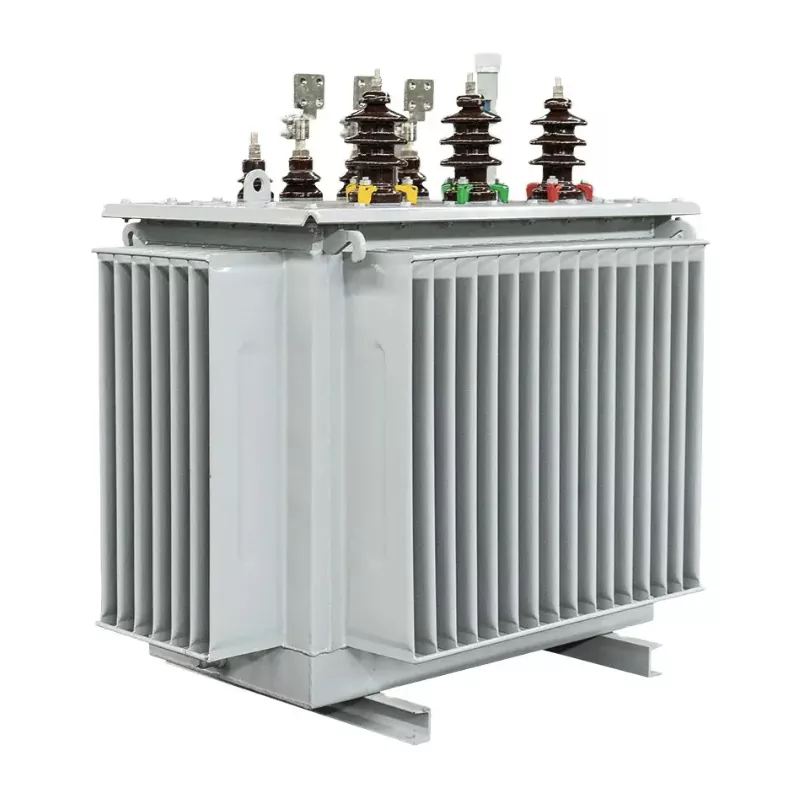
1. How Does Oil Cooling Outperform Air Cooling in Outdoor Conditions?
The cooling medium determines how effectively the transformer dissipates heat. In an oil-immersed Electrical Transformer, the core and windings are submerged in insulating oil. The oil circulates by natural convection, carrying heat from the windings to the tank walls and the radiators. The oil has a thermal conductivity of 0.12 to 0.14 W/mK, which is 10 times higher than air. It also has a high specific heat capacity, which means it can absorb a large amount of heat with a small temperature rise. In a dry-type transformer, the heat must be dissipated by air circulation. The windings are cooled by fans or by natural convection, but the air has a low thermal conductivity and a low heat capacity. The table below compares the cooling performance of the two types.
| Cooling parameter | Oil-immersed transformer | Dry-type transformer |
| Cooling medium | Insulating oil (natural or forced circulation) | Air (natural or forced ventilation) |
| Thermal conductivity of medium (W/mK) | 0.12 – 0.14 | 0.026 |
| Heat capacity of medium (kJ/kg·K) | 1.8 – 2.0 | 1.0 |
| Typical temperature rise at rated load | 55°C – 65°C | 80°C – 100°C |
| Maximum ambient temperature for full load | 50°C | 40°C |
The lower temperature rise of the oil-immersed transformer means that the insulation system operates at a lower temperature, which extends its life. In our factory, we design the tank and radiator surface area to keep the top-oil temperature below 95°C at rated load in a 40°C ambient. Wenzhou Naisite Electric Co., Ltd. has been manufacturing oil-immersed Electrical Transformer units for over 15 years.
2. Why Does Overload Capability Matter for Outdoor Substations?
Outdoor substations often serve loads that are not constant. A factory may start a large motor, or a residential area may experience a heat wave that drives air conditioning demand. The Electrical Transformer must be able to handle short-term overloads without failing. Oil-immersed transformers have a higher overload capability than dry-type transformers because the oil provides a thermal buffer. The oil absorbs the heat from the overload, and the radiators dissipate it gradually. The table below shows the overload capability of the two types.
| Overload condition | Oil-immersed transformer | Dry-type transformer |
| 150% load for 30 minutes | Allowed (with oil temperature monitoring) | Not recommended |
| 130% load for 2 hours | Allowed | Allowed (with forced cooling) |
| 120% load for 4 hours | Allowed | Allowed (with forced cooling) |
| 110% continuous | Allowed | Not allowed |
The overload capability is determined by the thermal time constant of the transformer. Oil-immersed transformers have a longer thermal time constant, which means they heat up more slowly during an overload. This gives the operator more time to reduce the load or start additional cooling. In our factory, we provide overload curves for each transformer model. These curves show the allowable overload duration for different ambient temperatures and pre-load conditions.
3. How Does the Sealed Tank Protect Against Outdoor Contamination?
The tank of an oil-immersed Electrical Transformer is sealed to prevent moisture and dust from entering the oil. The sealing system includes a gasket between the tank and the cover, and a breather or a conservator tank that allows the oil to expand and contract without exposing it to the atmosphere. In a dry-type transformer, the windings are exposed to the air. Dust and moisture can accumulate on the insulation, which reduces the dielectric strength and can cause flashover. The table below compares the contamination resistance of the two types.
| Contamination factor | Oil-immersed transformer | Dry-type transformer |
| Dust ingress | Sealed tank prevents ingress | Windings exposed to air |
| Moisture ingress | Breather with silica gel | Hygroscopic insulation absorbs moisture |
| Cleaning requirement | Annual inspection of breather and gaskets | Quarterly cleaning of windings |
| Dielectric strength degradation | Slow (oil can be filtered) | Fast (insulation cannot be restored) |
In our factory, we use a conservator tank with a rubber bladder that separates the oil from the air. This prevents the oil from absorbing moisture and oxidation products. We also use a magnetic oil level gauge that allows the operator to check the oil level without opening the tank. Wenzhou Naisite Electric Co., Ltd. provides a maintenance kit with replacement gaskets and breather silica gel for all of our transformers.
4. How Should Oil Quality Be Monitored for Long-Term Reliability?
The oil is the lifeblood of the transformer. Its dielectric strength, moisture content, and acidity must be monitored regularly. The three key tests are dielectric breakdown voltage, moisture content, and interfacial tension. The dielectric breakdown voltage should be above 30 kV for a 2.5 mm gap. The moisture content should be below 20 ppm. The interfacial tension should be above 25 mN/m. If the oil fails any of these tests, it should be filtered or replaced. The table below shows the recommended oil testing schedule.
| Test | Frequency | Acceptable limit | Action if out of limit |
| Dielectric breakdown voltage | Annually | > 30 kV | Filter or replace oil |
| Moisture content | Annually | < 20 ppm | Vacuum dehydrate |
| Interfacial tension | Every 2 years | > 25 mN/m | Replace oil |
| Acid number | Every 2 years | < 0.1 mg KOH/g | Replace oil |
| Dissolved gas analysis | Annually for critical units | Per IEEE C57.104 | Investigate fault |
Maintenance tip: A simple visual inspection of the oil in the sight glass can reveal a lot. If the oil is dark or cloudy, it needs to be tested. If the oil level is low, check for leaks. If the silica gel in the breather has turned pink, it needs to be replaced.
Frequently Asked Questions About Oil-Immersed Transformers for Outdoor Substations
Summary for Substation Maintenance Engineers
Oil-immersed Electrical Transformer units are the preferred choice for outdoor substations because they provide better cooling, higher overload capability, and superior protection against contamination. The oil acts as both a coolant and an insulator, and it can be monitored and reconditioned to extend the life of the transformer. By following a regular oil testing schedule and maintaining the sealing system, operators can achieve 20 to 30 years of reliable service from an oil-immersed transformer in an outdoor substation. Wenzhou Naisite Electric Co., Ltd. has been manufacturing oil-immersed Electrical Transformer units for over 15 years and supplies to utilities and industrial facilities worldwide.
Wenzhou Naisite Electric Co., Ltd. manufactures oil-immersed Electrical Transformer units in a range of capacities and voltage classes. We provide overload curves, oil test reports, and maintenance kits for all of our products.